
Last updated: July 31, 2026
Quick Answer: Faith-based fiction that doesn’t feel preachy is fiction where belief shapes what characters do, their choices, their failures, their small acts of mercy, rather than what they say. The faith is load-bearing, not decorative, and it never stops the story to deliver a lesson. Readers across the belief spectrum respond to it because it treats faith as lived experience, not a message to be delivered.
Key Takeaways
- Preachy fiction tells readers what to believe; non-preachy faith fiction shows what belief costs and what it produces
- The strongest faith-based novels treat doubt, failure, and moral complexity as features, not problems to resolve quickly
- Faith woven into character motivation reads as authentic; faith inserted at plot resolution reads as formula
- Christian fiction and faith-based fiction overlap but aren’t identical, the distinction matters for readers and writers alike
- The Christian fiction market grew approximately 14.7% year-over-year as of 2026, with readers increasingly favoring nuanced storytelling over message-driven plots [9]
- Secular readers often connect with faith-based fiction when the spiritual content functions as character interiority rather than instruction
- Common author mistakes include converting characters too cleanly, dropping scripture as explanation, and resolving moral problems with a single prayer scene
- The best faith-based fiction earns its grace, mercy arrives after cost, not instead of it
What Makes Faith-Based Fiction Feel Preachy
Faith-based fiction feels preachy when the story pauses to teach rather than continuing to move. The clearest signal is a character who stops behaving like a person and starts sounding like a pamphlet.
Specific patterns that create the preachy effect:
- Dialogue that exists to explain theology rather than reveal character or advance conflict
- Conversion scenes that solve the plot, the character believes, and suddenly the problem is manageable
- Narration that editorializes on a character’s spiritual state instead of letting the reader observe it
- Scripture dropped as punctuation, quoted at the end of a scene to confirm what the reader was already supposed to feel
- Antagonists who exist only to be wrong about faith, with no genuine interiority of their own
The deeper problem is structural. When an author is more committed to delivering a message than to telling the truth about their characters, the story starts to feel like a vehicle. Readers, even deeply devout readers, sense when they’re being driven somewhere rather than walked alongside. [10]
The fix isn’t to remove faith. It’s to trust it. A character who prays and still gets it wrong, who reads scripture and still makes a selfish choice, who finds grace in an ordinary Tuesday rather than a dramatic altar moment, that character carries more spiritual weight than any sermon-in-dialogue ever could.
Faith-Based Fiction vs. Christian Fiction: What’s the Difference
These terms are often used interchangeably, but they describe meaningfully different things for readers deciding what to pick up.
Christian fiction is a market category. It signals that the book was written from within a Christian worldview, typically published through Christian imprints or marketed to Christian readers, and generally holds to content standards (clean language, no explicit material). The faith content can range from background atmosphere to central theme.
Faith-based fiction is a craft description. It means faith is structurally present in the story, it drives character motivation, creates moral stakes, and shapes how the narrative resolves. A faith-based novel might be Christian, Jewish, or draw from a secondary-world belief system entirely. What defines it is that removing the faith would break the story.
The practical difference for readers: a book can be Christian fiction without being faith-based (a clean romance set in a church community, where faith is backdrop), and a book can be profoundly faith-based without carrying a Christian fiction label (Marilynne Robinson’s Gilead, for example, which sits in literary fiction).
For readers who want faith that actually does something in the story, not just flavors the setting, the question to ask is whether the character’s belief changes what they choose, not just where they worship.
How Authors Balance Faith and Storytelling Without Being Heavy-Handed
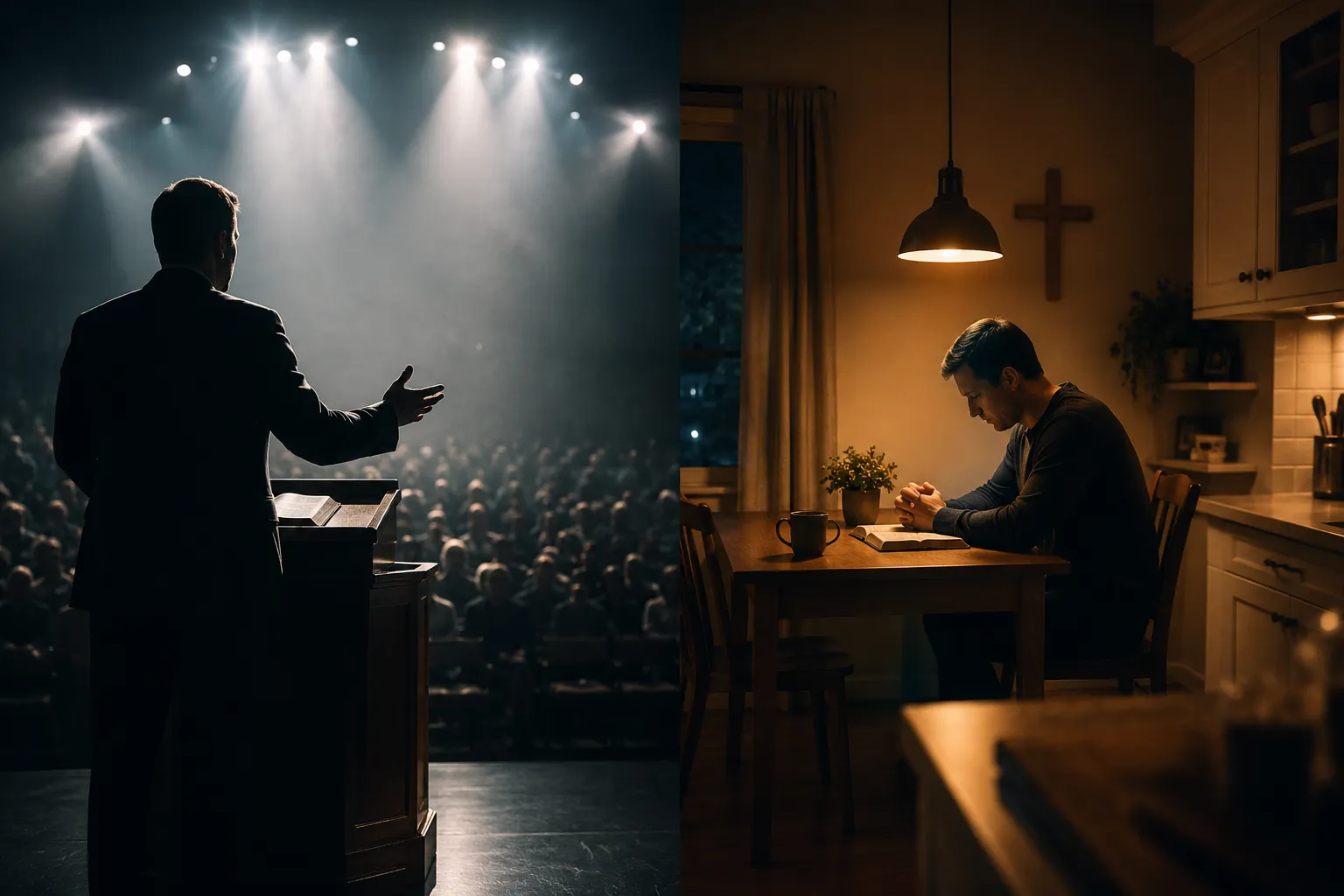
The balance comes down to one principle: faith shows up as consequence, not commentary. Authors who handle this well never explain what a spiritual moment means, they render it precisely enough that the meaning arrives on its own.
Practical craft approaches:
Let belief create the dilemma, not resolve it. A character’s faith should be what makes a choice hard, not what makes it easy. Caleb in The False Warrant faces a lawful document that isn’t just, his faith is exactly what won’t let him look away from that contradiction.
Show the cost before the grace. Earned redemption means the character pays something real before mercy arrives. Grace that costs nothing reads as cheap and unconvincing.
Give doubt its own dignity. Characters who never question their faith aren’t spiritually mature, they’re spiritually flat. Doubt handled honestly is more convincing than certainty handled loudly.
Trust the image over the explanation. A woman pressing a worn hymnal to her chest before she opens a door she’s afraid of says more about faith under fire than three paragraphs of internal monologue about trusting God.
Keep secondary characters spiritually complex. If every believer in the story is right and every skeptic is a cautionary tale, the worldview is propaganda, not fiction.
The shift happening across the Christian fiction market in 2026 reflects exactly this: readers and industry voices are increasingly distinguishing between “substantive spiritual content” and fiction that merely carries a Christian label. [9] The demand is for stories where faith does real narrative work.
Faith-Based Fiction With Complex Characters and Doubt
The most honest faith-based fiction doesn’t protect its characters from doubt, it builds the story around it. Doubt is not the opposite of faith in good fiction; it’s faith under pressure, which is the only version worth reading about.
What complex spiritual characterization looks like in practice:
- A character who prays sincerely and receives no clear answer, and has to act anyway
- A believer who does the right thing and suffers for it, without a tidy reversal
- A skeptic whose objections are treated as genuinely reasonable, not easily dismissed
- A person of faith who fails morally, not because their faith was fake, but because faith doesn’t make people perfect
When Hannah Sleeps (The Gathering Light, Book 1) puts Hannah Garrick in exactly this position: she has transcribed a hundred women’s testimonies, shaped the careful language of healing, and then her own testimony starts appearing in someone else’s file. Her faith doesn’t protect her from the system. It’s what makes the betrayal unbearable, and what she has to decide whether to carry forward anyway.
That’s the difference between faith as decoration and faith as load-bearing structure. When you remove Hannah’s belief, the story collapses. When you remove a decorative faith element, the story just gets a little blander.
Best Faith-Based Novels That Don’t Feel Like Sermons
The best examples share a common trait: the spiritual content is woven into motivation and consequence, not announced in dialogue or resolved by conversion. [10]
Across genres, look for:
- Cozy mystery with real moral weight, A Donation to Die For (Mercy House Mysteries) opens with a mislabeled donation box and a deacon who died just before he could confess. The faith isn’t in the resolution; it’s in why Nora Bell Hartley can’t leave the question alone.
- Frontier fiction where conscience is the real law, The False Warrant (The Mercy Line) asks what obedience is worth when the warrant is legal but the custody isn’t. The answer comes through action, not sermon.
- Psychological suspense where faith is the thing at risk, When the Voice Breaks follows Caris Weller, who built her career on careful language until the retreat’s system starts speaking for her. The spiritual stakes are about who controls the record of someone’s truth.
- Fantasy where covenant theology is structural, The Stone That Remembered (Kethara Chronicles) builds an empire that wants every act of mercy counted and contained. The faith-based conflict isn’t metaphor; it’s the plot.
The Goodreads community list of “super good but not at all preachy Christian fiction” consistently surfaces books where the spiritual content functions as character interiority, belief that shapes what people do in dark rooms when no one is watching. [10]
Common Mistakes Authors Make Writing Faith-Based Fiction
These patterns appear repeatedly in faith-based fiction that loses readers, including Christian readers who wanted something better.
| Mistake | Why It Fails |
|---|---|
| The clean conversion ending | Resolves tension too neatly; grace that costs nothing doesn’t ring true |
| Scripture as explanation | Stops the story; tells readers what to feel instead of letting them feel it |
| Villains with no spiritual interiority | Turns the story into a morality play |
| Doubt treated as a problem to fix | Makes faith look brittle; real belief survives contact with hard questions |
| Faith as reward for good behavior | Prosperity gospel in fiction form; readers recognize it and distrust it |
| Protecting characters from real consequences | Signals the author trusts the message more than the story |
The most damaging mistake is the last one. When an author softens consequences to protect the spiritual arc, readers feel it as dishonesty. Hope in the dark only means something if the dark was real.
Faith-Based Fiction for People Who Don’t Believe in Religion
Faith-based fiction that doesn’t feel preachy is often the fiction that secular readers find most accessible, because the faith is functioning as a moral framework and a source of interior conflict, not as a conclusion the reader is supposed to reach.
Secular readers connect when:
- The spiritual questions are universal, What do you owe someone you’ve wronged? What does it cost to tell the truth? What holds when everything else fails?
- The character’s belief creates genuine dramatic tension, A character who won’t lie because of conviction, even when lying would save them, is compelling regardless of the reader’s own theology
- The faith is specific, not generic, Vague “spirituality” reads as soft and unconvincing; a character with a particular, practiced, sometimes-inconvenient faith reads as real
The Sarel Chronicles (The Map of Unanswered Prayers) builds an entire secondary-world theology around the question of which prayers get recorded and which ones get refused. A reader who has never set foot in a church can still feel the weight of a prayer that goes unanswered, because that’s a human experience, not a denominational one.
Faith-Based Fiction Where Faith Isn’t the Main Plot
Some of the strongest faith-based fiction keeps the spiritual content in the background of the plot while keeping it central to the character. The mystery, the western, the thriller, those are the foreground. Faith is the ground the character stands on while the plot moves.
In The Flood Box Murder (Mercy House Mysteries, Book 5), the plot is about a flood-relief donation box that hides more than water damage. The mystery drives every chapter. But Nora Bell Hartley’s faith is why she notices what others walk past, why she can’t let a wrong stay buried, why mercy and justice feel like the same obligation rather than competing ones.
This is the fiction that works for readers who want clean Christian fiction without feeling like they signed up for a devotional. The faith is present, honest, and real, it just doesn’t stop the story to announce itself.
How to Know If a Book Is Faith-Based Fiction Before Buying
Readers can usually identify the approach from a few quick signals before purchasing.
Signs the faith will be woven in, not preached:
- Back-cover copy describes what the character faces, not what they learn
- Series descriptions mention moral stakes, not spiritual lessons
- Reviews mention doubt, complexity, or “not preachy” explicitly [10]
- The author’s stated approach centers character over message
Signs the book may lean message-heavy:
- Back-cover copy includes a clear spiritual takeaway or lesson
- Every conflict in the description has an obvious resolution implied
- The word “inspirational” appears without any tension or stakes alongside it
Kindle Unlimited subscribers browsing Christian fiction in 2026 have more tools than ever, look-inside samples, Goodreads reviews, and author pages that signal approach. [3] A sample chapter that opens with a character in a genuinely hard place, not a character being handed a spiritual answer, is the clearest sign of faith-based fiction that will walk with you rather than talk at you.

What Age Group Reads Faith-Based Fiction
Faith-based fiction has a broad readership, but the core demographic for Christian fiction, particularly cozy mystery, psychological thriller, and inspirational fiction, skews toward women ages 35 to 65, with strong Kindle Unlimited participation. [6] This group reads for genuine stakes and authentic faith representation, not sanitized feel-good resolution.
Young adult faith-based fiction is a growing category, with readers 16 to 25 responding strongly to stories where faith is tested rather than assumed. The key for YA faith-based fiction is the same as for adult: the character’s belief has to cost something, and doubt has to be treated as honest rather than dangerous.
The Christian fiction market’s 14.7% year-over-year growth as of 2026 reflects expansion across age groups, with genre hybridization, faith-based thriller, faith-based fantasy, faith-based western, drawing readers who wouldn’t have identified as “Christian fiction readers” five years ago. [9]
FAQ
What’s the fastest way to tell if faith-based fiction will feel preachy? Read the first chapter. If a character explains their faith to another character who didn’t ask, or if a scene ends with a scripture quote that summarizes the emotional lesson, the book likely leans message-heavy throughout.
Can faith-based fiction appeal to atheist or agnostic readers? Yes, when the faith functions as moral framework and interior conflict rather than as a conclusion. Stories built around questions of conscience, truth-telling, and the cost of conviction cross belief lines naturally.
Is clean Christian fiction the same as faith-based fiction? Not exactly. “Clean” describes content standards (no graphic violence, explicit material, or profanity). “Faith-based” describes structural role of belief in the story. A book can be clean without being faith-based, and a faith-based book is almost always clean by nature of its priorities.
What genres work best for non-preachy faith-based fiction? Mystery, thriller, western, and fantasy all handle faith well because they generate external stakes that the character’s belief has to engage with. The plot pressure forces faith to do real work rather than sitting decoratively in the background.
How do I find faith-based fiction with genuine doubt and complexity? Look for Goodreads lists specifically tagged “not preachy” or “complex Christian fiction.” [10] Author pages that describe characters who “doubt, serve, fail, and repent” are signaling the right approach. Series descriptions that mention moral dilemmas rather than spiritual journeys are also a reliable indicator.
Does faith-based fiction have to end hopefully? Hope is not the same as resolution. The best faith-based fiction ends with something honest, which may include unresolved grief, unanswered questions, or hard-won peace rather than tidy closure. Hope in the dark earned through honesty is more durable than happiness delivered by plot convenience.
What’s the difference between earned grace and cheap grace in fiction? Earned grace means the character pays something real, relationship, reputation, safety, pride, before mercy arrives. Cheap grace means the character prays, believes, or confesses and the problem dissolves. Readers recognize the difference immediately, even if they can’t name it.
Are there faith-based fiction series worth reading in order? Yes. Series with linked protagonists and ongoing moral stakes, like The Mercy Line or The Gathering Light, build spiritual complexity across books in ways a standalone can’t. The faith is tested progressively, which mirrors how belief actually works.
Conclusion
Faith-based fiction that doesn’t feel preachy is not a compromise between faith and story. It’s what happens when an author trusts both enough to let them work together honestly.
The characters doubt. They fail. They find grace in an ordinary Tuesday that suddenly isn’t ordinary anymore, not because the plot delivered it, but because they kept showing up to the hard thing in front of them. That’s faith under fire. That’s what readers are actually looking for when they pick up a book labeled Christian fiction and hope it won’t talk at them.
The Christian fiction market in 2026 is larger and more genre-varied than it has ever been. [9] Readers have more options, and they’re getting better at identifying which books will walk with them. The signal is always the same: does the faith cost the character something? Does it shape what they do when no one is watching?
If the answer is yes, the sermon never has to happen. The story carries it.
Where to start: Browse the Silas Bellhaven catalog at Amazon Author Page, from the cozy mysteries of Juniper Gap to the frontier justice of Mercy Crossing to the covenant highlands of Marat-Sol, every series is built on the same conviction: God is real, stories matter, and the two have always belonged together.
References
[1] New Christian Fiction Releasing In July 2026 – https://louallenwriter.wordpress.com/2026/06/25/new-christian-fiction-releasing-in-july-2026/
[3] Most Anticipated Christian Fiction 2026 – https://www.goodreads.com/list/show/225610.Most_Anticipated_Christian_Fiction_2026
[6] Top Selling Christian Fiction – https://www.accio.com/business/top-selling-christian-fiction
[7] Kregel Authors Sweep Finalist Lists For 2026 Golden Scroll And Christian Market Book Awards – https://www.kregel.com/news/kregel-authors-sweep-finalist-lists-for-2026-golden-scroll-and-christian-market-book-awards
[9] Christian Fiction 14.7% Yearly Surge Dramatic Market Expansion Data – https://www.firmenpresse.de/pressrelease734029/christian-fiction-14-7-yearly-surge-dramatic-market-expansion-data.html
[10] List of Super Good But Not At All Preachy Christian Fiction – https://www.goodreads.com/topic/show/21521298-list-of-super-good-but-not-at-all-preachy-christian-fiction