Last updated: August 5, 2026
Quick Answer: LitRPG series with real character flaws feature protagonists who make genuine mistakes, carry lasting damage, and grow through cost rather than convenience. These stories stand apart from the overpowered-hero default because the character’s inner life, pride, fear, self-deception, grief, shapes the plot as much as any stat sheet. If you’re tired of protagonists who are never actually wrong, this is the sub-genre worth your time.
Key Takeaways
- Most LitRPG protagonists fail at the character level, not the combat level, they win fights but never change [3]
- Real character flaws create story tension that stat progression alone cannot produce [7]
- The best flawed LitRPG leads make decisions readers can argue with, not just cheer for
- Slow, earned progression is a feature, not a bug, in character-driven LitRPG
- Moral ambiguity and social anxiety are increasingly common flaw types in 2026 releases
- Readers tired of overpowered heroes often find more satisfaction in progression fantasy with genuine cost
- A flaw only works narratively if the story makes the character pay for it at least once
- Christian LitRPG like The Measured Debt series builds earned grace directly into the progression mechanic, the record proves you right until it doesn’t
What Is LitRPG and How Does It Differ From Fantasy
LitRPG (Literary Role-Playing Game) is a fiction genre where the story’s world operates by explicit game mechanics, characters gain levels, receive system notifications, track stats, and progress through quantifiable skill trees. Unlike traditional fantasy, the numbers are part of the narrative, not just background flavor.
The key difference from standard epic fantasy is transparency of power. A fantasy hero might grow stronger through training; a LitRPG protagonist receives a system message that says exactly how much stronger. That transparency creates a specific storytelling problem: when growth is measurable and visible, it’s tempting to make it feel inevitable. The protagonist levels up, the numbers climb, the enemies fall. What gets lost is the messier, harder-to-quantify work of actual character change.
Progression fantasy is a related but distinct category. Progression fantasy prioritizes the arc of growing power, often without the explicit game-system overlay. LitRPG requires the game mechanics to be present and visible in the text. Both genres share the overpowered-hero problem, but LitRPG’s system scaffolding makes it more acute. [3]
Why So Many LitRPG Protagonists Feel Boring
The honest answer: most LitRPG protagonists are builds, not people. [3]
The genre developed strong conventions around wish fulfillment, the underdog who gets a rare class, the hidden talent that makes everyone underestimate them, the protagonist who is always the most competent person in any room they enter. Those conventions sell well in the short term. They also produce characters who feel interchangeable after three books, because nothing about them is actually at risk. [5]
A 2026 craft essay titled “Why So Many LitRPG Protagonists Feel Boring” identified the core issue: when a character’s flaw is just a temporary debuff, something to overcome in the first act so the power fantasy can begin, it isn’t a flaw at all. It’s a setup. Real flaws persist. They cost something. They shape choices the character makes even after they’ve become powerful. [1]
LitRPG Con 2026’s panel “The MC Is Not a Build, They’re a Person” made the same argument from the craft side: the system should pressure the character’s actual weaknesses, not just their hit points.
A flaw that disappears when the protagonist gets strong enough was never a flaw, it was a tutorial.
How Do Character Flaws Work in LitRPG Storytelling
Character flaws work in LitRPG the same way they work in any fiction: they create decisions the protagonist makes that cost them something, and those costs accumulate into a story. [7]
The difference in LitRPG is that the system can externalize a flaw in ways other genres can’t. A protagonist’s arrogance might show up as a stat penalty for underestimating enemies. A character’s grief might manifest as a debuff that no healing skill can fix. When the game mechanics reflect the inner wound, the genre is doing something genuinely interesting.
Three ways flaws function in LitRPG:
- Structural flaws, baked into the character’s class or build, creating a ceiling that skill alone can’t break through
- Relational flaws, pride, distrust, or isolation that damages party dynamics and costs the protagonist allies
- Moral flaws, choices made under pressure that the story holds the character accountable for, even when the system doesn’t
The most effective LitRPG series use all three. The least effective use none, substituting a tragic backstory for an actual flaw. Backstory is not a flaw. It’s context. [2]
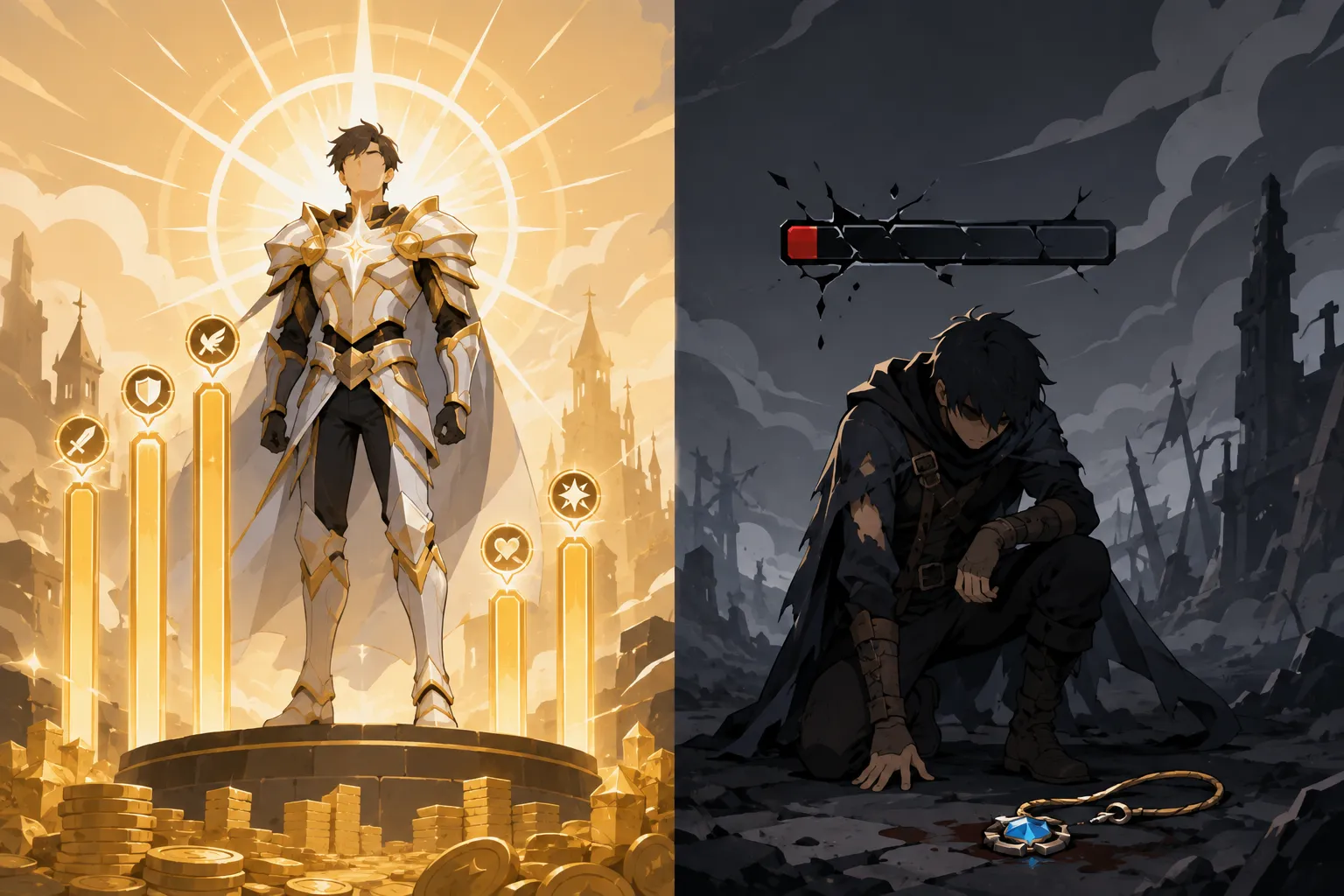
Best LitRPG Books With Flawed Main Characters and LitRPG Series With Real Character Flaws, Not Flawless Protagonists
Several 2026 releases have specifically marketed around protagonist vulnerability and earned progression.
Notable titles and what makes their flaws work:
- Cataclysm Rising (System Incursion Book 1, Hannibal Forge, July 2026), opens with a weak-to-overpowered arc, but the early vulnerability is genuine: poor decisions, fear-driven choices, and a protagonist who earns every level the hard way
- Penitent (C.B. Titus, July 2026), the title itself signals moral cost; power is described as “forged in the blood of battle,” language that implies guilt and sacrifice rather than clean success
- Bond (Beastforged Book 1, HideousGrain, July 2026), the protagonist wins through grit and strategy rather than raw strength, with a companion who highlights limitation rather than covering for it
- Accidental Healer (Austyn Vickers, July 2026), explicitly juxtaposes mending bones with breaking them, building moral ambiguity directly into the class mechanic
For readers who want faith woven into the progression structure, The Measured Debt series by Silas Bellhaven (The Cost of Being Chosen, The Remembered Route, The Borrowed Yield) builds earned grace directly into the LitRPG frame. Eamon Kersey’s position series keeps clearing him, until it doesn’t. The record that proves him right is also the record that eventually asks why he’s always the last one standing. That’s a flaw the system cannot patch.
LitRPG Series Where the Protagonist Makes Mistakes That Actually Matter
The key phrase is “that actually matter.” Plenty of LitRPG protagonists make mistakes. Almost none of them face lasting consequences. [1]
A mistake matters when:
- It changes a relationship permanently, not just temporarily
- It costs the protagonist something they can’t get back through leveling
- Other characters remember it and respond accordingly
- The protagonist carries it forward as a changed person, not a wiser version of the same person
Reddit discussions in the LitRPG community consistently flag this as the genre’s central weakness: protagonists who fail tactically but never fail morally or relationally. [4] The system resets. The party forgives. The arc continues. That pattern produces competent stories and forgettable characters.
Choose this type of LitRPG if: you want to read about someone who is genuinely wrong about something important, not just outmatched, and has to reckon with it.
LitRPG vs Progression Fantasy, Which Is Better for Flawed Characters
Neither genre is inherently better, but they handle character flaws differently.
| LitRPG | Progression Fantasy | |
|---|---|---|
| Flaw visibility | System can externalize inner wounds | Flaw lives entirely in prose and behavior |
| Risk of power fantasy | High, numbers make progress feel inevitable | Moderate, power is less quantified |
| Best use of flaws | Structural and moral, tied to class/build | Relational and psychological |
| Reader expectation | Stat growth is part of the contract | Story arc flexibility is higher |
Progression fantasy gives authors more room to let a flaw breathe without the system “solving” it. LitRPG, when it works well, uses the system to make the flaw visible in a way pure prose can’t. The best choice depends on what kind of flaw the story is built around. [9]
LitRPG Recommendations for Readers Tired of Overpowered Heroes
If the overpowered-hero formula has worn thin, look for these signals in a book’s description before buying:
- Language about cost, debt, or consequence (not just challenge)
- A protagonist whose starting position is genuinely weak, not strategically weak
- Reviews that mention the character making decisions readers disagreed with
- A flaw named in the blurb that isn’t resolved in the first act
The Aethon Books July 2026 launch slate leaned heavily into this language, Penitent, Bond, and Accidental Healer all used cost-and-consequence framing rather than power-fantasy hooks. That’s a meaningful shift in how publishers are positioning LitRPG for readers who want something with more weight. [2]
For clean Christian fiction readers specifically, The Measured Debt series offers a protagonist whose record of success becomes the very thing that indicts him. That’s a different kind of overpowered-hero critique, one rooted in the conviction that mercy and justice are not the same thing, and that a clean ledger is not the same as a clean conscience.
LitRPG Series With Realistic Character Development and LitRPG Series With Real Character Flaws, Not Flawless Protagonists
Realistic character development in LitRPG means the character changes in ways that are specific to who they were at the start, not just “they got stronger and kinder.” [7]
What realistic development looks like:
- A prideful character who becomes more humble, but still struggles with pride in specific situations, it doesn’t disappear, it gets managed
- A character whose grief shapes their decision-making in book three the same way it did in book one, just differently
- Relationships that carry the weight of past failures, even after reconciliation
- A flaw that the protagonist is partially blind to, they can see it in retrospect but keep repeating it
LitRPG Con 2026’s panel “The Perfect Build Doesn’t Exist (and That’s the Point)” made the case that the most durable LitRPG series are the ones where the protagonist’s build reflects their character, and where their character’s limits are not just tactical but human. [10]
LitRPG Where the Protagonist Has Social Anxiety or Mental Health Issues
Mental health as a character flaw in LitRPG is a growing trend in 2026, and when handled well, it produces some of the most grounded protagonists in the genre. [4]
Social anxiety, depression, and trauma responses work particularly well in LitRPG because the system can quantify their effects without reducing them to a simple debuff. A protagonist with social anxiety doesn’t just have a lower Charisma stat, they avoid party formation, miss information because they can’t ask for help, and make solo decisions that cost them dearly.
The risk is using mental health as a quirk rather than a genuine shaping force. If the protagonist’s anxiety disappears when the plot needs them to be bold, it wasn’t real, it was costuming. The standard is the same as any other flaw: the story has to make them pay for it at least once, in a way they can’t immediately undo.
Common Mistakes New LitRPG Authors Make With Protagonists
These patterns appear repeatedly in community discussions and craft panels: [5] [3]
- The temporary flaw, a weakness that exists only until the protagonist gets their first major level-up
- The informed flaw, other characters tell us the protagonist is arrogant, but the story never actually shows arrogance costing them anything
- The trauma backstory substitution, a painful past used in place of a present flaw; the character has suffered but isn’t actually flawed
- The perfect moral compass, a protagonist who makes hard choices but is always right, even when the story pretends the choice was difficult
- Flaw as flavor, a quirk (sarcasm, messiness, a fear of spiders) that has no narrative weight and never intersects with the plot
TBRCon 2026’s craft panel “Flaws and Failure as Requirements” put it plainly: a flaw that never costs the protagonist a relationship, a resource, or a decision they regret is not a flaw, it’s a personality note. [6]
How Much Character Flaw Is Too Much in LitRPG
A character flaw becomes too much when it makes the protagonist unreadable, not morally, but emotionally. Readers can follow a deeply flawed character through almost anything if they understand why the character is that way and if the story treats the flaw honestly rather than exploiting it for shock. [6]
The threshold questions:
- Can the reader still want something for this character, even if they can’t root for every choice?
- Does the flaw serve the story, or does it exist to make the author seem edgy?
- Is there hope in the dark, not cheap hope, but the kind that costs something to hold onto?
Morally grey protagonists work when the story holds them accountable without punishing the reader for caring about them. The line between compelling and exhausting is usually whether the narrative has any mercy in it, not for the character’s choices, but for the character’s humanity. That’s where faith-rooted fiction has something specific to offer: the conviction that a person can be genuinely wrong and still worth the story.
Who Should Read LitRPG With Flawed Characters

LitRPG series with real character flaws are best suited for readers who find pure power fantasy satisfying for a book or two but hollow over a series. [1]
This type of LitRPG is a strong fit if you:
- Read fantasy for character over worldbuilding
- Want to argue with a protagonist’s choices, not just cheer for them
- Prefer slow, earned progression to rapid level-climbing
- Are drawn to stories where grace shows up after cost, not instead of it
- Read in the Christian fiction space and want faith handled as lived experience, not a moral overlay
It’s probably not the right fit if you:
- Read LitRPG primarily for the system mechanics and power scaling
- Find morally complicated protagonists frustrating rather than interesting
- Prefer a clear hero/villain structure with clean resolution
The readers who find the most in this sub-genre are often the ones who’ve read enough LitRPG to know what they’re tired of. That recognition, this protagonist is never actually wrong, is the entry point. Once you’ve named it, you can’t unname it.
Conclusion
The LitRPG genre has the tools to produce some of the most honest character fiction being written right now. The system mechanics that make it distinctive, visible progression, quantified cost, externalized consequence, can do real narrative work when authors use them to pressure a character’s actual weaknesses rather than just their hit points.
The best LitRPG series with real character flaws, not flawless protagonists, share one quality: the protagonist is genuinely wrong about something that matters, and the story holds that line. Not to punish them, but because earned grace requires a real debt. A character who was never actually in danger of being lost doesn’t need to be found.
Actionable next steps:
- If you’re new to flawed-protagonist LitRPG, start with a series where the blurb uses cost or consequence language rather than power-fantasy hooks
- For Christian fiction readers, The Cost of Being Chosen opens The Measured Debt series with a protagonist whose record of success is already beginning to ask the wrong questions
- Browse the full Silas Bellhaven catalog for faith-rooted fiction across LitRPG, frontier western, covenant fantasy, and psychological thriller, all built on the same conviction that redemption costs something, and that the cost is the story
FAQ
What makes a LitRPG protagonist “flawed” versus just “weak at the start”? A weak start is a power state. A flaw is a character state. Weakness resolves through leveling; a real flaw shapes decisions even after the character becomes powerful, and the story holds them accountable for it.
Are there LitRPG series where the protagonist actually loses, not just struggles? Yes. The best examples feature losses that don’t reset: a relationship permanently damaged, a reputation that doesn’t recover, a choice that forecloses other options. Tactical losses that get reversed in the next chapter don’t count.
What is the difference between a morally grey protagonist and a villain protagonist in LitRPG? A morally grey protagonist makes choices the reader can understand even when they can’t approve of them. A villain protagonist is built around transgression as the appeal. The distinction is whether the narrative has mercy for the character’s humanity, not just interest in their darkness.
Is Christian LitRPG a real sub-genre? Yes. Silas Bellhaven’s The Measured Debt series is a current example, clean content, faith handled as lived experience, and a progression mechanic built around earned grace rather than cheap power.
Why do so many LitRPG series lose readers after the first few books? Character stagnation is the most common cause. [1] Once the protagonist’s flaw is “solved”, usually by becoming powerful enough that it no longer costs them anything, the series loses its tension. The numbers keep climbing, but there’s nothing at stake.
Can a LitRPG protagonist have too many flaws? Yes, if the flaws pile up without narrative purpose. Each flaw should connect to the story’s central question. More than two or three active flaws usually means none of them are getting the weight they need.
What’s the best LitRPG for readers coming from literary fiction? Look for series with slower progression, strong prose, and blurbs that lead with character rather than system mechanics. Flawed-protagonist LitRPG tends to sit closer to literary fiction’s concerns than the power-fantasy mainstream.
Does slow progression always mean better character development? Not automatically, but slow progression creates more space for the flaw to breathe. When a character levels up every chapter, there’s no room for the cost of a mistake to accumulate. Pacing and character depth are connected.
What should I look for in reviews to find LitRPG with real character flaws? Look for reviews that mention disagreeing with the protagonist’s choices, caring about side characters, or feeling the story earned its ending. Those signals point toward character-driven writing rather than system-driven writing. [4]
Is LitRPG appropriate for Christian fiction readers? It depends on the series. The genre defaults to content that many Christian readers would find objectionable. Clean, faith-rooted LitRPG exists, The Measured Debt series is a current example, but it requires deliberate searching.
References
[1] Why Great Litrpg Series Fall Off – https://www.chapterchronicles.com/blog/why-great-litrpg-series-fall-off/ [2] Discussion On Litrpg Flaws Strength And Your – https://www.reddit.com/r/ProgressionFantasy/comments/1kwknwo/discussion_on_litrpg_flaws_strength_and_your/ [3] Discussion Does Litrpg Have A Character Problem – https://www.reddit.com/r/Fantasy/comments/86umyo/discussion_does_litrpg_have_a_character_problem/ [4] Realistic Mc – https://www.reddit.com/r/litrpg/comments/1oom9b1/realistic_mc/ [5] What Do You Hate About Litrpg – https://www.reddit.com/r/ProgressionFantasy/comments/118pxan/what_do_you_hate_about_litrpg/ [6] Poll Which Of These Do You Consistently Have A Problem With Having Rea – https://www.goodreads.com/topic/show/19548378-poll-which-of-these-do-you-consistently-have-a-problem-with-having-rea [7] How Character Flaws Improve Roleplaying And Storytelling In Dungeons Dragons – https://litrpgreads.com/blog/rpg/how-character-flaws-improve-roleplaying-and-storytelling-in-dungeons-dragons [9] How Do You Handle The Current Meta In Litrpg – https://www.reddit.com/r/litrpg/comments/11h1qwl/how_do_you_handle_the_current_meta_in_litrpg/ [10] Royal Road Forums – https://www.royalroad.com/forums/thread/124129