

Last updated: August 8, 2026
Quick Answer: Christian psychological thrillers are suspense novels that use faith, doubt, conscience, spiritual warfare, and the cost of grace, as the primary engine of psychological tension. They differ from secular thrillers by treating a character’s relationship with God as load-bearing plot architecture, not background decoration. The stakes are both earthly and eternal, and the fear is as often internal as external.
Key Takeaways
- Christian psychological thrillers treat faith as a source of tension, not comfort, belief gets tested, not confirmed.
- The genre’s core psychological tools are guilt, memory distortion, conscience, and the fear of being truly known by God.
- Religious doubt functions as a plot device because it creates genuine jeopardy: the character’s entire framework for meaning is at risk.
- Redemption in these stories costs something, cheap grace doesn’t survive the genre’s structure.
- Characters in faith-based thrillers often face psychological pressure that mirrors real clinical experiences (trauma, dissociation, moral injury) while grounding recovery in spiritual terms.
- The best examples avoid preaching by showing faith through character choice and consequence, not narration.
- These books are not exclusively for religious audiences, the psychological depth and moral stakes read across belief lines.
- The genre is growing fast: 2026 release data shows a sustained pipeline of clean Christian suspense titles with explicit psychological and trauma-recovery angles. [2][5]
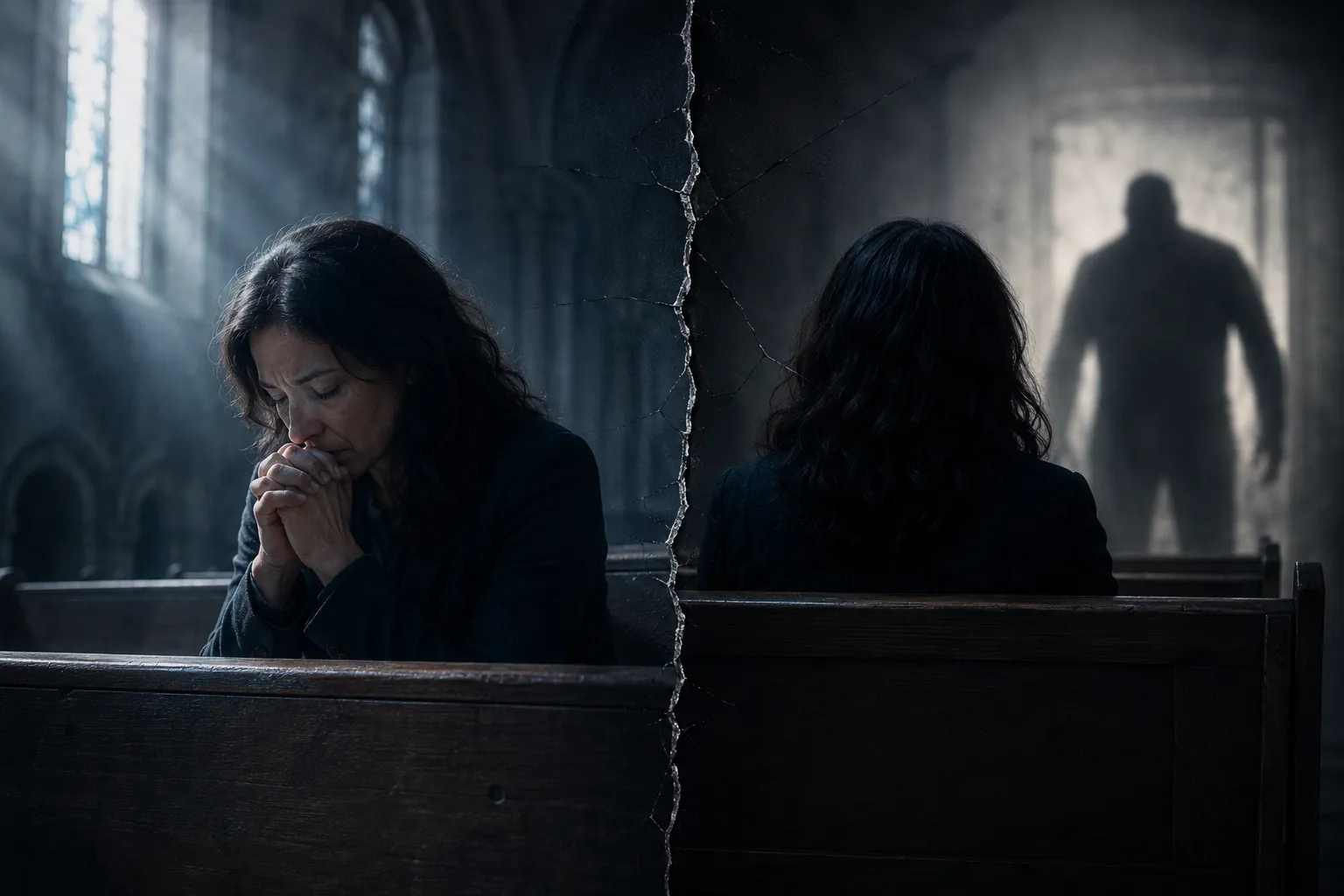
What Is a Christian Psychological Thriller and How Does It Differ from Regular Thrillers
A Christian psychological thriller is a suspense novel where faith, specifically the character’s active, doubted, tested relationship with God, drives the psychological conflict at the center of the story. It’s not a thriller with a church setting bolted on. The spiritual dimension is structural.
In a standard psychological thriller, the tension lives in what the protagonist knows versus what they’re allowed to admit. In a Christian psychological thriller, that same tension runs a layer deeper: what the protagonist knows about themselves versus what God already knows. That gap, between self-deception and divine clarity, is where the genre does its most interesting work.
Key distinctions:
| Feature | Secular Psychological Thriller | Christian Psychological Thriller |
|---|---|---|
| Primary fear | External threat or mental unraveling | External threat and spiritual exposure |
| Conscience function | Psychological mechanism | Active moral and spiritual force |
| Resolution framework | Justice, survival, sanity | Justice and grace, often at cost |
| Content contract | Variable | Typically clean: no graphic violence, no explicit content [5] |
| Stakes ceiling | Life and death | Life, death, and the condition of the soul |
The 2026 market reflects this clearly. Titles like Over the Edge by Susan May Warren (billed as psychological suspense involving trauma) and the Gathering Light series sit in a growing segment that explicitly foregrounds spiritual-psychological conflict as the selling point, not just the setting. [2][5]
How Does Faith Create Psychological Tension in Thriller Stories
Faith creates psychological tension because it raises the cost of self-deception. A character who believes God sees everything cannot lie to themselves without also lying to God, and that second layer of dishonesty is where the psychological pressure compounds.
Three specific mechanisms drive this:
Conscience as an unreliable narrator. A character formed by faith will interpret their own guilt differently than a secular character. They may confuse conviction (a healthy response to real wrongdoing) with condemnation (a distorted, shame-driven spiral). Thrillers exploit this confusion relentlessly.
Prayer as evidence. When a character prays, they’re creating a record of what they believed, wanted, and feared. In The Gathering Light series, the prayer list itself becomes a weapon, Taryn Vickers finds her own name on it, written in the hand of someone who was supposed to be safe. The intimacy of prayer becomes the source of dread. [4]
The gap between public faith and private reality. Christian communities have strong social expectations around testimony and spiritual health. A character who performs wellness while privately fracturing faces a specific kind of psychological isolation, they can’t seek help without exposing the gap. That’s thriller fuel.
Why Do Authors Use Religious Doubt as a Plot Device in Thrillers
Religious doubt functions as a plot device because it destabilizes the character’s entire interpretive framework, not just their emotions. When a secular character loses confidence, they lose certainty. When a faith-formed character loses confidence, they lose the lens through which they’ve understood every event in their life.
That’s a much larger collapse, and thrillers run on collapse.
Doubt also creates a specific kind of vulnerability to manipulation. A character who is uncertain whether God is present is far easier to gaslight than one whose faith is settled. Antagonists in Christian thrillers often exploit this directly: they speak the language of spiritual authority to destabilize someone who is already questioning whether they can trust their own perception of God’s voice.
Faith under fire isn’t the absence of doubt. It’s the decision to keep moving when doubt has made the road invisible.
This is why loss of faith works as character motivation rather than just backstory. It’s an active wound, not a healed scar.
How Does Guilt and Redemption Work in Faith-Based Thrillers
Guilt in faith-based thrillers is not just psychological weight, it’s theologically specific. The character doesn’t only feel bad; they believe they are accountable to someone beyond themselves. That distinction changes everything about how guilt functions in the plot.
Guilt as engine:
- It drives concealment (which drives plot).
- It distorts memory (which drives unreliable narration).
- It creates susceptibility to manipulation by anyone who offers either absolution or exposure.
Redemption as cost: The genre’s contract with readers is that redemption, when it comes, has to be earned. Mercy shows up after cost, not instead of it. A character who confesses and is immediately restored without consequence isn’t experiencing grace, they’re experiencing a plot convenience. Readers who want clean Christian fiction aren’t asking for easy fiction. They’re asking for honest fiction that doesn’t wallow in darkness for its own sake. [3][5]
The Gathering Light series builds this structure deliberately: Hannah Garrick, Caris Weller, and Taryn Vickers each carry a version of the same wound, they helped shape language that controlled other women’s pain, until that same language turned on them. The redemption arc requires them to dismantle the system they helped build. That costs something real.
What Are Examples of Christian Psychological Thrillers
The genre has a growing catalog in 2026, with both established and emerging titles. [2][10]
Silas Bellhaven’s The Gathering Light series is a strong current example of the form done with structural intentionality:
- When Hannah Sleeps, a transcriptionist finds her own testimony appearing in someone else’s file
- When the Voice Breaks, a retreat counselor’s careful language gets turned against her
- When the Prayer List Opens, a woman finds her name on a prayer list written by someone who should have been safe
Each book features a new protagonist and household, keeping the psychological focus tight rather than letting ensemble drift dilute the tension. [4]
Other 2026 releases in the space include Conspiracy by Colleen Coble (political thriller with Christian stakes), Silent Menace by Angela Carlisle, and Over the Edge by Susan May Warren, which is specifically marketed around trauma and psychological suspense. [2] The Goodreads “Most Anticipated Christian Fiction 2026” list also includes Deadly Currents by Elizabeth Goddard and Last to Fall by Lynn H. Blackburn as high-stakes Christian suspense titles. [8]
What Psychological Disorders Are Common in Christian Thriller Characters, and How Does Prayer Affect Plot Twists
Christian thriller characters frequently carry trauma responses, moral injury, and dissociation, conditions that interact directly with their faith in ways secular thrillers can’t access.
Common psychological patterns:
- Moral injury: The character did something (or failed to prevent something) that violates their deepest beliefs. Faith makes this wound specific and named, not just vague guilt.
- Dissociation and memory gaps: Useful for unreliable narration. A character who can’t trust their own memory also can’t trust whether their prayers were answered or whether they imagined it.
- Religious scrupulosity: An anxiety pattern where the character becomes obsessed with whether they’ve sinned, confessed correctly, or received genuine forgiveness. This is psychologically real and clinically documented. [7]
How prayer affects plot twists: Prayer creates a paper trail of the character’s inner life. When a plot twist recontextualizes events, the reader can look back at what the character prayed and see exactly where self-deception entered. It’s one of the genre’s most elegant tools, the character told God the truth before they told themselves, and the reader caught it.

How Do Authors Avoid Making Religious Thrillers Preachy, and Are They Only for Religious Audiences
The single most reliable way to avoid preachiness is to show faith through character choice and consequence rather than narration or scripture-dropping. When a character’s belief is visible only in what they do under pressure, not in what they say about it, the reader experiences the faith rather than being lectured about it.
Practical techniques:
- Let the character doubt without resolving it cleanly
- Let grace arrive through another person’s costly action, not a private revelation
- Never have a character explain what a spiritual moment meant, trust the image
- Keep the antagonist’s worldview coherent and genuinely threatening, not a straw man
Are these books only for religious readers? No. The psychological architecture of these stories, guilt, conscience, the terror of being truly known, the cost of confession, is universally human. Readers who don’t share the faith framework can still engage fully with the moral and psychological stakes. What they won’t get is the specific resonance of recognizing their own spiritual experience in the character’s. That resonance is the bonus for faith-formed readers, not the price of admission for everyone else. [3][5]
The genre is also explicitly clean in content contract, no graphic violence, no explicit material, which makes it accessible to readers who want high psychological stakes without graphic content, regardless of their faith background. [5]
What’s the Difference Between Horror and Psychological Thrillers with Faith Themes
Horror and psychological thrillers both use fear, but they aim it differently. Horror wants the reader to feel dread about something external and threatening. Psychological thrillers want the reader to feel dread about the protagonist’s own mind, what they’ve done, what they can’t remember, what they’re capable of.
Faith-based psychological thrillers add a third layer: dread about the condition of the soul. That’s distinct from both horror (which is often about physical survival) and secular psychological thriller (which is about sanity and truth). The spiritual thriller asks whether the character can be forgiven, and whether they want to be.
A quick rule of thumb:
- Horror: Something is coming for you.
- Psychological thriller: You may have done something you can’t face.
- Christian psychological thriller: You may have done something you can’t face, and Someone already knows.
That third version is quieter than horror and more morally specific than secular psychological suspense. It’s also, for the right reader, more unsettling than either.
What Makes a Character’s Faith Crisis Believable in a Thriller
A faith crisis is believable when it’s specific, earned, and costs the character something they valued more than their doubt. Vague spiritual malaise isn’t a crisis, it’s a mood. A real crisis has a triggering event, a specific belief that got broken, and a concrete choice the character has to make because of it.
Markers of a well-built faith crisis:
- The character can name what they believed before and what broke it
- The crisis changes their behavior in ways that create plot consequences
- Other characters respond to the change, not just the reader
- Resolution (if it comes) requires the character to act, not just feel differently
The worst version is a faith crisis that resolves in a single emotional scene with no lasting consequence. The best version is one where the character carries the scar of it into every subsequent choice, and grace shows up not as a cure but as company in the wound.
Conclusion: Reading and Writing Faith Under Fire
The psychology of faith in thriller narratives works because belief is not a comfort system, it’s a pressure system. It raises the stakes of every choice, makes self-deception more costly, and turns conscience into something with teeth. Christian psychological thrillers are the genre that takes that pressure seriously.
For readers looking to find this space, the 2026 market has a strong pipeline. The Gathering Light series (starting with When Hannah Sleeps) offers a clean, structurally sound entry point with genuine psychological weight and faith handled as lived experience rather than lesson. [4] Titles from Colleen Coble, Susan May Warren, and Lynn H. Blackburn represent the wider genre’s range from political thriller to trauma-focused suspense. [2]
Actionable next steps:
- Start with a single title that matches your psychological tolerance, cozy-adjacent suspense or full psychological thriller, and let the faith element be a discovery, not a prerequisite.
- If you’re a writer, ask yourself: where does my character’s faith cost them something? That’s where the story lives.
- Browse the Gathering Light series page for a current example of the form built with intentional structure: https://www.amazon.com/dp/B0H3HB2PGV
Hope in the dark isn’t naive. It’s the hardest thing a character can choose, and that’s exactly why it makes for the best thrillers.
FAQ
What is a Christian psychological thriller? A suspense novel where a character’s faith, their doubt, conscience, and relationship with God, is the primary source of psychological tension, not just the setting or background.
Do Christian psychological thrillers have graphic content? Most are clean by design: no explicit sexual content, no graphic gore, no profanity. The tension is psychological and spiritual, not visceral. [5]
Is the genre growing in 2026? Yes. Multiple new releases in 2026 explicitly foreground psychological and trauma-recovery angles within Christian suspense, and curated guides now treat it as a distinct, mature segment. [2][10]
Can non-Christians enjoy Christian psychological thrillers? Yes. The psychological stakes, guilt, memory, conscience, the cost of confession, are universally human. The faith framework deepens the resonance for believing readers but doesn’t gate the story. [3]
What makes these thrillers different from Christian horror? Christian horror focuses on external dread and threat. Christian psychological thrillers focus on internal dread, what the character has done, can’t remember, or can’t face, with the added layer of spiritual accountability.
How does prayer function as a plot device? Prayer creates a record of the character’s inner life. When the plot recontextualizes events, that record reveals where self-deception entered, making it one of the genre’s most precise narrative tools.
What’s the best entry point for new readers? When Hannah Sleeps by Silas Bellhaven is a clean, focused entry, a transcriptionist who finds her own testimony in someone else’s file. It’s psychologically grounded and faith-integrated without being preachy. [4]
Why is redemption in these thrillers different from other Christian fiction? Because it costs something. Cheap grace, forgiveness without consequence or change, doesn’t survive the genre’s structure. The best Christian psychological thrillers treat mercy as real and hard-won, not as a plot reset.
Are these books only for women? The primary audience skews toward women 35-65, particularly Kindle Unlimited readers, but the psychological and moral stakes are not gender-specific. [9]
What psychological conditions appear most in these characters? Moral injury, trauma responses, religious scrupulosity, and dissociation are the most common, all conditions that interact directly and specifically with faith. [7]
References
[1] Christian Psychological Thrillers – https://christianbooks.today/collections/christian-psychological-thrillers [2] Best Christian Suspense Books Of 2026 – https://gracefulreads.com/best-christian-suspense-books-of-2026/ [3] Christian Mystery Suspense – https://www.cherrypicksreviews.com/christian-mystery-suspense [4] amazon – https://www.amazon.com/gp/new-releases/books/332929011 [5] Christian Suspense Thrillers – https://christiansuspensenovels.com/christian-suspense-thrillers [7] Pmc11146012 – https://pmc.ncbi.nlm.nih.gov/articles/PMC11146012/ [8] Christian Suspense – https://www.goodreads.com/list/tag/christian-suspense [9] Zeitgeist Mystery Thriller Suspense K Lytics Report – https://www.authormedia.com/zeitgeist-mystery-thriller-suspense-k-lytics-report/ [10] 50 Best Christian Mystery Books 2026 Ultimate Reading Guide – https://thebookdecoder.com/50-best-christian-mystery-books-2026-ultimate-reading-guide/