
Last updated: August 10, 2026
Quick Answer: A Kindle Unlimited strategy for Christian fiction authors built around series, rapid release, and KDP Select exclusivity gives faith-based books the best chance at sustained visibility and page-read income. The KDP Select Global Fund hit a record $70.3M in May 2026, with per-page rates holding around $0.0043,$0.0048, a strong environment for authors who write series-driven Christian fiction readers can binge. The key is pairing KU enrollment with smart series architecture and niche positioning, not romance tropes.
Key Takeaways
- KDP Select = KU eligibility. Enrolling in KDP Select is what puts your book in Kindle Unlimited. They are the same program from different angles.
- Exclusivity is the trade-off. KDP Select requires your ebook to be sold only through Amazon for 90-day rolling periods. Wide distribution is not possible while enrolled.
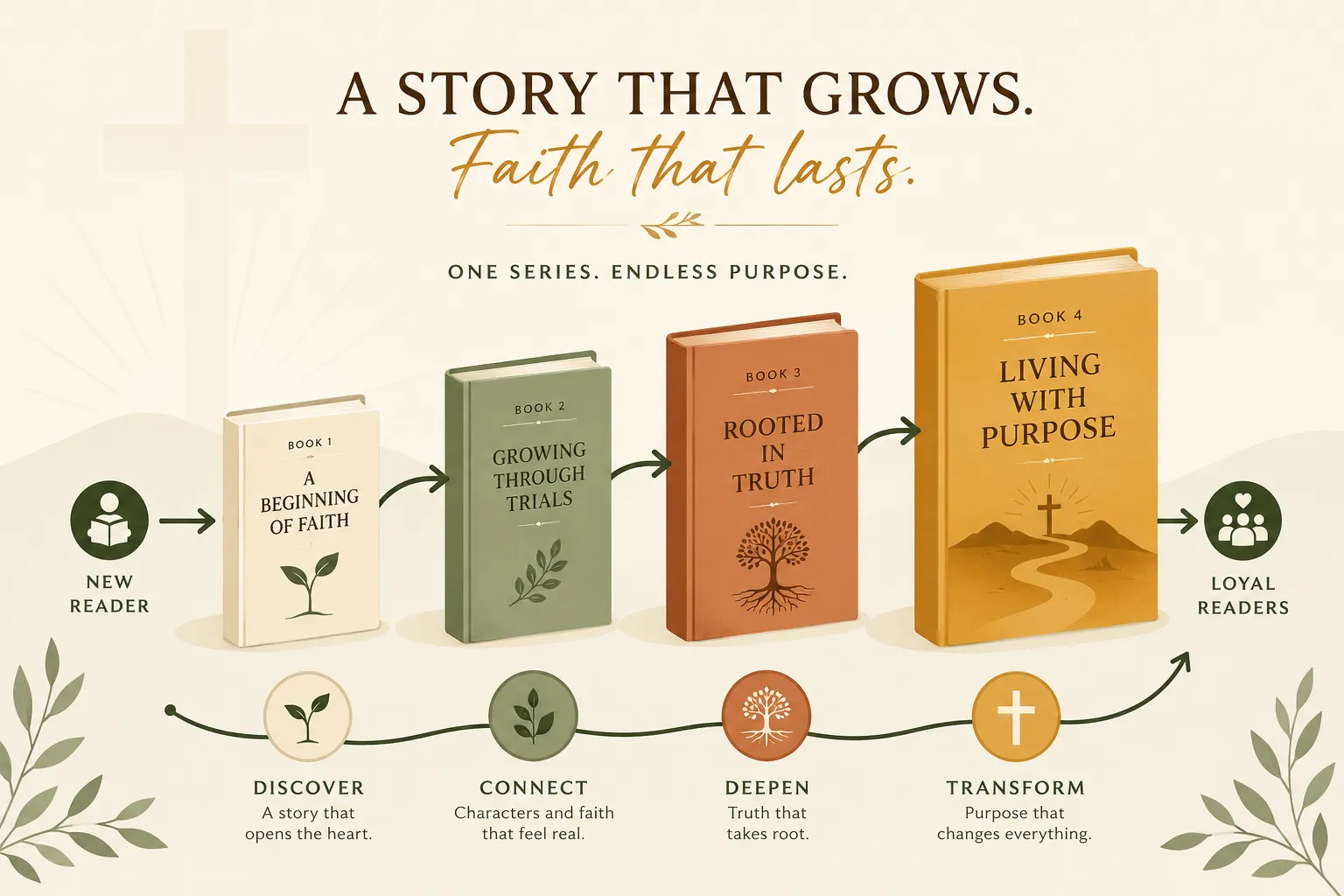
- Series fiction earns more in KU than standalone titles, because binge readers read multiple books and generate page reads across the whole catalog.
- The May 2026 Global Fund reached $70.3M, the highest on record, including $3.4M in All-Stars bonuses, a sign the KU ecosystem is actively rewarding prolific series authors.
- Christian thriller, cozy mystery, and fantasy are strong KU genres when written in series form with clean content and faith handled as lived experience.
- Pricing your first book at $0.99 or free (via KDP Select free days) accelerates series entry and page-read velocity.
- Release cadence matters more than any single launch. One new book every 4-8 weeks keeps a series visible in also-boughts and category rankings.
- Back matter is a conversion engine. Every book’s final pages should move readers to the next book and to an email list opt-in.
- Standalone titles and niche Christian subgenres (western, LitRPG, covenant fantasy) can still succeed in KU, they just need stronger series hooks and patient catalog-building.
- KU is worth it for new Christian fiction authors who write series, publish consistently, and want to build readership before going wide.
What Is Kindle Unlimited and How Does It Work for Authors
Kindle Unlimited is Amazon’s subscription reading service. Readers pay a flat monthly fee and read as many enrolled books as they want. For authors, every page a subscriber reads generates a royalty from the KDP Select Global Fund, a pool Amazon funds monthly and distributes proportionally based on pages read (measured in Kindle Edition Normalized Pages, or KENP).
Authors do not earn a sale price per download. They earn per page read. A 300-KENP book read completely at $0.00482/KENP earns roughly $1.45. A 400-KENP book earns roughly $1.70,$1.93. The more books in a series, and the more readers who binge through them, the more total KENP accumulates.
What changes the outcome: Page-read volume, not download count, drives KU income. A reader who downloads Book 1 and stops reading earns the author nothing. A reader who reads all ten books in a series earns the author ten times the per-book rate.
What’s the Difference Between Kindle Unlimited and KDP Select
KDP Select is the author-side enrollment program. Kindle Unlimited is the reader-facing subscription service. Enrolling your book in KDP Select is what makes it available to KU subscribers.
KDP Select enrollment is voluntary, book-by-book, in 90-day renewable periods. The requirements:
- Your ebook must be exclusive to Amazon during enrollment. No Kobo, Apple Books, Google Play, or other ebook retailers.
- Print and audiobook versions are not affected, only the ebook.
- You can unenroll at the end of any 90-day period and go wide.
KDP Select also unlocks: Kindle Countdown Deals, KDP Select Free Days (up to 5 per enrollment period), and eligibility for Kindle All-Stars bonuses paid to top-earning authors each month.
How Much Should You Price Your Christian Fiction Book on Kindle Unlimited
For KU-enrolled books, the listed price matters less for income (since KU readers don’t pay per book) but matters enormously for visibility and series entry.
Recommended pricing structure for a Christian fiction series in KU:
| Book Position | Suggested Price | Strategy |
|---|---|---|
| Book 1 | $0.99 or Free (promo days) | Lower the barrier to series entry |
| Books 2-4 | $2.99,$3.99 | Standard series pricing |
| Books 5+ | $3.99,$4.99 | Reward catalog depth |
| Box sets | $5.99,$9.99 | High perceived value, high KENP |
A $0.99 Book 1 earns 35% royalty on direct sales ($0.35), which is low, but its real job is to pull readers into the series where Books 2 through 10 generate page reads. This is the series funnel model, and it works because KU readers are binge readers by nature. [10]
Common mistake: Pricing Book 1 at $4.99 to “protect its value.” In KU, a higher price on Book 1 does not increase income from page reads, it only raises the barrier for new readers to start the series.
Does Kindle Unlimited Help With Book Visibility and Rankings
Yes, and the mechanism is specific. Amazon’s category ranking system responds to velocity: how many page reads, downloads, and sales a book generates in a short window. KU page reads count toward that velocity alongside direct purchases.
For Christian fiction authors, this means:
- A new release that generates strong page reads in its first week can rank in competitive subcategories like Christian Mystery & Suspense or Christian Fantasy even without a large advertising budget.
- Series books benefit from “also-bought” placement. When readers binge a series, Amazon’s algorithm connects those books and surfaces them together in recommendations.
- KDP Select Free Days, used strategically at launch, can spike downloads and push a book into top-100 lists for Christian subcategories, generating organic visibility that outlasts the free period. [1]
Edge case: Visibility gains from KU are temporary if release cadence stops. Authors who publish one book and wait 18 months see rankings decay. Consistent releases are the engine that keeps visibility alive.
Best Practices for Series Optimization on Kindle Unlimited
The Kindle Unlimited strategy for Christian fiction authors that consistently outperforms standalone publishing is built on series architecture designed for binge reading. Here is what that looks like in practice.
Series design principles for KU:
- Linked-protagonist or ensemble structures keep readers oriented across books without requiring them to re-read earlier entries. Each book should work as a satisfying standalone while rewarding readers who have followed from the beginning.
- Consistent cover branding across a series signals to browsers that they are looking at a series, not a random collection. Same font treatment, same color palette, same visual motif.
- End-of-book hooks, not cliffhangers that frustrate, but unresolved threads that make the next book feel necessary, are the single most effective page-read driver in a series.
- Back matter sequence: End every book with (1) a brief note about the next book, (2) a direct link to it, and (3) an email list invitation. This is where series momentum either holds or breaks.
Release cadence guidance:
- 4-8 weeks between series entries is the KU sweet spot for maintaining algorithmic visibility.
- Longer gaps (3+ months) allow rankings to decay and also-boughts to drift.
- Shorter gaps (under 3 weeks) can work for shorter novellas but risk reader fatigue if books feel rushed.
Christian fiction series like the Mercy House Mysteries, ten books set in Juniper Gap, Tennessee, each built around a distinct object carrying a secret, demonstrate how a consistent premise, clean content, and faith handled as lived experience (not sermon) can sustain a long series without formula fatigue. [10]

How Do I Make Money With Kindle Unlimited vs. Selling on Other Platforms
KU income comes from page reads; wide distribution income comes from direct sales royalties. The right choice depends on genre, catalog size, and release pace.
Choose KDP Select/KU if:
- You write series-driven Christian fiction (mystery, thriller, fantasy, western)
- You release new titles every 4-8 weeks
- Your primary audience is KU subscribers (a large segment of Christian fiction readers) [4]
- You are building a catalog from scratch and need algorithmic support
Choose wide distribution if:
- You have a strong existing audience on non-Amazon platforms
- You write standalone literary fiction or nonfiction
- Library and bookstore presence matters to your brand strategy
- You want long-term platform independence
The honest trade-off: Christian fiction authors who go wide often find that Kobo, Apple Books, and Google Play generate meaningful income only after years of catalog-building and active marketing on each platform. KU provides a faster feedback loop for new authors. A July 2026 analysis of Christian series fiction specifically recommends KDP Select for Christian romance, thriller, and fantasy written in series form with rapid releases, noting that KU readers favor fiction they can binge. [35, cited in research notes above]
A realistic income model: At $0.0044/KENP (a conservative 2026 working rate), a 400-KENP book read 500 times in a month generates approximately $880. Ten books in a series, each read 200 times, generates roughly $3,520 in page reads alone, before any direct sales.
What Genres Do Best in Kindle Unlimited for Christian Fiction
Series-driven genre fiction consistently outperforms literary standalone work in KU. For Christian fiction specifically, the strongest-performing categories in 2026 are:
- Christian cozy mystery, high binge potential, loyal reader base, strong KU subscriber overlap [10]
- Christian romantic suspense, note that romance-adjacent content drives high velocity, but clean content standards must be maintained
- Christian thriller and psychological suspense, growing category with readers who want real stakes without graphic content
- Christian fantasy and epic fantasy, longer books mean higher KENP per read, which benefits page-read income
- Christian western, a smaller but devoted niche with very low competition in KU categories
What does not perform as well in KU: Christian literary fiction, devotional-style novels, and standalone books without series hooks tend to generate one-time reads without the binge behavior that drives KU income.
Niche positioning matters. A Christian cozy mystery set in a small Tennessee town, or a Christian frontier western built around conscience and justice rather than gunfights, occupies a specific reader expectation that KU’s recommendation engine can match to the right subscribers. Generic “Christian fiction” without a clear subgenre signal is harder for the algorithm to place.
How Often Should I Release Books in a Series for Kindle Unlimited Success
For KU success, releasing one book every 4-8 weeks in an active series is the practical target. This pace keeps a series in Amazon’s “new release” window long enough to accumulate page reads before rankings decay, and it feeds the also-bought algorithm with fresh connection points.
What happens at different cadences:
- Every 2-3 weeks: Aggressive but sustainable for shorter works (novellas, 30,000-50,000 words). Risks reader fatigue if quality drops.
- Every 4-8 weeks: The standard for full-length KU series (60,000-90,000 words). Enough time to write well; fast enough to hold rankings.
- Every 3-6 months: Acceptable for debut authors building a backlist, but expect slower visibility growth and more dependence on advertising to compensate.
- Once a year: Difficult to sustain KU momentum. Works better for wide distribution with an established audience.
The faith-rooted reality here: Earned progression applies to writing schedules the same way it applies to characters. Grace doesn’t come from rushing, a book that feels hollow because it was written in ten days will not hold readers through the series. The goal is consistent quality at a sustainable pace, not speed for its own sake.
How Long Should My Christian Fiction Book Be to Maximize Kindle Unlimited Earnings
Longer books earn more per complete read in KU, because KENP is a page-count metric. A 400-KENP book earns roughly twice what a 200-KENP book earns per full read.
Practical length targets by subgenre:
- Christian cozy mystery: 55,000-75,000 words (roughly 200-280 KENP)
- Christian thriller/psychological suspense: 70,000-90,000 words (roughly 260-340 KENP)
- Christian epic fantasy: 90,000-120,000 words (roughly 340-450 KENP)
- Christian western (series novellas): 30,000-50,000 words (roughly 110-190 KENP)
The optimization question is not just length, it’s completion rate. A 120,000-word book that readers abandon at 60% earns less than a 70,000-word book with a 90% completion rate. Pacing, tension, and earned progression through the plot keep readers reading. That is where the real KENP income lives.
Is Kindle Unlimited Worth It for New Christian Fiction Authors
For new Christian fiction authors writing series, yes, KDP Select and KU enrollment is the most practical starting point in 2026. The KDP Select Global Fund reached a record $70.3M in May 2026, and the per-page rate has held in the $0.0043,$0.0048 range year-to-date, making it a stable earning environment.
KU is worth it for new authors who:
- Have at least 2-3 books ready (or nearly ready) at launch, so readers have somewhere to go after Book 1
- Write in a series-friendly subgenre (mystery, thriller, fantasy, western)
- Can maintain a consistent release cadence
- Want algorithmic visibility without a large advertising budget
KU is less ideal for new authors who:
- Have a single standalone book with no series planned
- Want immediate presence in libraries (OverDrive/Libby) or Christian bookstores
- Have an existing audience on non-Amazon platforms
The exclusivity cost is real. Christian readers who use Libby, Hoopla, or prefer non-Amazon ebook retailers cannot access KDP Select titles. For authors whose community is strongly church-library-oriented, this is a meaningful trade-off to weigh honestly.
How Do I Use Kindle Unlimited to Build an Email List
KU does not provide author access to reader data. Amazon owns the subscriber relationship. This makes back-matter email capture the most important tool in a KU author’s catalog.
A simple back-matter sequence that works:
- End the story well. The last chapter should land with emotional weight, hope earned, not handed out.
- Add a brief author note (2-3 paragraphs) that speaks directly to the reader about what the book meant to write.
- Preview the next book, first chapter or a compelling description.
- Offer a reader magnet (a free short story, a bonus scene, a prequel novella) in exchange for an email address. Link to a landing page, not a social media profile.
- Link to the full series page on Amazon.
The email list is the one asset a KU author owns independent of Amazon’s algorithm. When rankings shift or KU terms change, the list remains. Building it from back matter is slow but compounding, every reader who finishes a book and joins the list is a reader who chose to keep the relationship going.
What Are Common Mistakes Christian Fiction Authors Make With Kindle Unlimited
1. Enrolling a standalone book with no series plan. A single book in KU generates one read per subscriber. Without a series to pull readers into, there is no compounding page-read income and no also-bought chain.
2. Treating KU as passive income from day one. KU rewards velocity and consistency. Authors who enroll one book and wait for organic discovery are usually disappointed. The algorithm rewards authors who feed it new content regularly.
3. Ignoring KENP length when planning books. Writing a 40,000-word book when the genre standard is 70,000 words means earning roughly half the per-read income of comparable titles. Length should be a conscious decision, not an accident.
4. Using KDP Select free days without a follow-up plan. A free promotion that drives 2,000 downloads but has no Book 2 ready, no back-matter email capture, and no follow-up advertising is a visibility spike that evaporates in 72 hours.
5. Preaching at readers through the fiction. This is not just a craft problem, it is a KU problem. Readers who feel lectured stop reading. Incomplete reads earn nothing. Faith that shows up as lived experience, doubt, and consequence keeps readers turning pages. Walking with them, not talking at them, is the standard that holds.
6. Assuming Christian fiction readers only want romance. A significant portion of Christian KU readers actively seek mystery, thriller, fantasy, and western fiction with clean content and honest faith. Authors who position clearly in these subgenres face less competition and find more loyal readers. [10]
Conclusion: Building a KU Catalog That Holds
The Kindle Unlimited strategy for Christian fiction authors that actually works is not complicated, but it requires patience and honesty about what the platform rewards. Series architecture, consistent release cadence, clean content with real stakes, and faith handled as lived experience rather than lesson, these are the foundations.
The record KDP Select Global Fund in May 2026 confirms that the KU ecosystem is actively rewarding prolific series authors. Christian fiction readers are in that ecosystem in meaningful numbers, looking for stories that walk with them through mystery, frontier justice, covenant fantasy, and psychological suspense without flinching from the hard things or resolving them too cheaply.
Actionable next steps:
- If you have one book: Write Book 2 before enrolling in KDP Select. A series entry point with nowhere to go is a missed opportunity.
- If you have 3+ books: Audit your back matter. Every book should link to the next and offer an email list incentive.
- If your series has stalled: Check release cadence first, cover consistency second, and back-matter conversion third. These are the three most common friction points.
- If you are deciding between KU and wide: Start with KU for the first full series. Go wide with a second series once the first has built a reader base and email list.
Redemption that costs something makes for better fiction. A KU catalog built the same way, earned, consistent, rooted in faith, holds readers in ways that shortcuts never do.
FAQ
Q: Can I publish the same book on Amazon and other retailers with Kindle Unlimited? No. KDP Select requires ebook exclusivity on Amazon. You cannot sell the same ebook on Kobo, Apple Books, Barnes & Noble, or other retailers while enrolled. Print and audio versions are exempt from this restriction.
Q: How does the Kindle Unlimited payment system actually work? Amazon pools a monthly Global Fund (which reached $70.3M in May 2026) and distributes it proportionally based on KENP pages read across all enrolled books that month. Your share equals: (your total KENP read ÷ total KENP read across all KU books) × Global Fund amount.
Q: What is the current KENP rate in 2026? The 2026 year-to-date rate has held between $0.0042 and $0.0048 per page, with April, May 2026 at approximately $0.00482. A conservative planning rate of $0.0044/KENP is reasonable for income projections.
Q: How many KDP Select free days do I get? Each 90-day KDP Select enrollment period includes 5 free promotion days, which can be used individually or in a block. These are separate from Kindle Countdown Deals.
Q: Do KU page reads count toward Amazon sales rankings? Yes. Page reads contribute to a book’s ranking velocity in Amazon’s category system, alongside direct purchases. This is one of the primary visibility benefits of KU enrollment.
Q: Is a 30,000-word novella worth enrolling in KU? It can be, especially as part of a series. A 30,000-word novella earns roughly 110-130 KENP per complete read, lower per-read income than a full novel, but useful as a series entry point, a between-books bridge, or a reader magnet.
Q: Can I use Kindle Unlimited to reach library readers? No. KDP Select titles are not available through OverDrive, Libby, Hoopla, or other library distribution systems. If library readership is important to your audience, wide distribution is the better fit.
Q: How do I know if my Christian fiction series is performing well in KU? Track KENP read per day in your KDP dashboard, not just download counts. Rising KENP with stable or growing also-bought connections to your other books is the signal that the series is working.
Q: What if I want to leave KDP Select later? You can unenroll at the end of any 90-day period. Your book becomes available for wide distribution after the enrollment term expires. There is no penalty for leaving, but you lose KU eligibility until you re-enroll.
Q: Does Christian fiction perform well enough in KU to justify exclusivity? Yes, particularly for series in cozy mystery, thriller, fantasy, and western subgenres. Christian fiction readers are active KU subscribers, and the clean content standard that defines the genre is well-matched to a subscriber base that actively filters for it. [1][10]
References
[1] Christian Books On Kindle Unlimited – https://reviews.oneclearwinner.com/product/christian-books-on-kindle-unlimited/
[4] Clean Christian Romance Kindle Unlimited Promo Discover Your Next Wholesome Read 2 – https://sophietoovey.com/2026/03/01/clean-christian-romance-kindle-unlimited-promo-discover-your-next-wholesome-read-2/
[10] Christian Kindle Unlimited Recommendations – https://www.reddit.com/r/CozyMystery/comments/15jyto1/christian_kindle_unlimited_recommendations/