Last updated: August 11, 2026
Quick Answer: Modern Christian western fiction is built on a small set of recurring character types, the frontier preacher, the reluctant hero, the steadfast rancher, the reformed outlaw, and the quiet widow, each shaped by faith, conscience, and calling in ways that separate them from their secular counterparts. Understanding how these archetypes work, and how they differ from each other, helps readers find the stories they want and helps writers build characters whose faith actually costs them something.
Key Takeaways
- The frontier preacher archetype functions as the story’s moral compass, but the best versions carry real doubt alongside conviction, faith under fire, not faith on a pedestal.
- The reluctant hero is defined by resistance to calling, not by lack of courage, the cost of stepping forward is what makes the arc meaningful.
- Frontier preachers and reluctant heroes are related but distinct: a preacher can be reluctant, but not every reluctant hero carries a Bible.
- Christian values reshape both archetypes by adding a conscience layer secular westerns rarely sustain, mercy and justice in tension, not just law and order.
- The genre is growing: religion print sales rose 12% in the first half of 2024 [1], and Christian western fiction is riding that momentum into 2026 [2].
- Common craft mistakes include making the preacher too polished and the reluctant hero too passive, both flatten the faith into decoration rather than load-bearing structure.
- Companion archetypes, the reformed outlaw, the steadfast rancher, the quiet widow, do essential work alongside the main protagonist.
- Clean Christian fiction readers want earned grace, not cheap grace: redemption that costs something before it arrives.
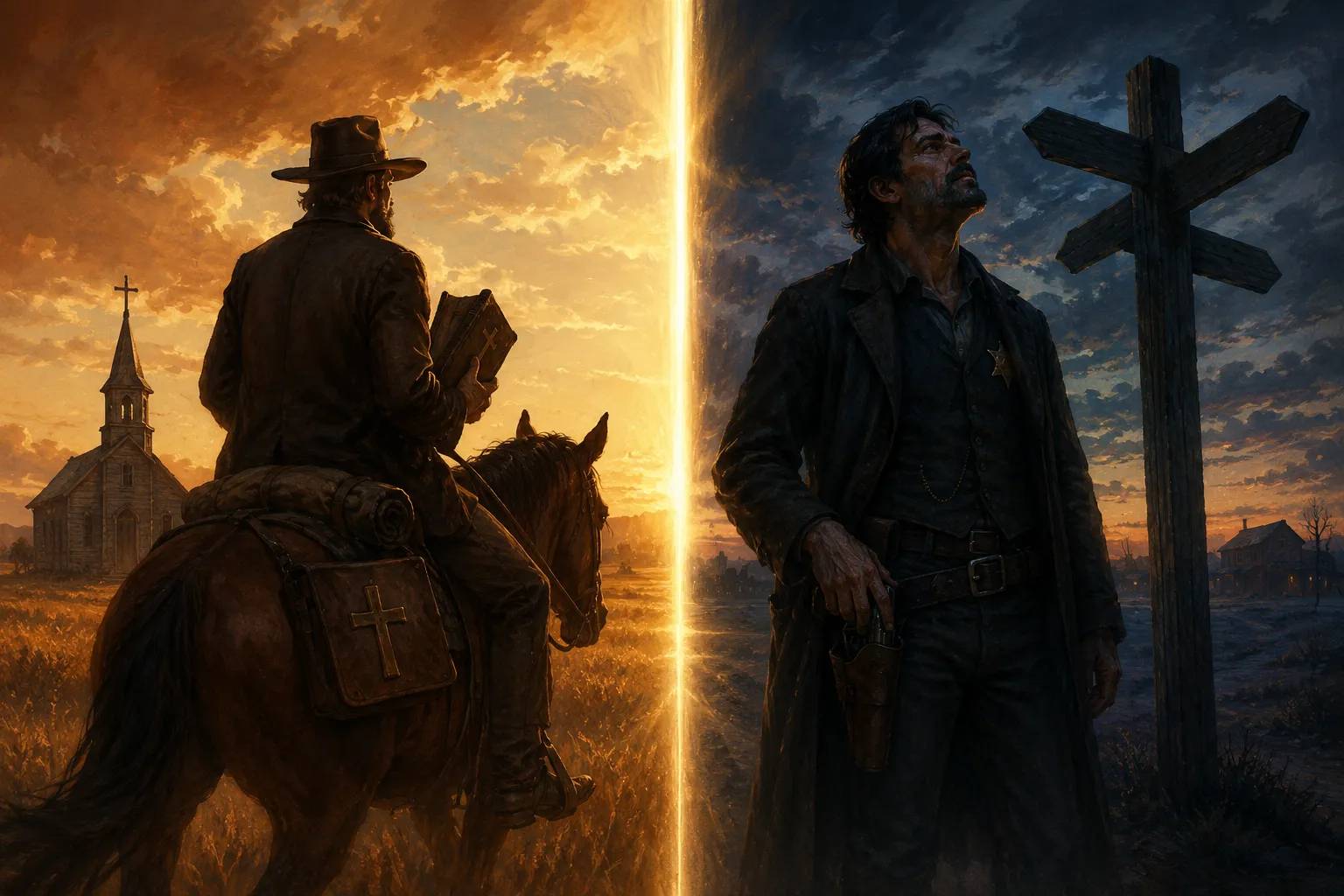
What Is the Frontier Preacher Archetype in Western Fiction?
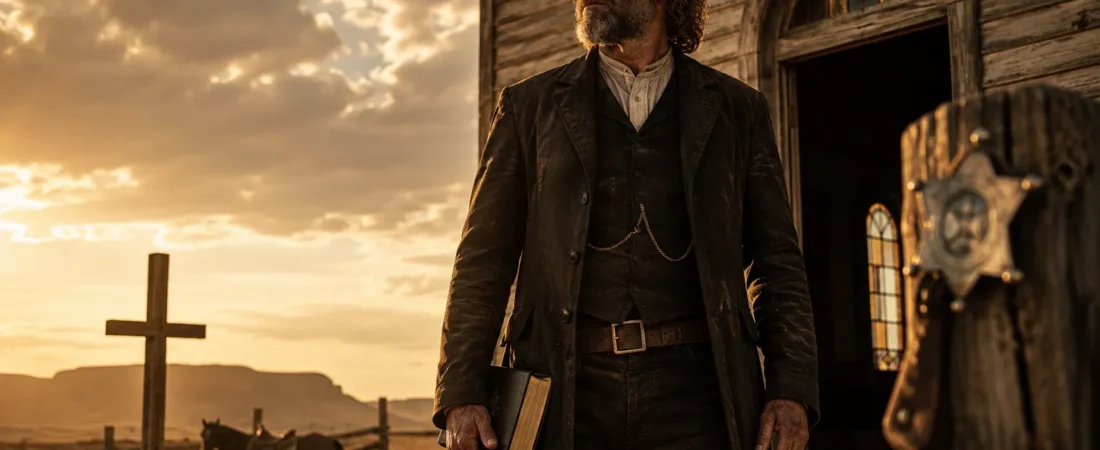
The frontier preacher is the character who carries the moral weight of a story’s world, not because the plot assigns them authority, but because their calling puts them in the middle of every conflict between what is lawful and what is right. In western fiction broadly, this figure has appeared since the genre’s earliest days. In Christian western fiction specifically, the preacher’s faith is not a costume. It’s the source of every hard choice they make.
What makes the archetype distinct:
- Called, not credentialed. The frontier preacher rarely has a seminary degree or a proper church building. Their authority comes from conviction, not institution.
- Positioned between worlds. They move between the respectable and the outcast, the law and the lawless, the living and the dying. That positioning is where the story’s tension lives.
- Carrying a question, not an answer. The best frontier preachers in modern Christian western fiction are not walking sermons. They’re people who believe deeply and still don’t always know what God is asking of them in this particular moment.
Authors like Misty M. Beller have described the frontier as a spiritual crucible, a place where God’s love gets revealed through hardship rather than comfort. That instinct shapes how the preacher archetype works: the frontier strips away every easy answer and leaves only what the character actually believes.
Faith isn’t a backdrop, it’s load-bearing. The frontier preacher works because the land itself demands an answer.
The Difference Between a Frontier Preacher and a Reluctant Hero in Christian Westerns
These two archetypes are often confused, and sometimes they overlap, but they answer different questions.
The frontier preacher asks: What does my calling require of me here? The reluctant hero asks: Why does it have to be me?
The frontier preacher has already accepted a vocation. Their struggle is about faithfulness, living up to what they’ve already said yes to. The reluctant hero hasn’t accepted anything yet. Their arc is the story of being pulled toward a role they didn’t choose and would rather hand to someone else.
| Archetype | Core Tension | Faith Role | Arc Shape |
|---|---|---|---|
| Frontier Preacher | Faithfulness vs. human cost | Central, explicit | Tested conviction |
| Reluctant Hero | Calling vs. self-preservation | Implicit, earned | Resistance to acceptance |
| Reformed Outlaw | Past vs. present identity | Redemptive | Earned grace |
| Steadfast Rancher | Duty vs. justice | Grounding, quiet | Moral anchor |
A frontier preacher can be a reluctant hero, a circuit rider who keeps getting drawn into conflicts he didn’t come to solve is both. But the two archetypes are doing different work, and collapsing them loses the specific texture each one carries.
Why Are Reluctant Heroes Popular in Modern Christian Western Novels?
The reluctant hero resonates because resistance to calling is honest. Most readers know what it feels like to see a need and hope someone else handles it. When a character finally steps forward, not because they’re fearless, but because they can’t stay back anymore, that moment carries real weight.
In Christian western fiction specifically, the reluctant hero’s arc maps onto a theological truth the genre takes seriously: God doesn’t always call the prepared. He calls the available. The hero’s reluctance isn’t a character flaw to be fixed. It’s the starting condition that makes earned grace possible.
The Christian fiction market has expanded significantly, with religion print sales up 12% in the first half of 2024 [1], and western/frontier-themed titles gaining visible shelf space within that growth [2]. Readers coming to the genre in 2026 are looking for stories with real stakes, not adventure for its own sake, but characters whose choices matter because something genuine is on the line.
Examples of Frontier Preacher Characters in Contemporary Western Books
Contemporary Christian western fiction has produced several clear examples of the frontier preacher type, though the archetype appears in varied forms:
- The circuit rider who covers a territory too large for any one congregation, showing up when someone is dying or when a land dispute turns violent, present not by assignment but by calling.
- The lay preacher with a past, common in series like Silas Bellhaven’s The Mercy Line, where characters carry both a conscience and a history, and the two don’t always point the same direction.
- The preacher who isn’t ordained but functions as the community’s moral anchor, the person everyone turns to when the law has already failed.
Authors like Davalynn Spencer and Mary Connealy have built careers on western Christian romance that centers the faith journey as a character portrait, not a subplot. The preacher figure in their work tends to be someone whose belief is tested by circumstance rather than confirmed by it.
How Do Christian Values Shape the Reluctant Hero Archetype?
Christian values change the reluctant hero’s arc in one specific way: the cost of stepping forward is spiritual, not just physical. In a secular western, the reluctant hero risks their life. In a Christian western, they also risk their pride, their comfort, their sense of who they are before God.
Key ways faith reshapes the archetype:
- Conscience over code. The reluctant hero in Christian fiction isn’t just weighing danger, they’re weighing what they’ll answer for. The Mercy Line’s conscience line, “Where law runs out, a man finds what he answers to”, captures this exactly.
- Mercy and justice in tension. A secular hero can choose justice and be done. A Christian hero has to hold mercy alongside it, even when mercy is harder.
- Grace arrives after cost. The hero doesn’t get rescued from the hard choice. They make it, pay for it, and find grace on the other side. That’s earned grace, not cheap grace.
What Makes a Character a Reluctant Hero vs. Just a Regular Protagonist?
A regular protagonist moves toward the story’s goal. A reluctant hero actively resists it, at least at first.
The reluctant hero has three defining features:
- They have a reason not to act. A past wound, a competing obligation, a genuine belief that someone else should handle this.
- The story removes their exits. One by one, the reasons not to act stop working. Not through manipulation, but through consequence.
- Their choice to act is costly. When they finally step forward, something real is given up. That cost is what separates the archetype from a protagonist who was always going to do the right thing.
In Christian western fiction, the reluctant hero’s resistance often has a spiritual dimension, a character who has stopped trusting God’s direction, or who believes they’ve already used up whatever grace was available to them.
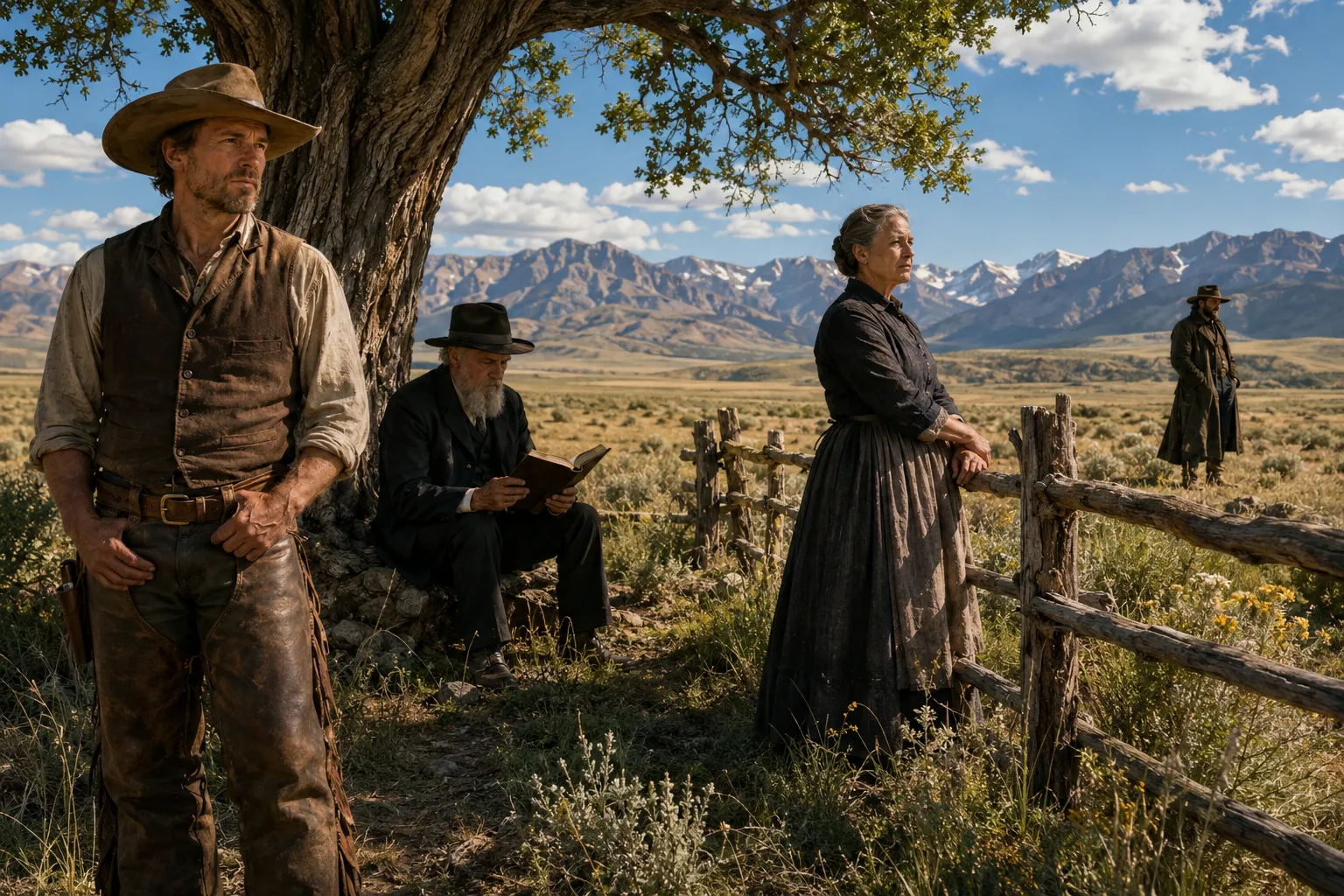
Are Frontier Preachers Always Reluctant Heroes in Christian Fiction?
No, and conflating the two is one of the more common craft mistakes in the genre.
A frontier preacher who has fully accepted their calling and steps into conflict without internal resistance is not a reluctant hero. They’re a different archetype entirely: the faithful servant, the moral anchor, the one who holds steady while everyone else wavers. That character has enormous value in a story. But they’re doing different work.
The frontier preacher becomes a reluctant hero when their calling asks more than they budgeted for, when the cost of faithfulness exceeds what they thought they’d signed up for. That’s a specific story, and it’s a powerful one. But it’s not the default setting for the archetype.
Common Mistakes Writers Make with Frontier Preacher Characters
The frontier preacher is one of the most mishandled archetypes in Christian western fiction, usually in one of two directions:
Too polished: The preacher who always has the right word, never doubts, and functions as a walking answer machine. This character isn’t rooted in faith, they’re a theological prop. Real conviction includes uncertainty.
Too passive: The preacher who observes the story’s moral conflicts but never enters them. Faith under fire means the preacher has to be in the fire, not commenting on it from the edge.
Other common errors:
- Dropping scripture into dialogue as a substitute for character development
- Resolving the preacher’s arc with a clean, dramatic conversion moment (for themselves or someone else) that costs nothing
- Making the preacher the only character who carries faith, which isolates belief from the story’s actual texture
The better approach: let the preacher’s faith show through choice and consequence, not narration. When Caleb in The False Warrant has to decide what obedience is worth, the question isn’t answered with a verse, it’s answered with a decision that has a price.
How Has the Reluctant Hero Archetype Evolved in Christian Western Fiction?
Early Christian westerns tended toward the straightforward moral hero, someone whose faith was already settled and whose arc was about proving it under pressure. The reluctant hero as a distinct type has become more prominent as the genre has matured and as readers have asked for characters whose faith feels less certain and more worked-through.
The shift reflects something real about the market. Christian fiction readers, particularly the women 35-65 who make up the genre’s core audience [2], are not looking for characters who have already figured everything out. They want stories that walk with them, not talk at them. A reluctant hero who arrives at conviction through cost and doubt is far more companionable than one who started there.
The religion print market’s growth [1] has brought new readers to Christian fiction who may not have grown up with the genre’s older conventions. For them, the reluctant hero’s arc, resistance, cost, earned grace, reads as honest rather than formulaic.
What Audience Reads Christian Western Fiction with These Archetypes?
The primary audience for Christian western fiction is women between 35 and 65, many of them Kindle Unlimited subscribers who want clean, faith-based stories with real stakes [2]. They’re not looking for graphic content or shock value, but they’re also not looking for stories that avoid hard things. They want hope in the dark, not hope instead of the dark.
This audience responds to:
- Characters whose faith is tested and proven through the plot, not delivered as a sermon
- Settings that feel specific and grounded, a real frontier town with real weather and real consequences
- Moral questions that don’t resolve too cleanly
- Relationships built on trust and conscience rather than romance (particularly in series like The Mercy Line, which maintains a romance-absent content contract)
The western/frontier subgenre is visible and growing within the broader Christian fiction market [2], with 2026 seeing new series launches and increased craft attention to what makes the frontier work as a theological testing ground.
Reluctant Hero vs. Anti-Hero in Christian Western Storytelling
These two are not the same, and Christian western fiction handles the distinction carefully.
The reluctant hero resists their calling but holds to a moral code throughout. Their struggle is about willingness, not virtue.
The anti-hero operates outside conventional morality, often doing wrong things for right reasons (or right things for wrong reasons). The anti-hero’s arc, if it exists, is about moral reclamation.
Christian western fiction can accommodate a version of the anti-hero, the reformed outlaw, the man with blood on his hands who is trying to become someone different, but it handles that arc through earned redemption rather than moral ambiguity for its own sake. Grace shows up after cost, not instead of it. The anti-hero who never pays a price for their past isn’t a Christian western character. They’re a secular one wearing faith as a label.
What Other Archetypes Work Alongside the Frontier Preacher in Modern Westerns?
The frontier preacher and reluctant hero rarely carry a story alone. The archetypes that work best alongside them:
- The reformed outlaw: Carries the weight of a past that can’t be undone, seeking redemption that costs something real. In The Ash Ledger, the question of what a fire-loss claim conceals is also a question about what a man’s past conceals.
- The steadfast rancher: The moral anchor of the community, not dramatic, not conflicted, just quietly holding to what’s right when everything around them shifts. This character grounds the story’s emotional center.
- The quiet widow: Often underestimated in the story’s world, but carrying a clarity that comes from having already survived the worst. She sees through pretense because she’s already paid for her own.
- The corrupt lawman: The antagonist who reveals what happens when authority loses its conscience, a direct foil to both the preacher and the reluctant hero.
- The land-claim villain: Specific to frontier settings, this figure represents institutional injustice, the kind that has a seal and a signature and is still wrong.
Each of these archetypes creates a different kind of pressure on the protagonist’s faith. Together, they make the frontier town function as what good craft advice for the genre calls a “theological testing ground”, a place where what a person actually believes gets revealed by what they actually do.
Do All Christian Westerns Need a Reluctant Hero Protagonist?
No. The reluctant hero is one strong option, not a requirement.
A frontier preacher who has already accepted their calling can anchor a compelling story. A steadfast rancher who simply refuses to bend when the corrupt land agent arrives doesn’t need an arc of resistance, their arc is about endurance. A reformed outlaw’s story is about identity, not reluctance.
The question isn’t which archetype to use. It’s which question the story is actually asking. Choose the archetype that creates the right kind of pressure on that question, then let the faith show up through the choices the character makes under that pressure.
FAQ
What is the frontier preacher archetype in Christian western fiction? The frontier preacher is a character defined by calling rather than credentials, someone whose faith positions them between the lawful and the lawless, and whose belief is tested by the specific demands of frontier life.
Is the reluctant hero always a man in Christian western fiction? Not necessarily, though the archetype appears most often with male leads in frontier settings. Series like The Mercy Line use masculine-only leads by design, but the reluctant hero’s core dynamic, resistance to calling, earned acceptance, works across gender.
What separates Christian western fiction from secular western fiction? The primary difference is the conscience layer. Christian westerns hold mercy and justice in tension rather than resolving conflict through force alone. Faith shapes the protagonist’s choices in ways that cost them something, and grace arrives after that cost, not before.
Can a frontier preacher be the villain? Yes, and some of the genre’s most interesting antagonists are preachers who have confused their own authority with God’s. That corruption, faith weaponized, is a distinct and powerful story.
What is earned grace in the context of Christian western fiction? Earned grace means redemption arrives after genuine cost, the character has paid something real before mercy shows up. It’s the opposite of cheap grace, where a character is forgiven without consequence or change.
How long is a typical Christian western novel? Most run between 60,000 and 90,000 words, though series entries sometimes run shorter (50,000-65,000) to maintain pacing across multiple books.
What makes the frontier setting work for Christian themes? The frontier strips away institutional support, no established church, no reliable law, no safety net. That stripping-away forces characters to act on what they actually believe rather than what their community expects. It’s a natural crucible for faith under fire.
Are there Christian western series without romance? Yes. The Mercy Line by Silas Bellhaven maintains a romance-absent content contract across its catalog, focusing on conscience, justice, and earned grace without a romantic subplot.
What is the difference between a reluctant hero and a coward? A coward acts against their conscience to preserve themselves. A reluctant hero knows what the right action is and delays it, but eventually chooses it, at cost. The reluctant hero’s resistance is honest, not dishonest.
How do I find clean Christian western fiction in 2026? Kindle Unlimited is the most accessible platform for the subgenre. Searching by series, The Mercy Line, or authors like Misty M. Beller, Davalynn Spencer, and Mary Connealy, will surface the most consistent options.
Conclusion
From frontier preacher to reluctant hero, the archetypes that define modern Christian western fiction are doing more than populating a genre. They’re asking a specific question in a specific place: when the law runs out and the easy answers are gone, what does a person actually answer to?
The frontier preacher carries that question as a calling. The reluctant hero carries it as a burden they didn’t ask for. The reformed outlaw carries it as a debt. The steadfast rancher carries it as a quiet refusal to bend. Each archetype puts pressure on faith from a different angle, and the best Christian westerns let that pressure build until something real is revealed.
For readers looking for clean Christian fiction with genuine stakes, the western frontier remains one of the most honest settings in the genre. And for writers, the work is straightforward even when it’s hard: let faith show up through choice and consequence, let grace arrive after cost, and trust the story to carry what a sermon never could.
Explore the archetypes in action: The Mercy Line series by Silas Bellhaven, beginning with The False Warrant, follows linked protagonists across the railroad town of Mercy Crossing, where land claims, labor bonds, and buried records decide who gets justice, and grace never comes cheap.
References
[1] Religion Print Sales Up 12 In First Half Of 2024 Publishersweekly Com – https://www.midlandco.com/religion-print-sales-up-12-in-first-half-of-2024-publishersweekly-com/
[2] The Rise Of Christian Fiction Market Trends Regional Dynamics And Future Predictions For 2026 – https://www.alibaba.com/product-insights/the-rise-of-christian-fiction-market-trends-regional-dynamics-and-future-predictions-for-2026.html