
Last updated: August 13, 2026
Quick Answer: Building Christian fiction communities means creating spaces, online groups, book clubs, newsletters, and author platforms, where readers who want faith handled honestly can find each other and the stories that speak to them. The most effective communities are built around a shared conviction about how faith belongs in fiction, not just around genre labels. For authors and readers alike, the practical tools are accessible and largely low-cost; what separates thriving communities from quiet ones is consistency and genuine care for the reader’s experience.
Key Takeaways
- Christian fiction communities work best when they’re built around a shared why, a conviction about how faith belongs in story, rather than a genre category alone.
- Book clubs are the single most reliable reader engagement tool for Christian fiction authors; they generate word-of-mouth, reviews, and long-term loyalty.
- Free platforms (Goodreads groups, Facebook, Bookclubs.com) are sufficient to launch; paid tools (Patreon, Substack, Fable) become relevant once a core audience exists.
- Discussion questions should engage faith themes through character choice and consequence, not doctrinal debate.
- Controversial topics can be addressed honestly without moralizing, the key is framing questions around story, not theology.
- The Christian fiction market is estimated at roughly $1.37 billion globally, with Kindle Unlimited subscribers representing a significant and growing segment.
- Authors who build platform-agnostic communities, email list first, social second, retain their audience regardless of algorithm changes.
- The divergence between “clean reads” and genuinely faith-centered fiction is reshaping community expectations; readers increasingly want both.
- Moderation in Christian fiction groups requires clear, grace-forward community guidelines rather than rigid rule enforcement.
- Monetization works best when it extends the reader’s experience rather than interrupting it.
What Is a Christian Fiction Community and Why Does It Matter
A Christian fiction community is any gathering, physical or digital, where readers and authors connect around stories that treat faith as load-bearing rather than decorative. It matters because readers who want their faith represented honestly in fiction have historically had to search hard to find each other, and because the stories themselves carry more weight when they’re read in conversation.
The work of building Christian fiction communities, reader engagement, book clubs, and author platforms, isn’t just a marketing strategy. It’s an act of hospitality. When a reader finishes A Donation to Die For at midnight and has no one to ask “did you catch what that ledger meant?”, that’s a loneliness the right community can answer.
These communities also serve a curation function. Christian fiction spans cozy mystery, psychological thriller, epic fantasy, western, and LitRPG. A reader who loved one genre may not know the others exist under the same faith-rooted promise. Communities become the bridge.
What Makes Christian Fiction Different from Regular Fiction Book Clubs
Christian fiction book clubs operate on a different set of questions than general fiction clubs. The difference isn’t a content checklist, it’s a shared assumption that faith, doubt, mercy, and consequence are worth examining seriously inside a story.
Key distinctions:
- Faith as a character force. Discussion centers on how belief shapes what characters do, not on whether the theology is correct.
- Clean content expectation. Members generally share an expectation of no graphic violence, no explicit content, and no profanity, but the best discussions don’t treat this as the main event.
- Grace and cost. The most generative discussions in Christian fiction clubs tend to circle around earned redemption: what did it cost the character, and did the story make that cost real?
- Divergence between “clean” and “faith-centered.” In 2026, readers are increasingly distinguishing between fiction that simply avoids objectionable content and fiction that actively engages faith under fire. Communities built around the latter run deeper conversations.
“Walking with them, not talking at them”, that phrase describes what the best Christian fiction does, and it describes what the best Christian fiction community does too.
How Do You Start a Christian Fiction Book Club
Starting a Christian fiction book club requires three decisions before anything else: where it lives, how often it meets, and what the shared standard for book selection will be.
Step-by-step framework:
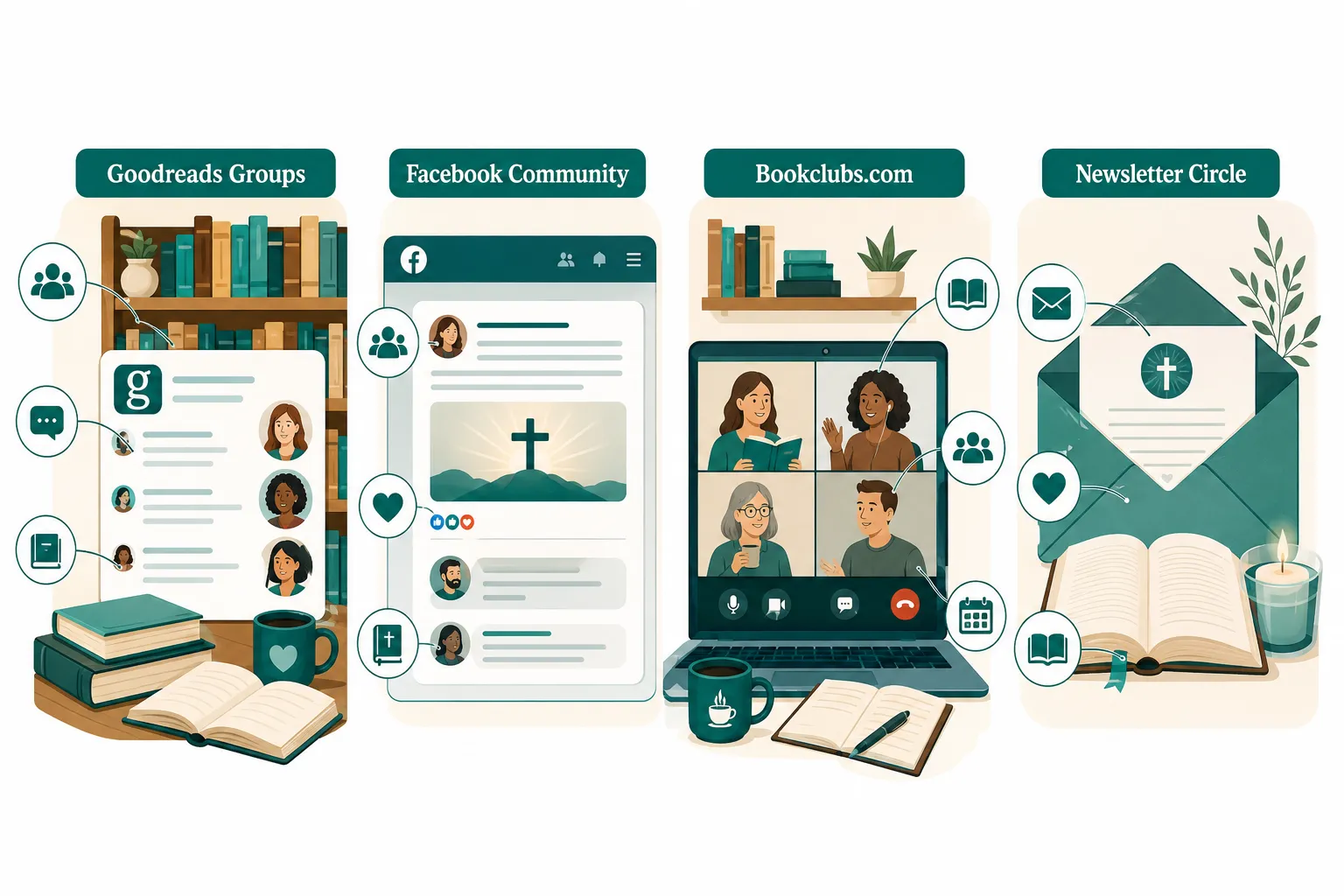
- Choose a platform. For virtual clubs, Bookclubs.com [8] and Goodreads groups [2] are free starting points. Fable works well for fantasy read-alongs (Purple Pages Book Club used it effectively for Christian fantasy in 2026). Facebook Groups work for larger, less curated audiences.
- Set a selection standard. Decide upfront: clean content only, or faith-centered content specifically? The second standard produces better discussions but a smaller pool of titles.
- Establish a meeting rhythm. Monthly is the most sustainable for working adults. Bi-weekly works for highly engaged groups of ten or fewer.
- Prepare discussion questions in advance. Questions should focus on character choice, consequence, and faith themes, not plot summary.
- Assign a host or rotating facilitator. Someone needs to keep the conversation moving and redirect if it drifts into doctrinal argument.
- Start small. Ten committed readers produce better community than fifty passive ones.
Choose this format if: You want deep engagement and genuine word-of-mouth. Book clubs generate reviews and reader loyalty at a rate that passive social media following does not.
Best Platforms for Christian Authors to Connect with Readers
The best platforms for Christian fiction authors in 2026 are the ones where readers already gather around books, and where the author can show up as a person, not a product announcement.
Platform breakdown:
| Platform | Best For | Cost | Audience Size |
|---|---|---|---|
| Goodreads Groups | Discovery, genre-specific curation [7] | Free | Large, searchable |
| Facebook Groups | Ongoing community discussion | Free | Broad, algorithm-dependent |
| Bookclubs.com | Structured virtual book clubs [8] | Free to join | Growing |
| Substack / Newsletter | Direct reader relationship | Free to start | Owned audience |
| Patreon / YouTube | Deeper engagement, Salt & Light-style clubs [5] | Revenue share | Niche, loyal |
| ACFW Fiction Finder | Author discoverability [10] | Varies | Faith-specific |
The non-negotiable: Email list first. Every other platform is rented land. An algorithm change can cut a Facebook group’s reach overnight. A newsletter list belongs to the author.
Read Write Rendezvous, which launched as a cross-genre Christian fiction gathering in August 2026 [3], demonstrates the appetite for in-person and hybrid community events, authors should watch for similar gatherings as both attendance and sponsorship opportunities.
How to Grow a Christian Fiction Reader Engagement Strategy
Reader engagement for Christian fiction grows when the author’s content does what the fiction does: walks with the reader rather than talking at them.
Practical engagement tactics:
- Back-matter invitations. The last page of a book is the highest-converting real estate an author owns. A direct invitation to a reader community, a newsletter, or a book club guide converts better than any social media post.
- Discussion guides. A free PDF discussion guide for each title gives book clubs a reason to choose your book and gives readers a reason to share it.
- ARC reader groups. Advance reader communities on Goodreads [6] build pre-launch momentum and generate early reviews.
- Series momentum. Long series (the Mercy House Mysteries runs ten books; The Mercy Line runs nine) create natural re-engagement points. Each new release gives existing readers a reason to return and new readers an entry point.
- Consistent newsletter cadence. Monthly is enough. The content should feel like a letter from a trusted friend, not a promotional announcement.
Common mistake: Trying to be present on every platform simultaneously. Pick two and do them well.
Christian Fiction Book Club Discussion Questions and Formats
Good discussion questions for Christian fiction focus on what characters chose and what those choices cost, not on whether the theology was correct.
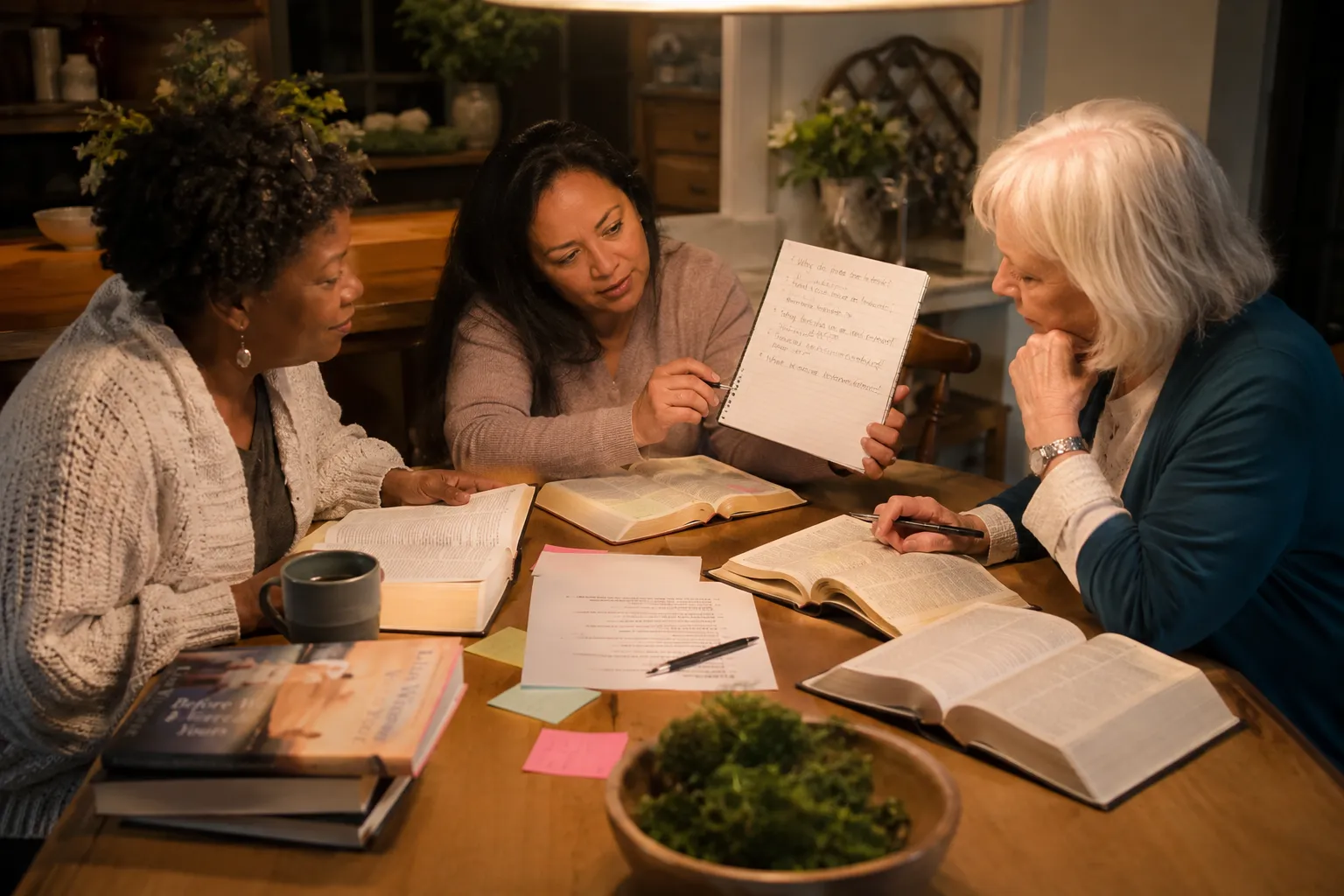
Question frameworks that work:
- “At what point did [character] have a choice, and what did they choose?”
- “Where did grace show up in this story, and did it cost anything?”
- “What did the setting (small town, frontier, secondary world) make possible that a modern setting wouldn’t?”
- “Was there a moment where faith felt like a burden rather than a comfort? How did the author handle it?”
- “What would you have done differently, and why?”
Formats to consider:
- Read-along: Members read simultaneously, with weekly check-in posts on Fable or a private Facebook group.
- Monthly pick with live discussion: One video call or in-person meeting per book.
- Theme-based series: Three months of psychological thrillers, three months of cozy mystery, etc., helps readers discover new subgenres.
- Author Q&A session: Even a short pre-recorded video response to club questions builds significant loyalty.
How to Handle Controversial Topics in Christian Fiction Communities
Controversial topics, denominational differences, political undertones in historical settings, the portrayal of doubt or spiritual abuse, arise in Christian fiction communities and can either deepen the conversation or fracture it.
The guiding principle: Keep the discussion anchored to the story. “What did the author do with this?” is a safer and more productive question than “What do you believe about this?”
Practical moderation moves:
- Establish community guidelines that name the goal: honest conversation about faith in story, not doctrinal debate.
- When a thread drifts toward argument, redirect with a story-specific question.
- Distinguish between “this book handled something I found uncomfortable” (valid discussion) and “this book is theologically wrong” (outside the community’s purpose).
- Acknowledge that Christian fiction readers hold a range of denominational backgrounds. The shared ground is the story, not the systematic theology.
The best Christian fiction, stories where faith is tested and proven through the plot, never delivered as a sermon, actually makes these conversations easier, because the author has already done the work of holding the tension honestly.
How Much Does It Cost to Build an Author Platform for Christian Fiction
Building a functional Christian fiction author platform costs very little to start and scales with audience size. Most authors can launch with under $50 in the first year.
Cost breakdown by stage:
- Launch (Year 1): Free Goodreads author profile, free Mailchimp or MailerLite newsletter (up to 500-1,000 subscribers), free Facebook Group. Total: $0,$20 for a domain email address.
- Growth (Year 2-3): Paid newsletter platform (Substack Pro or ConvertKit, roughly $9,$29/month at standard tiers), optional Bookclubs.com author features. Total: $100,$350/year.
- Established platform: Patreon for a reader subscription community, paid advertising for book launches, virtual event hosting. Costs vary widely based on scale.
The real investment is time, not money. A consistent monthly newsletter and an active Goodreads presence, maintained over 18-24 months, builds more durable community than a large ad spend with no follow-through.
Common Mistakes When Building Christian Fiction Reader Communities
The most common mistakes in building Christian fiction communities share a root: treating the community as a marketing channel rather than a genuine gathering place.
Mistakes to avoid:
- Leading with genre labels. “Christian cozy mystery readers” is a category, not a community. Lead with the shared conviction about how faith belongs in story.
- Inconsistent presence. A Facebook group that goes quiet for two months loses its rhythm. Better to post less frequently and consistently than to burst and disappear.
- Over-moderating. Heavy-handed moderation kills honest conversation. Clear, grace-forward guidelines work better than a long list of rules.
- Treating reviews as the only goal. Reviews matter, but readers who feel genuinely seen by a community become long-term advocates, which generates far more reviews over time.
- Ignoring the back-matter. The end of a book is where the most motivated readers are. Not including a community invitation there is a significant missed connection.
- Conflating “clean” with “shallow.” Readers who want faith-centered fiction are not looking for stories that avoid hard things, they’re looking for stories that handle hard things honestly. Communities that signal otherwise attract the wrong readers and frustrate the right ones.
Who Should Join a Christian Fiction Book Club
Christian fiction book clubs are a good fit for readers who want to discuss faith themes in story without the conversation becoming a theology class or a content-policing exercise.
This kind of community is a good fit for:
- Readers who want clean content but also want real stakes, characters who doubt, fail, and find grace at a cost.
- Women 35-65 who read on Kindle Unlimited and want community around their reading habit.
- Readers who cross genre lines (cozy mystery one month, frontier western the next) and want a community that follows them.
- New Christian fiction readers looking for curation help in a crowded market.
It may not be the right fit for:
- Readers seeking strictly devotional content or Bible study material.
- Readers who want graphic content, Christian fiction’s clean content standard is consistent across the genre.
- Readers who prefer solo reading without discussion.
Best Christian Fiction Communities and Forums Online in 2026
Several active communities serve Christian fiction readers well in 2026 [2][7][4]:
- Goodreads Christian Fiction groups, multiple active groups covering general Christian fiction, Christian fantasy specifically, and Christian reader circles [2][7][4].
- ACFW Fiction Finder, curates monthly Christian fiction picks and serves as a discovery engine for readers and authors [10].
- Bookclubs.com virtual clubs, Story Seekers and similar clubs run structured read-alongs [8].
- YouTube-based clubs, Salt & Light Reader’s Society and similar channels run Patreon-supported reading communities with video discussion [5][9].
- Read Write Rendezvous, a cross-genre Christian fiction gathering that launched in August 2026, bridging authors and readers across mystery, fantasy, thriller, and western [3].
- Instagram faith-fiction communities, active reader communities sharing recommendations and discussion [1].
How to Moderate a Christian Fiction Facebook Group or Discord
Effective moderation in a Christian fiction community is less about enforcement and more about tone-setting. The moderator’s job is to model the kind of conversation the community exists to have.
Practical moderation framework:
- Write community guidelines in plain language. State the purpose (honest conversation about faith in story), the content standard (clean fiction), and the one rule that matters most (discuss the story, not each other’s theology).
- Pin a welcome post that orients new members and links to current reading selections.
- Respond to every new member with a brief, warm acknowledgment in the first week.
- Address conflict privately first. A direct message before a public warning preserves dignity and usually resolves the issue.
- Post consistently. A weekly discussion prompt keeps the group alive between book discussions.
- Celebrate readers publicly. When someone shares a thoughtful review or a personal connection to a book, acknowledge it. That’s the behavior the community wants more of.
What Tools Do Christian Authors Use to Engage with Readers
Christian fiction authors in 2026 use a combination of owned and platform-based tools, with the email list as the foundation.
Core toolkit:
- Email newsletter (MailerLite, ConvertKit, or Substack), the primary owned channel.
- Goodreads author profile, essential for discoverability and reader reviews.
- Amazon Author Central, manages the author page and connects the catalog [10].
- Bookclubs.com, allows authors to connect with existing virtual clubs [8].
- Facebook Group or Page, for ongoing community discussion.
- Discussion guide PDFs, free downloads that give book clubs a reason to select a title.
- Back-matter links, in-book invitations to newsletter, community, and next-in-series.
Optional deeper tools:
- Patreon or Substack paid tiers for reader subscription communities.
- Fable for read-along facilitation, particularly for fantasy series.
- YouTube or podcast for author Q&A and community discussion content [5][9].
How to Monetize a Christian Fiction Author Platform
Monetization for a Christian fiction author platform works best when it extends what the reader already loves rather than interrupting it.
Sustainable monetization paths:
- Kindle Unlimited page reads, the primary income stream for most Christian fiction authors; community-building directly supports KU enrollment by driving reads.
- Series depth, a reader who finishes book one of a ten-book series is worth far more than a single-book sale. Community engagement drives series completion.
- Patreon reader tiers, early access to new releases, exclusive discussion guides, or behind-the-scenes content.
- Newsletter sponsorships, once a list reaches 2,000+ engaged subscribers, sponsorship from Christian publishers or related brands becomes viable.
- Virtual events and author appearances, book clubs and Christian fiction gatherings (like Read Write Rendezvous [3]) create paid appearance and speaking opportunities.
- Affiliate relationships, recommending other Christian fiction authors’ books to a trusted audience, with appropriate disclosure.
The honest constraint: Monetization follows trust, and trust follows consistency. An author who shows up for their community over 24 months will find monetization options opening naturally. An author who leads with monetization before building genuine community will find the reverse.
Conclusion: Communities That Walk With Readers
The practical work of building Christian fiction communities, reader engagement, book clubs, and author platforms, comes down to one question: are you building a place where readers feel genuinely accompanied, or a channel where they receive announcements?
The communities that last are the ones where faith shows up the same way it does in the best Christian fiction: not as a disclaimer, not as a sermon, but as something that costs the characters something real and means something true.
Actionable next steps:
- Start an email list today, even ten subscribers is a community. Use MailerLite or ConvertKit free tiers.
- Create a Goodreads author profile and join two or three existing Christian fiction groups as a participant before promoting anything.
- Write a discussion guide for your most popular title or the book your club is reading next.
- Find one existing community, Bookclubs.com, a Goodreads group, or a YouTube club, and show up consistently for 90 days before evaluating results.
- Put a community invitation in your back-matter if you haven’t already. That single change can outperform months of social media effort.
Hope in the dark is what Christian fiction offers its readers. The communities built around that fiction should offer the same thing: a place where the hard questions are welcome, grace is never cheap, and the story isn’t over yet.
FAQ
What is the best free platform to start a Christian fiction book club? Goodreads Groups and Bookclubs.com are both free and already populated with Christian fiction readers. Goodreads works better for discovery; Bookclubs.com works better for structured read-alongs with meeting scheduling.
How many members do you need to start a Christian fiction community? Ten committed members is enough to start. A small group that reads and discusses consistently builds more momentum than a large group that rarely engages.
Can a Christian fiction book club include readers from different denominations? Yes, and it works well when the discussion stays anchored to the story rather than doctrinal positions. The shared ground is how faith functions in the narrative, not which tradition the reader comes from.
How often should a Christian fiction book club meet? Monthly is the most sustainable rhythm for most working adults. Bi-weekly works for smaller, highly engaged groups. Weekly is difficult to maintain long-term.
Do Christian fiction authors need to be on every social media platform? No. Two platforms done consistently outperform five platforms done sporadically. Email list plus one community platform (Goodreads or Facebook) is a sufficient foundation.
What makes a good discussion question for Christian fiction? Questions that focus on character choice and consequence work best, “What did this character choose, and what did it cost them?”, rather than questions about plot summary or theological correctness.
How do you handle a member who turns book club discussions into theological debates? Redirect with a story-specific question and, if needed, address the pattern privately. Community guidelines that name the purpose (discussing faith in story, not debating doctrine) give moderators a neutral reference point.
Is Christian fiction only for women? No, though women 35-65 represent the largest demographic. The Mercy Line western series and The Measured Debt LitRPG series, for example, are written with masculine-lead perspectives and attract male readers specifically.
What’s the difference between clean fiction and Christian fiction? Clean fiction avoids objectionable content. Christian fiction does that and also treats faith as an active force in the story, characters who doubt, serve, fail, and find grace at a cost. Readers increasingly distinguish between the two.
How long does it take to build a meaningful Christian fiction author platform? Eighteen to twenty-four months of consistent effort, regular newsletter, active community presence, and new releases, is a realistic timeline for a platform that generates meaningful reader engagement and income.
Can I run a Christian fiction book club if I’m not an author? Absolutely. Reader-led book clubs are often the most authentic communities because the motivation is purely the love of the books, not platform-building.
What is ACFW Fiction Finder? ACFW Fiction Finder is a curated resource for Christian fiction discovery, actively maintained with monthly picks and genre-specific browsing for readers and authors [10].
References
[1] Dr4fs07jf8f – https://www.instagram.com/p/DR4fS07jf8f/ [2] Christian Fiction – https://www.goodreads.com/group/show_tag/christian-fiction [3] rendezvous.justreadtours – https://rendezvous.justreadtours.com/ [4] goodreads – https://www.goodreads.com/group/show_tag/7262084?name=christian-readers [5] Watch – https://www.youtube.com/watch?v=haa_6QHeYWc [6] Arc Readers – https://www.goodreads.com/group/show_tag/arc-readers [7] goodreads – https://www.goodreads.com/group/show_tag/1174317?name=christian-fantasy [8] Story Seekers Bookclub – https://bookclubs.com/join-a-book-club/club/story-seekers-bookclub [9] Watch – https://www.youtube.com/watch?v=MEymljNTP9Y [10] fictionfinder – https://www.fictionfinder.com/