Last updated: August 29, 2026
Quick Answer: The most effective Kindle Unlimited strategy for Christian fiction authors combines KDP Select exclusivity with a series-first publishing cadence, precise niche category placement, and faith-forward branding that signals content values without preaching them. Christian fiction, especially cozy mystery, western, fantasy, and psychological thriller, performs strongly in KU because its readers are habitual re-readers who borrow often and read deeply, generating high KENP page reads that reward frequent releases.
Key Takeaways
- KU exclusivity favors Christian fiction because faith-based genre readers are among the most loyal KU subscribers, with high borrow-and-finish rates that translate directly into page-read royalties [3]
- Series depth drives KU income, the KDP Global Fund has recently reached highs near $70M monthly, but individual author share depends entirely on page reads, not borrows alone [3][6]
- Category selection is your first discoverability lever, placing books in KU-heavy sub-categories like “Christian Cozy Mystery” or “Christian Western” captures readers already in a borrow mindset
- KENP rates in 2026 hover around $0.0045,$0.0048 per page (estimates based on reported fund distributions), meaning a 300-page novel fully read generates roughly $1.35,$1.44 per borrow [6][8]
- Faith-friendly branding works through tone, not disclaimers, covers, titles, and descriptions should make content values obvious without listing them as rules
- Release cadence of 6-12 books per year is the industry benchmark for KU-native series authors who want algorithmic visibility [9]
- Amazon Ads amplify KU discoverability but require category-aware targeting, Christian fiction ads perform best with ASIN targeting on comparable series, not broad keyword sprays
- The biggest mistake Christian authors make in KU is treating it as a passive income channel rather than an active publishing system with its own rhythm and rules
- “Clean & Wholesome” is now a recognized Amazon category signal, using it correctly in metadata is a concrete discoverability advantage, not just a content label [2]
What Is Kindle Unlimited and How Does It Work for Authors
Kindle Unlimited is Amazon’s subscription reading service. Readers pay a flat monthly fee and borrow as many enrolled books as they want. For authors, enrollment requires KDP Select exclusivity, the book cannot be sold or distributed elsewhere in digital format during the enrollment period.
Authors earn from a shared global fund based on Kindle Edition Normalized Pages (KENP) read, not per borrow. The KDP Global Fund has grown significantly, reaching near $70M in recent months [3]. That pool is divided among all enrolled authors proportionally to their page reads. The result is a system that rewards books readers actually finish, which is a quiet advantage for Christian fiction, where reader loyalty and series completion rates tend to run high.
How the math works in practice:
- A 300-page novel fully read at ~$0.0046/page = approximately $1.38 per borrow [6][8]
- A 10-book series where a reader reads all 10 = approximately $13.80 from one subscriber
- Multiply that by borrow volume, and the series-depth argument for KU becomes clear
KDP Select also grants access to promotional tools: Kindle Countdown Deals and Free Book Promotions, both of which can spike visibility and borrow rates when timed to a new release [5].
Best KDP Categories for Christian Fiction Books
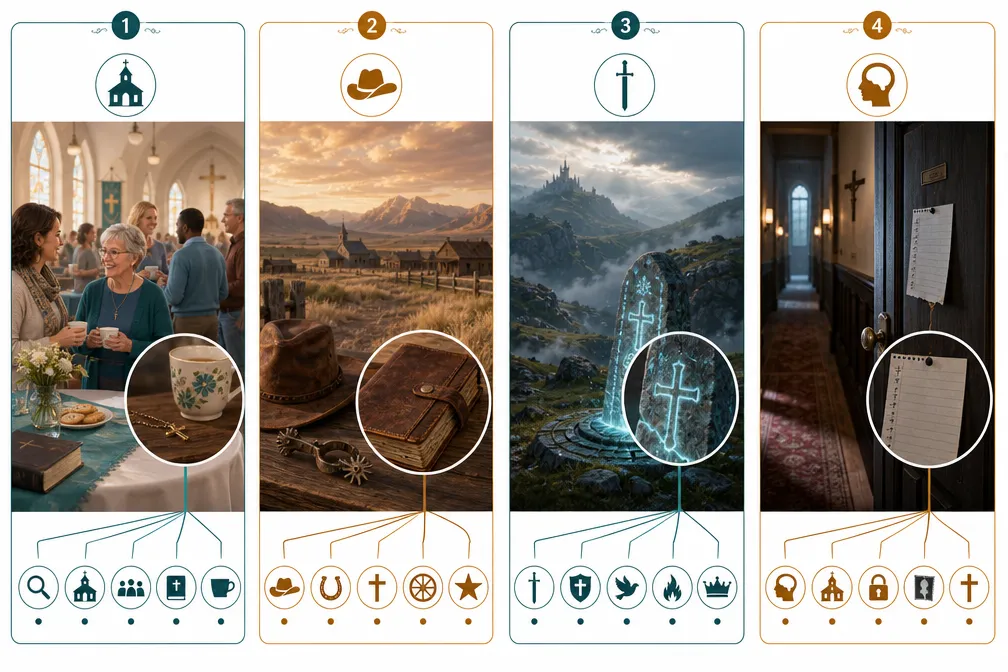
Category selection is the single most controllable discoverability variable in a Kindle Unlimited strategy for Christian fiction authors. The right sub-category places a book in front of readers already searching that shelf, and already in a borrow mindset.
Amazon allows authors to select two browse categories at upload and request additional ones via KDP support. For Christian fiction, the goal is to find KU-heavy sub-categories where the top 100 lists are dominated by enrolled titles, not wide releases.
High-performing category paths for Christian fiction:
| Genre | Primary Category | Secondary Category |
|---|---|---|
| Cozy Mystery | Mystery > Cozy > Amateur Sleuths | Christian Books & Bibles > Literature & Fiction > Mystery |
| Western | Literature & Fiction > Westerns | Christian Books & Bibles > Literature & Fiction > Action & Adventure |
| Fantasy | Science Fiction & Fantasy > Fantasy > Christian | Christian Books & Bibles > Literature & Fiction > Fantasy |
| Psychological Thriller | Mystery > Thrillers > Psychological | Christian Books & Bibles > Literature & Fiction > Suspense |
| LitRPG | Science Fiction & Fantasy > Gaming > LitRPG | Christian Books & Bibles > Literature & Fiction > Fantasy |
The “Clean & Wholesome” signal: Amazon’s updated category guidance (August 2026) increasingly recognizes “Clean & Wholesome” as a meaningful sub-genre filter. Including this in metadata, through category selection and keyword fields, connects books to a reader segment that searches specifically for content without graphic material [2].
Common mistake: Choosing the broadest possible category to chase a Hot New Releases badge. A cozy mystery placed in the top-level Mystery category competes against thousands of titles. The same book placed in Christian Cozy Mystery can reach the top 100 of that list with far fewer sales and borrows, and that ranking is what new readers actually see.
How to Optimize a Kindle Unlimited Book Description for Discoverability
A KU book description has two jobs: convert the reader who lands on the page, and signal to Amazon’s algorithm what the book is and who it’s for. Both jobs require the same thing, specific, honest language that reflects the actual reading experience.
Structure that works for Christian fiction:
- Opening hook, a concrete moment of jeopardy or contradiction from the story, not a genre label
- Stakes, what the character stands to lose, and what faith has to do with it
- Tone signal, one or two sentences that let the reader feel the emotional register (warm, tense, quiet, epic)
- Series context, book number, series name, and a one-line series premise
- Content signal, not a disclaimer, but a closing line that makes the content promise obvious through tone
What to avoid:
- Opening with “In a world where…” or any variation
- Listing themes as bullet points (“themes of faith, redemption, and community”)
- Describing the book as “clean” or “appropriate”, the description itself should make that clear
- Vague spiritual language that could mean anything (“a story of hope and healing”)
The description for A Donation to Die For, the first Mercy House Mystery, demonstrates this: it leads with a specific object (a mislabeled donation box), a specific character tension (a deacon who died before he could confess), and a setting (Juniper Gap, Tennessee) that carries its own emotional weight without needing to announce its genre.
Keyword fields: Amazon’s seven keyword slots are separate from the description but equally important. For Christian fiction, effective keyword phrases include: “clean Christian cozy mystery,” “faith-based western fiction,” “Christian psychological thriller series,” “wholesome mystery Kindle Unlimited,” and “Christian fantasy series.” These mirror how readers actually search [7][9].
Should Christian Fiction Authors Go Exclusive with Kindle Unlimited or Wide
For most Christian fiction authors, particularly those writing series in cozy mystery, western, fantasy, or thriller, KU exclusivity is the stronger starting position. Wide distribution (selling across multiple retailers) makes sense when an author has an established audience on platforms like Apple Books or Kobo, or when the book’s content doesn’t fit the KU reader profile.
Choose KU exclusivity if:
- The book is part of a series in a KU-heavy genre (cozy mystery, Christian romance, faith-based thriller)
- The author is still building discoverability and needs algorithmic support
- Release cadence is 4+ books per year, KU rewards velocity
- The target reader is a KU subscriber (Christian fiction readers skew heavily toward KU) [2][9]
Consider wide distribution if:
- The book is a standalone with strong backlist potential
- The author has an existing email list or social following on non-Amazon platforms
- The genre is underrepresented in KU (some literary Christian fiction performs better wide)
The KU vs. wide decision is not permanent. Many authors start exclusive, build a KU readership and page-read income, then selectively move older backlist titles wide while keeping new releases in KDP Select [1][7].
How Much Money Can You Make with Kindle Unlimited as a Christian Author
Income from KU varies widely, but the structure is knowable. With the KDP Global Fund near $70M monthly and KENP rates estimated at $0.0045,$0.0048 per page in 2026, a Christian fiction author’s earnings depend on three variables: page count per book, borrow volume, and read-through rate [3][6][8].
Rough income model for a 10-book Christian cozy mystery series:
- Average book length: 280 pages
- KENP rate: $0.0046/page
- Per full read: ~$1.29
- If 500 readers borrow and finish Book 1 per month: ~$645/month from Book 1 alone
- If 40% read through to Book 5: additional ~$1,290/month from the series tail
This is not a guarantee, it’s a framework. The authors who report consistent KU income in Christian fiction are almost always publishing series with 6+ books and releasing new titles every 4-8 weeks [9]. Sporadic single-title publishing rarely generates meaningful page-read volume.
The royalty ceiling context: KDP raised its royalty ceiling to $12.99 for the 70% royalty tier. For KU authors, this matters less for page reads (which are fixed by KENP rate) and more for authors who sell direct copies alongside their KU enrollment, a hybrid approach some Christian fiction authors use for box sets and series starters [4][5].
What Keywords Work Best for Christian Fiction and Faith-Based Genres

The most effective keywords for Christian fiction on KDP are reader-intent phrases, the words a subscriber types when they know what they want but haven’t found the right book yet. Generic terms like “Christian fiction” or “faith-based novel” are too broad to convert. Specific phrases tied to genre, tone, and content signal perform better [7][9].
High-performing keyword phrase patterns:
- Genre + faith qualifier: “clean Christian cozy mystery,” “Christian western fiction series,” “faith-based psychological thriller”
- Tone + content signal: “wholesome mystery Kindle Unlimited,” “clean read Christian suspense,” “cozy mystery no violence”
- Series reader language: “Christian mystery series books in order,” “faith fiction series complete,” “Christian fantasy series for adults”
- Comparable author/series adjacent: keywords that mirror the search behavior of readers who finished a similar series and are looking for what’s next
What doesn’t work:
- Single-word keywords (“mystery,” “Christian,” “thriller”), too competitive, too vague
- Keyword stuffing in the description, Amazon’s algorithm reads keyword fields separately; cramming keywords into description prose hurts readability without helping ranking
- Mismatched keywords, tagging a western as “Amish fiction” because both are “clean” sends the wrong reader to the book and damages conversion
How to Use Amazon Ads to Promote Christian Fiction on KDP
Amazon Ads work for Christian fiction when the targeting is specific enough to reach readers who are already in a borrow or buy mindset for that sub-genre. The most reliable approach for KU authors is ASIN targeting, placing ads on the product pages of comparable series.
Practical ad structure for Christian fiction:
- ASIN targeting campaigns: Target the top 10-20 books in the same KU sub-category. For a Christian cozy mystery, this means targeting the product pages of other Christian cozy series, not general mystery bestsellers.
- Keyword campaigns: Use the same high-intent phrases from the keyword strategy above. Start with exact match to control spend, then expand to phrase match once conversion data exists.
- Sponsored Brand ads: Available to authors with 3+ books. Use these to promote the series as a whole, not individual titles, this is where series depth pays off in advertising too.
Budget reality: Amazon Ads for Christian fiction don’t require large budgets to be effective. A daily budget of $5,$10 per campaign, focused on ASIN targeting within the right sub-category, can generate meaningful borrow volume for a new release. The goal is not to win a broad keyword, it’s to appear on the page of the book a reader just finished, when they’re already looking for what to read next [1].
Common mistake: Running ads on a Book 1 without a series to read into. Ads generate clicks; read-through generates income. A standalone book with no sequel captures one borrow. A 10-book series captures ten.
Common Mistakes Christian Authors Make with Kindle Unlimited
The most costly mistakes in a Kindle Unlimited strategy for Christian fiction authors are structural, not tactical. They happen before the first ad is run or the first category is chosen.
The five most common:
Publishing standalone books in a series-native platform. KU is built for series. A single novel, however well-written, has limited page-read potential compared to a 6-book series where read-through multiplies every borrow.
Treating faith content as a disclaimer rather than a design element. Phrases like “clean and appropriate for all ages” in a book description signal uncertainty, not confidence. The tone of the description itself should carry the content promise.
Choosing categories for prestige rather than discoverability. Placing a Christian western in the top-level Western category because the competition looks thinner is a mistake, the readers browsing that category may not be looking for faith-based content, and conversion suffers.
Irregular release cadence. Amazon’s algorithm favors authors who publish consistently. A six-month gap between books in a KU series allows the algorithm to deprioritize the catalog. The recommended cadence for KU-native authors is 6-12 books per year [9].
Ignoring back matter. Every KU book should end with a direct link to the next book in the series, a series page link, and a newsletter sign-up. Readers who finish a KU book are at peak engagement, back matter converts that engagement into a lasting reader relationship.
How to Build an Author Brand for Faith-Based Fiction Readers
A faith-based author brand is not a content filter, it’s a promise about how faith gets handled inside the story. The difference matters because readers who want Christian fiction are not just looking for the absence of objectionable content. They’re looking for stories where belief is load-bearing, where grace costs something, where the ordinary Tuesday can turn out to matter more than anyone expected.
The brand architecture that works:
- One clear conviction, not a genre label. “Rooted in Faith” communicates a worldview. “Christian cozy mystery author” communicates a product category. The first builds loyalty across genres; the second locks an author into one shelf.
- Tone consistency across all touchpoints. The description, the back matter, the author bio, and the social presence should all feel like they were written by the same person with the same convictions, because they were.
- Series as brand anchor. The highest-traction series functions as the discovery engine. New readers find the brand through the cozy mystery or the western, then follow the author into fantasy or thriller because the brand promise transferred. This is the C.S. Lewis model: readers who found him through Narnia followed him into the Space Trilogy because the promise (“this author handles faith with intelligence and imagination”) held.
- Walking with readers, not talking at them. The anti-preachy positioning is not a marketing stance, it’s a craft commitment. Faith shows up in character choice and consequence, not in narration or scripture-dropping. That commitment, made consistently, is what builds the kind of reader trust that sustains a KU catalog.
What Makes a Book Cover Work for Christian Fiction on Amazon
A Christian fiction cover has to do two things simultaneously: signal genre clearly enough that the right reader stops scrolling, and signal content values clearly enough that the wrong reader keeps going. Both signals are visual, not verbal.
Genre-specific cover conventions:
- Cozy mystery: Warm palette, illustrated or soft-focus photography, small-town setting elements (church steeple, quilt, pie), no blood or weapons visible
- Christian western: Muted earth tones, frontier landscape, lone figure or horse, ledger/document prop for series with records-and-justice themes
- Christian fantasy: Rich jewel tones, symbolic objects (covenant stones, maps, light sources), world-building detail without dark/occult visual cues
- Psychological thriller: Cool, shadowed palette, domestic setting with one unsettling element, no gore, tension through implication
What separates a converting cover from a generic one:
The cover for A Donation to Die For works because it places a specific, story-relevant object (a donation box) in a warm, recognizable small-town context. It doesn’t announce “Christian fiction”, it shows a world where that kind of story lives, and readers who want that world recognize it immediately.
The content signal: A cover that reads as clean and faith-forward doesn’t need a cross on it. Color palette, typography choice, and the absence of certain visual elements (graphic violence, sexualized figures) communicate content values before a reader reads a single word of the description.
How Often Should Christian Authors Release Books on Kindle Unlimited
The recommended KU release cadence for series authors is 6-12 books per year, or roughly one new title every 4-8 weeks [9]. This frequency keeps the author’s catalog active in Amazon’s recommendation algorithm, gives KU subscribers a reason to stay engaged with the series, and creates a compounding page-read effect as new releases drive borrows on earlier books.
What this looks like in practice:
- A 10-book cozy mystery series released over 12-18 months generates ongoing page reads on every book in the catalog each time a new title launches
- A western series with a linked-protagonist structure (like The Mercy Line) allows faster release cadence because each book introduces a new lead while maintaining series continuity
- Box sets of 3-book arcs, released after the individual titles, provide a second revenue event and a lower barrier to entry for new readers
For authors who can’t sustain 6-12 books per year: Two to four books per year can still work in KU, but the algorithmic support is weaker. In that case, the emphasis shifts to ads and external traffic (newsletter, social) to compensate for lower release frequency.
Is Kindle Unlimited Worth It for Niche Genres Like Christian Suspense and LitRPG
Yes, with a specific caveat. KU is most profitable for niche genres when the niche has a dedicated subscriber base that actively searches for it, and when the author can build enough catalog depth to capture read-through income. Christian suspense and Christian LitRPG both meet the first condition; the second depends on the author’s publishing pace [1][9].
Christian suspense in KU: The psychological thriller sub-genre has grown within Christian fiction, partly because readers who want real stakes and moral complexity without graphic content have few alternatives. A series like The Gathering Light, where each book features a new protagonist in a faith-testing situation, works in KU because it delivers the tension KU readers want within a content framework they trust.
Christian LitRPG in KU: This is a smaller but genuinely underserved niche. LitRPG readers are habitual KU users, and a Christian LitRPG series (The Measured Debt) occupies a category with almost no direct competition. Low competition in a KU-heavy genre is a discoverability advantage, not a warning sign.
The honest answer: KU is worth it for any Christian fiction niche where the author can commit to series depth and consistent releases. It is not worth it for one-off titles or for authors who want maximum per-unit royalties on a small catalog.
How to Get Christian Fiction Books into Amazon’s Hot New Releases
Hot New Releases is an Amazon list that tracks sales and borrow velocity in the first 30 days after a book’s release date. For KU authors, borrows count toward this ranking, which means a strong launch week, driven by a pre-existing readership, a newsletter, or targeted ads, can place a new Christian fiction title on a list that new readers actually browse.
Practical launch tactics:
- Set a pre-order 2-4 weeks out and drive newsletter subscribers to pre-order or wishlist, this concentrates borrow/purchase velocity into the launch window
- Target the most specific sub-category where the book can realistically reach the top 20 of Hot New Releases, a Christian cozy mystery has a better chance in “Christian Mystery” than in “Mystery > Cozy”
- Run a launch-week ad campaign focused on ASIN targeting of comparable series, timed to go live on release day
- Use back matter from the previous book in the series to pre-announce the new release, readers who just finished Book 9 are the most motivated audience for Book 10
What Do Christian Fiction Readers Actually Search for on Amazon
Christian fiction readers search with intent. They know what they want, they’re not browsing abstractly. The most common search patterns fall into four categories [2][7]:
1. Genre + faith qualifier: “Christian cozy mystery,” “faith-based western,” “clean Christian thriller,” “Christian fantasy series”
2. Content signal searches: “clean read no language,” “wholesome mystery,” “Christian fiction no graphic content,” “faith fiction for women”
3. Series and author loyalty: “[Author name] series,” “books like [comparable series],” “Christian mystery series complete,” “next book in [series name]”
4. Mood and setting: “small town Christian mystery,” “cozy mystery church setting,” “Christian fiction Tennessee,” “frontier faith fiction”
What this means for metadata: Every keyword slot, every category choice, and every line of the book description should be written with these search patterns in mind. A reader searching “small town Christian mystery” is looking for exactly what The Mercy House Mysteries delivers, but only finds it if the metadata uses that language.
Conclusion: Building a KU Catalog That Holds
A Kindle Unlimited strategy for Christian fiction authors is not a set of tricks applied to a finished book. It’s a publishing architecture built from the first title, series-first, category-specific, brand-consistent, and paced for the algorithm that rewards authors who show up regularly and give readers a reason to stay.
The faith element is not a marketing add-on. It’s the load-bearing conviction that makes the brand coherent across genres, that makes a reader who found the cozy mystery willing to follow the author into a frontier western or a covenant fantasy. That coherence, “Rooted in Faith,” expressed through story rather than announcement, is what separates a KU catalog that compounds from one that stalls after a single series.
Actionable next steps:
- Audit current category selections against KU-heavy sub-categories in your genre
- Review book descriptions for content-signal language that shows rather than disclaims
- Map your series release calendar against the 6-12 books/year cadence benchmark
- Set up ASIN-targeted ad campaigns on the top 10 comparable series in your sub-category
- Add a series-forward back matter template to every enrolled title
The ordinary Tuesday can turn out to matter more than anyone expected. So can the metadata field no one thought to optimize.
Frequently Asked Questions
Q: Can I enroll a Christian fiction series in KU if some books are already wide? A: No. KDP Select requires that the enrolled title not be available in digital format anywhere else. You can enroll future books while keeping existing wide titles outside KDP Select, but each title must be exclusive for its enrollment period (90-day renewable terms) [5].
Q: How long does it take to see meaningful KU income from a Christian fiction series? A: Most KU authors report that meaningful page-read income begins at 3-5 books in a series, assuming consistent releases and basic ad support. A single title rarely generates enough borrow volume to produce significant income on its own [9].
Q: Do KENP rates change? A: Yes. The per-page rate fluctuates monthly based on the total fund size and total pages read across all enrolled titles. Amazon does not publish a fixed global rate, the rate is calculated after the fact each month [6][8].
Q: Should a Christian fiction author use a pen name for KU? A: A pen name is useful when an author writes across multiple genres with different audience expectations. A worldview-based pen name (like Silas Bellhaven) can hold multiple Christian fiction genres under one identity because the brand promise transfers across genres.
Q: What’s the minimum catalog size to make KU worth the exclusivity cost? A: Three books in a series is the practical minimum, enough to generate read-through income and justify the loss of wide distribution. One or two books rarely generates enough page-read volume to offset the opportunity cost of exclusivity [1][9].
Q: Can Christian fiction authors run Kindle Countdown Deals on KU-enrolled books? A: Yes. Kindle Countdown Deals are available to KDP Select enrolled titles and can be an effective way to drive borrow velocity on a series starter or backlist title [5].
Q: How do I find out which KU sub-categories have the most borrow activity? A: Browse the Kindle Store top 100 lists in your target sub-category and count how many of the top 20 titles have the KU “Read for Free” badge. A category where 15+ of the top 20 are KU-enrolled is a KU-native category, the readers there are already in a borrow mindset [7].
Q: Does book length affect KU earnings for Christian fiction? A: Yes, directly. KENP earnings are based on pages read, so a 350-page novel earns more per full read than a 180-page novella. However, shorter books can generate higher borrow rates and faster read-through, which may offset the per-book earnings difference in a series context [6][8].
Q: Is it worth paying for professional cover design for a KU Christian fiction series? A: Yes. Cover design is the highest-ROI investment for KU discoverability because it determines click-through rate before a reader ever reads the description. A cover that misreads genre or content signal loses readers at the first impression.
Q: How does Amazon’s “Clean & Wholesome” category signal work in practice? A: Amazon has increasingly recognized “Clean & Wholesome” as a sub-genre filter in its browse and recommendation systems. Using this term in keyword fields and selecting it where available as a category tag connects books to a reader segment that specifically filters for content without graphic material [2].
References
[1] Kindle Unlimited Strategy – https://getebook.ai/blog/kindle-unlimited-strategy
[2] Clean Christian Romance Kindle Unlimited Promo Discover Your Next Wholesome Read 2 – https://sophietoovey.com/2026/03/01/clean-christian-romance-kindle-unlimited-promo-discover-your-next-wholesome-read-2/
[3] 70 3 Million Was Up For Grabs On Kindle Unlimited Last Month Are You Getting Your Share – https://kladams.blog/2026/06/23/70-3-million-was-up-for-grabs-on-kindle-unlimited-last-month-are-you-getting-your-share/
[4] Kindle Royalty Calculator – https://ebookdone.com/tools/kindle-royalty-calculator
[5] KDP Help: KDP Select – https://kdp.amazon.com/en_US/help/topic/G6BZ4M9PVJ8YSCW8
[6] Kindle Unlimited Payouts 2026 – https://inkett.com/blog/kindle-unlimited-payouts-2026
[7] Kindle Unlimited Strategy – https://www.rahatt.co/blog/kindle-unlimited-strategy
[8] Kindle Unlimited Earnings – https://profitable.app/kdp/stats/kindle-unlimited-earnings
[9] Kindle Unlimited Strategy For Authors – https://www.writebookai.com/how/kindle-unlimited-strategy-for-authors
[10] Faith Hope and Heartwarming – https://faithhopeandheartwarming.com/