Last updated: September 27, 2026
Quick Answer
Christian psychological thriller plotting can trade the unreliable narrator for an unreliable setting: a place where records contradict each other, routines shift without explanation, and community rumor clouds the facts, while the protagonist stays honest and clear-eyed. This keeps suspense high without asking readers to doubt the hero’s sanity or faith. The result is a story where the mystery is what is happening to this place, not can I trust this person telling me about it.
Key Takeaways
- An unreliable setting creates doubt through the environment, contradictory records, altered routines, shifting rumors, not through a narrator who lies or misremembers.
- The core difference is epistemological versus ontological uncertainty: the narrator’s account can be sincere while the world itself contradicts itself [1].
- A morally grounded, reliable protagonist makes an unreliable setting scarier, not weaker, because readers can’t dismiss anomalies as personal instability [7].
- Christian thrillers pair naturally with this device because faith, forgiveness, and institutional trust are already about deciding what to believe under pressure [6].
- Clues should be planted through verifiable artifacts, sign-in sheets, transcripts, calendars, texts, rather than vague sensory impressions.
- The twist lands best when it’s earned through consequence, not a last-page reveal that erases everything the reader believed.
- This technique fits retreat centers, small churches, inherited farmhouses, and close-knit congregations especially well, because communal record-keeping is already part of the setting’s logic.
- Unreliable setting is not the same as a gaslighting setting, gaslighting implies a deliberate human hand; unreliable setting can stay ambiguous about cause.
What Is an Unreliable Setting in Fiction?
An unreliable setting is a fictional environment whose facts, records, or physical details contradict themselves or shift over time, creating doubt about the world rather than the person describing it. The narrator may be entirely sincere. The place simply won’t hold still.
This differs from a narrator who misremembers or lies. In an unreliable setting, a character can say “the hallway was forty feet long yesterday” and be telling the truth about their own perception, while the hallway itself, the building’s records, or the community’s account of it no longer agree [5]. The uncertainty lives in the world, not in the witness.
For Christian psychological thriller plotting, this matters because faith-based fiction rarely wants readers doubting whether the protagonist is a reliable moral compass. An unreliable setting protects that compass while still delivering real suspense.
Unreliable Narrator vs. Unreliable Setting: What’s the Difference?
The unreliable narrator tradition, from Agatha Christie’s misdirection to modern domestic suspense, asks readers to question the account itself, is this person lying, forgetting, or too damaged to see clearly [7]. The unreliable setting asks readers to question the world the account describes.
Wayne C. Booth’s foundational idea of narrator reliability holds that a narrator is reliable when acting according to the story’s own moral and factual norms. Christian Psychological Thriller Plotting: How to Use an Unreliable Setting Instead of an Unreliable Narrator keeps that reliability intact on purpose. The protagonist stays honest, morally accountable, and accurate about personal observation, even while the environment defeats ordinary expectations.
Quick comparison:
| Element | Unreliable Narrator | Unreliable Setting |
|---|---|---|
| Source of doubt | The person telling the story | The world being described |
| Reader question | “Can I trust her account?” | “What is happening to this place?” |
| Risk to faith themes | Can undercut moral credibility | Preserves moral credibility |
| Typical clue type | Memory gaps, contradictions in tone | Records, timestamps, physical objects |
Christian Psychological Thriller Plotting: How to Use an Unreliable Setting Instead of an Unreliable Narrator
The method centers on keeping the protagonist demonstrably careful, checking facts, consulting other people, correcting personal assumptions, while the setting itself produces contradictions the protagonist cannot fully explain. That contrast is what generates suspense.
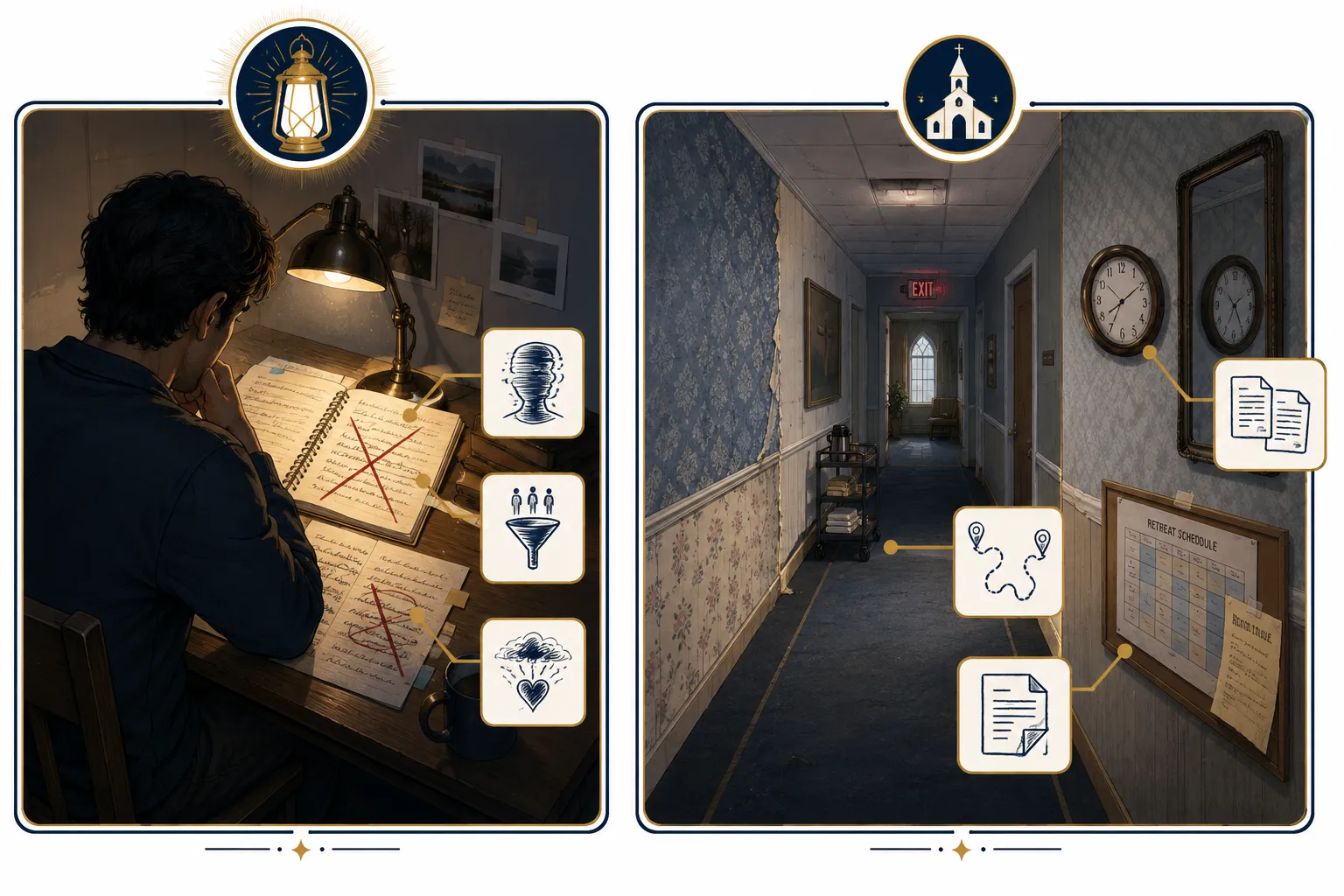
Four building blocks make this work in practice:
- Contradictory records. A sign-in log, a donation ledger, or a counseling file that says one thing on Tuesday and another on Thursday.
- Altered routines. A retreat schedule, church rotation, or family ritual that quietly changes shape and nobody admits to changing it.
- Digital traces. Deleted messages, mismatched timestamps, or a shared calendar that updates itself in ways no single person can account for.
- Community rumor. Neighbors, congregants, or staff who each remember the same event differently, not because anyone is lying, but because the record itself is unstable.
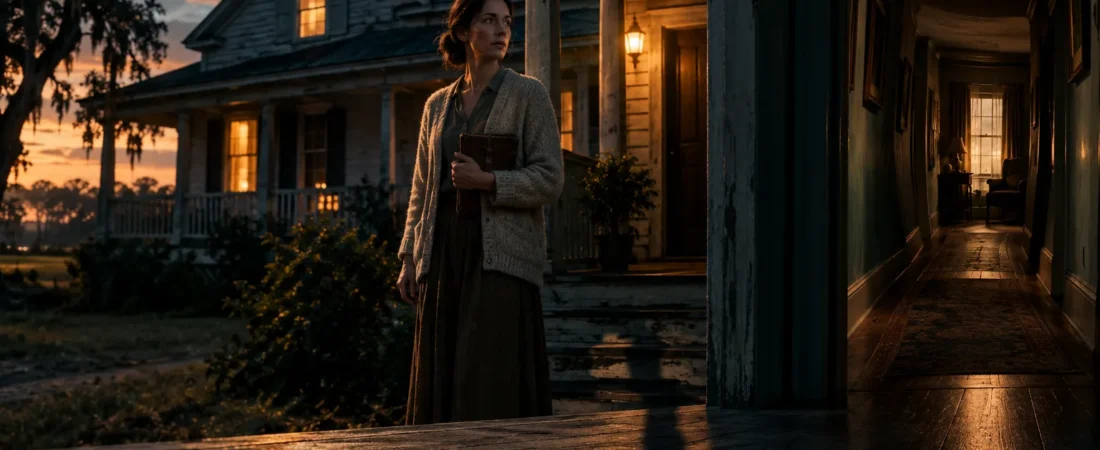
Silas Bellhaven’s Gathering Light series builds on exactly this structure: a restoration retreat that preserves every testimony “word for word,” until the preserved language starts working against the women who gave it. The mystery isn’t whether Hannah, Caris, or Taryn are telling the truth, it’s whether the system recording their truth can be trusted at all.
What Makes a Setting Feel Unreliable or Untrustworthy?
A setting feels unreliable when its own internal evidence disagrees with itself, and no single character can be blamed for the disagreement. That disagreement should feel earned, not random.
Craft guidance on this device points to a few reliable ingredients [5]:
- Small, verifiable contradictions rather than sweeping impossibilities (a door that was locked from the inside is stronger than a hallway that vanished).
- Institutional cover. Retreat centers, churches, and hospitals already keep records, which gives the contradictions a paper trail to expose.
- Emotional resonance. The instability should mirror the protagonist’s inner conflict, grief, guilt, or doubt about whom to trust, rather than existing as decoration.
Unreliable Setting vs. Gaslighting Setting: What’s the Difference?
A gaslighting setting implies a deliberate human hand manipulating records to control someone. An unreliable setting can stay genuinely ambiguous about cause, supernatural, institutional error, or human intent, for most of the book. Choose gaslighting when the reveal should indict a specific person. Choose true ambiguity when the story’s power comes from not knowing who, or what, is responsible until the final act.
Christian Psychological Thriller Examples With Unreliable Settings
The clearest working example in faith-based fiction is a retreat, church, or record-keeping institution whose documentation contradicts the people it claims to protect. This gives the story built-in stakes around mercy and justice without needing graphic content to feel dangerous.
In When Hannah Sleeps, the first book in The Gathering Light, Hannah Garrick has transcribed a hundred women’s testimonies before her own account starts appearing in someone else’s file. In When the Voice Breaks, Caris Weller’s carefully chosen language gets absorbed and repurposed by the retreat’s own system. In When the Prayer List Opens, Taryn Vickers finds her name on a list written in a hand that was supposed to be safe. Each book keeps its protagonist honest and clear-headed, the danger is that the institution’s record no longer matches what actually happened.
For readers comparing tone against secular suspense, Christian psychological thrillers vs. secular thrillers covers how faith-based suspense keeps stakes real without graphic content.
How to Foreshadow and Plant Clues in an Unreliable Setting Without Confusing Readers
Foreshadow an unreliable setting by introducing one small, checkable contradiction early, a date on a receipt, a name spelled two ways, before the protagonist (or reader) has reason to worry about it. Readers should be able to go back and verify the clue was always there.
Working rules for clarity:
- Anchor every clue to an object. A transcript, photo, or calendar entry is easier to track than a vague feeling.
- Repeat the anomaly with a variation, not an exact copy, so attentive readers feel rewarded rather than tricked.
- Let the protagonist react like a careful person would, checking, asking, documenting, rather than spiraling. This is what keeps the setting unreliable instead of the narrator.
- Limit active contradictions to two or three threads at a time. More than that and readers lose track of what’s actually in question.
How to Reveal an Unreliable Setting Twist Without Feeling Cheap
The reveal should cost the protagonist something and clarify the moral stakes, not simply explain away the mystery with a shrug. A twist feels cheap when it contradicts earlier evidence instead of recontextualizing it.
For Christian Psychological Thriller Plotting: How to Use an Unreliable Setting Instead of an Unreliable Narrator, the strongest reveals connect the setting’s instability to a specific human choice, a cover-up, a policy, a fear-driven decision, even if a smaller ambiguity remains. Tyndale’s editorial approach to faith-based fiction has noted that spiritual content works best as a lens on the story rather than a tidy explanation [2], which supports leaving some ambiguity intact while making the moral response unmistakable. Grace that arrives without any cost to the protagonist will always read as unearned.
Can You Use Both an Unreliable Narrator and Unreliable Setting Together?
Yes, but only if the two unreliabilities serve different purposes, otherwise readers can’t tell what’s actually in doubt. A workable split: the narrator is reliable about facts but unreliable about interpretation (Phelan’s distinction), while the setting is unreliable about facts entirely. That keeps the story legible instead of chaotic.
Common Mistakes Writers Make With Unreliable Settings
- Making the protagonist unstable too. This collapses the device back into an unreliable narrator by accident.
- Overloading the world with contradictions until nothing feels solid enough to build suspense on.
- Resolving everything with a single mundane explanation that retroactively makes early tension feel manufactured.
- Skipping the moral stakes. Without a choice about truth, forgiveness, or justice, the setting is just a puzzle box, not a Christian psychological thriller.

Is Unreliable Setting Better Than Unreliable Narrator for Christian Themes?
For most Christian psychological thriller plotting, an unreliable setting serves faith themes better because it protects the protagonist’s moral credibility while still testing their discernment under pressure. Readers can watch someone act in faith under fire without wondering if that faith is a symptom of instability.
Rachelle Gardner’s observation that Christian fiction grew from romance into romantic suspense, while mystery received comparatively less attention, points to open ground for this kind of crossover thriller [6]. Cynthia Ruchti’s caution that publishers may only be “dipping their toes” into Christian mystery [6] is a useful reminder not to oversell this as an established formula, it’s a genuine opportunity, not a guaranteed trend.
How Does Faith Play Into an Unreliable Setting in Christian Fiction?
Faith enters through the choices the protagonist makes while the setting stays uncertain, whether to tell the truth when it costs safety, whether to forgive without abandoning justice, whether to trust an institution or their own conscience. The physical explanation for the setting’s instability can remain partly unresolved while the spiritual and ethical response becomes completely clear. That’s earned grace: it shows up after the cost, not instead of it.
What Genres Work Best With the Unreliable Setting Technique?
This device works especially well in psychological thriller, gothic suspense, and cozy mystery settings built around institutions that already keep records, churches, retreat centers, small towns, inherited property. For readers exploring how this compares across formats, clean Christian psychological thrillers for readers who avoid horror and Christian cozy mystery tropes in small communities both show how institutional record-keeping already drives tension in faith-based fiction.
FAQ
What is an unreliable setting in one sentence? It’s a fictional environment whose facts or records contradict themselves in ways the narrator can’t fully explain, even while telling the truth about what they personally saw.
Does an unreliable setting require a supernatural explanation? No. It can resolve through human error, institutional cover-up, or deliberate manipulation, and often stays partly ambiguous by design.
Is this technique harder to write than an unreliable narrator? It requires more attention to physical detail and record consistency, since the contradictions have to live in objects and documents the reader can track.
Can a Christian thriller use both techniques at once? Yes, as long as the narrator’s unreliability is limited to interpretation, not fact, while the setting carries the factual instability.
Why do retreat centers and churches work so well for this device? They already generate paperwork, sign-in sheets, counseling notes, prayer lists, which gives contradictions a built-in paper trail.
How is this different from gaslighting in fiction? Gaslighting implies one person deliberately manipulating another’s perception. An unreliable setting can remain genuinely ambiguous about whether any single person is responsible.
Where can readers see this technique used in a Christian thriller series? The Gathering Light series builds its entire suspense engine around a retreat whose preserved testimonies stop matching what actually happened.
Conclusion
Christian psychological thriller plotting doesn’t need a broken narrator to earn its suspense. An unreliable setting, contradictory records, altered routines, digital traces, and community rumor, can hold the mystery while the protagonist stays exactly what faith-based fiction needs: honest, careful, and morally awake. That’s suspense without cheap shock, and hope in the dark that never asks readers to doubt the person carrying it.
Writers building this into a manuscript should start small: pick one institution with built-in record-keeping, plant one verifiable contradiction in the first act, and let the protagonist’s careful response do the work of building dread. For a closer look at how faith and suspense interact without sliding into sermon, see the psychology of faith in thriller narratives and faith-rooted character development for more on keeping the moral compass steady while everything around it shifts.
References
[1] Roggeveen Sofie BA Thesis Creative Writing – https://studenttheses.uu.nl/bitstream/handle/20.500.12932/37215/Roggeveen_Sofie%20BA%20Thesis%20Creative%20Writing.docx?sequence=1&isAllowed=y [2] Christian Publishers Tap Into Grittier Side Of Fiction – https://www.publishersweekly.com/pw/by-topic/industry-news/religion/article/86032-christian-publishers-tap-into-grittier-side-of-fiction.html [5] Writing Unreliable Setting Guide – https://www.iwrity.com/writing-unreliable-setting-guide [6] Mysteries On The Rise In Christian Fiction – https://www.publishersweekly.com/pw/by-topic/industry-news/religion/article/100974-mysteries-on-the-rise-in-christian-fiction.html [7] These Might Just Be The Best Thrillers With Unreliable Narrators Or Are They – https://www.panmacmillan.com/blogs/crime-thriller/these-might-just-be-the-best-thrillers-with-unreliable-narrators-or-are-they