
Last updated: October 25, 2026
Quick Answer
Roughly one-third of the nearly 360 crime hardbacks on the UK autumn 2026 list sit in the Freida McFadden, Lisa Jewell psychological-thriller lane, up from about a quarter the year before [1]. What 2026’s psychological thriller boom means for Christian clean-read authors is simple and uncomfortable: the hunger is for paranoia, unreliable narrators, and domestic betrayal, not gore. Those are exactly the pressures faith-rooted fiction has always handled best. The gap is positioning, not craft.
Key Takeaways
- Psychological fiction grew 15% year over year in Canada’s second quarter of 2026, against 9% the prior year [2].
- The boom rewards interiority, suspicion, memory, broken trust, which clean writing can deliver at full strength.
- Christian publishers are actively widening into clean mystery and suspense, including Love Inspired Trade and Bethany House [3].
- Baker’s Haven imprint proves there’s shelf space for clean fiction without overt religious content [3].
- Indie publishing remains the fastest proving ground; Heather Day Gilbert self-published ten mystery titles before the traditional door opened [3].
- Domestic thrillers currently outperform paranormal in the clean market.
- The biggest author mistake is resolving the faith question before the plot has cost anybody anything.
- Lead with the story promise. Let faith be load-bearing, not the hook.
How Do You Write Tension in a Psychological Thriller Without Graphic Content?
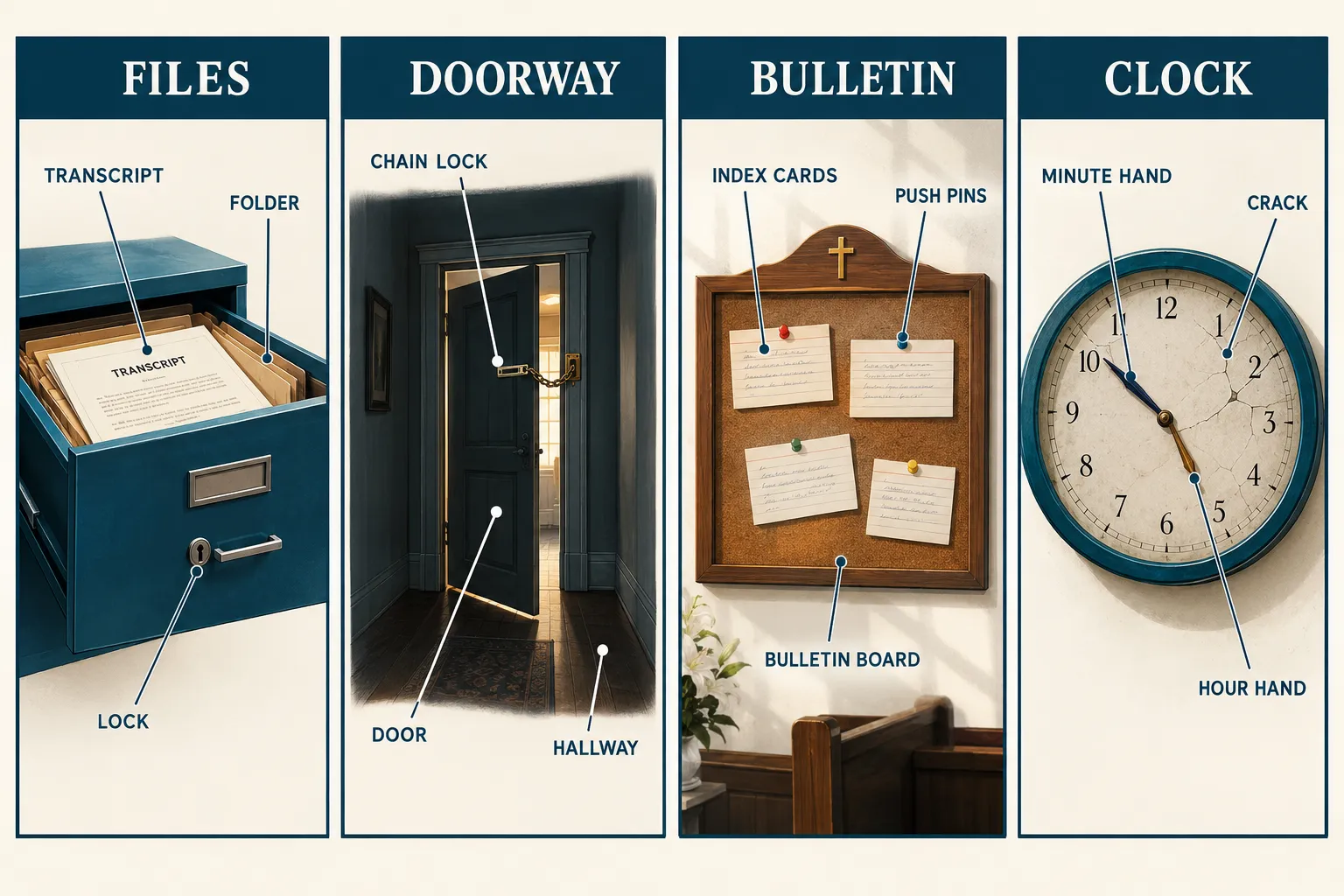
You build tension from uncertainty about people, not from what happens to bodies. A reader who doesn’t know whether the narrator’s husband moved the file cabinet is more frightened than a reader watching a described injury.
Practical levers that cost nothing in content:
- Contradicted testimony. Two people describe the same Tuesday differently. Only one can be right.
- Access. Who has a key, a password, a copy of your counseling notes.
- Delay. The phone call that comes back forty pages later.
- Physical specificity without violence. A chair moved six inches. A hymnal margin with handwriting that isn’t yours.
Decision rule: if cutting a graphic beat wouldn’t change what the reader fears, the beat was decoration. Cut it. For a deeper breakdown, see non-violent suspense techniques for raising stakes without graphic content.
Common mistake: writing a threatening antagonist who never actually threatens anything the protagonist loves. Specific stakes beat menacing atmosphere every time.
Are Christian Readers Actually Buying Thrillers Right Now?
Yes, and publishers have the receipts. Publishers Weekly reported in August 2026 that mysteries are “on the rise” in Christian fiction, with Love Inspired Trade editor Shana Asaro citing growing demand for clean, faith-centered mysteries in the Agatha Christie tradition [3].
Supporting signals:
- Love Inspired is treating mystery as ongoing strategy, not an experiment, with Dana Mentink’s Murders in the Marquee (September 2026) and Heather Day Gilbert’s All the Suspects on Campus (January 2027) [3].
- Bethany House published Naomi Stephens’s Don’t Upstage the Body in June 2026 [3].
- Kindle Unlimited readers are already consuming clean suspense in volume alongside romance and cozy mystery, see the 2026 clean Christian KU book haul roundup.
Edge case: demand is real, but it’s unevenly distributed. Christian romance readers won’t automatically cross over. The thriller audience has to be built, not inherited.
What’s the Difference Between Suspense and Psychological Thriller for Christian Fiction?
Suspense asks will the danger reach her? Psychological thriller asks is she reading the danger correctly at all? The second one lives inside the protagonist’s head, which is why it’s a better fit for faith-rooted work.
| Christian Suspense | Christian Psychological Thriller | |
|---|---|---|
| Main threat | External: pursuer, conspiracy, disaster | Internal: memory, trust, perception |
| Reader question | What happens next? | Who’s telling the truth? |
| Faith pressure | Courage, protection, providence | Conscience, confession, discernment |
| Typical pace | Fast, event-driven | Tightening, revelation-driven |
| Romance | Common and welcome | Optional, often absent |
Both work. Suspense tends to sell faster; psychological thriller tends to hold readers longer because the moral reckoning sticks. If you want the split explored through character, read about dual-timeline Christian thrillers and two versions of the truth.
How Much Darker Can a Clean-Read Thriller Actually Get?
Very dark in subject, restrained in depiction. Clean-read limits govern what’s rendered on the page, not what the story is allowed to be about. Spiritual abuse, coercive control, child endangerment, suicide, institutional cover-up, all available, handled off-page or at a remove.
The working boundary:
- Allowed: aftermath, implication, testimony about what happened, the sound through a wall.
- Not allowed: the act in close camera, profanity, explicit content, lingering injury description.
Quick example: a character reading a transcript of her own interview and not recognizing a single answer she supposedly gave is darker than most on-page violence, and contains nothing a reader would need warned about.
Comfort earned through honesty about hard things, not by avoiding them.
Can You Write a Page-Turner That Doesn’t Need Content Warnings?
Yes, and the structural trick is placing the reader’s dread in anticipation rather than aftermath. Chapter hooks built on withheld information work identically whether or not anything graphic follows.
A workable chapter-end checklist:
- End on a question the reader can’t answer yet.
- Make the question about a person, not an event.
- Give the next chapter a different point of pressure.
- Pay off every third hook, or trust erodes.
- Keep the ending costly. Earned grace, not a clean exit.
What Are Christian Readers Expecting From Thrillers These Days?
They expect real stakes, a protagonist whose faith gets tested rather than recited, and an ending where mercy and justice both show up. What they will not forgive is a sermon pasted onto a plot.
Reader expectations in practice:
- Doubt is permitted. A character who prays and hears nothing is credible.
- Consequences land. Redemption that costs something, not an eleventh-hour conversion.
- No cheap grace. The person who did harm answers for it.
- Community matters. Churches, small towns, and families as pressure systems, not scenery.
Readers browsing by this standard often use shelf tools, see finding clean Christian fiction lists on Goodreads.
Which Publishers Are Taking On Christian Psychological Thrillers in 2026, and Is Indie Viable?
Love Inspired Trade, Bethany House, Harper Muse, and Baker’s clean imprint Haven are the names to watch, while indie remains the fastest route to proving demand [3].
What’s actually open:
- Love Inspired Trade, clean, faith-centered mystery, active acquisition [3].
- Bethany House, expanding mystery list [3].
- Haven (Baker), clean and wholesome fiction with no sex, profanity, or graphic violence; overt religious content optional. Six titles planned for 2026 and six for 2027 [3].
- Indie/KU, no gatekeeper, faster release cadence, series-building control.
Indie is more than viable. Gilbert self-published the ten-book Barks & Beans Café series through Woodhaven Press after traditional houses found Christie-style mysteries hard to place, then the traditional door opened [3]. Build the series, show the read-through, negotiate later.
How Do I Market a Clean Thriller to Both Christian and Mainstream Audiences?
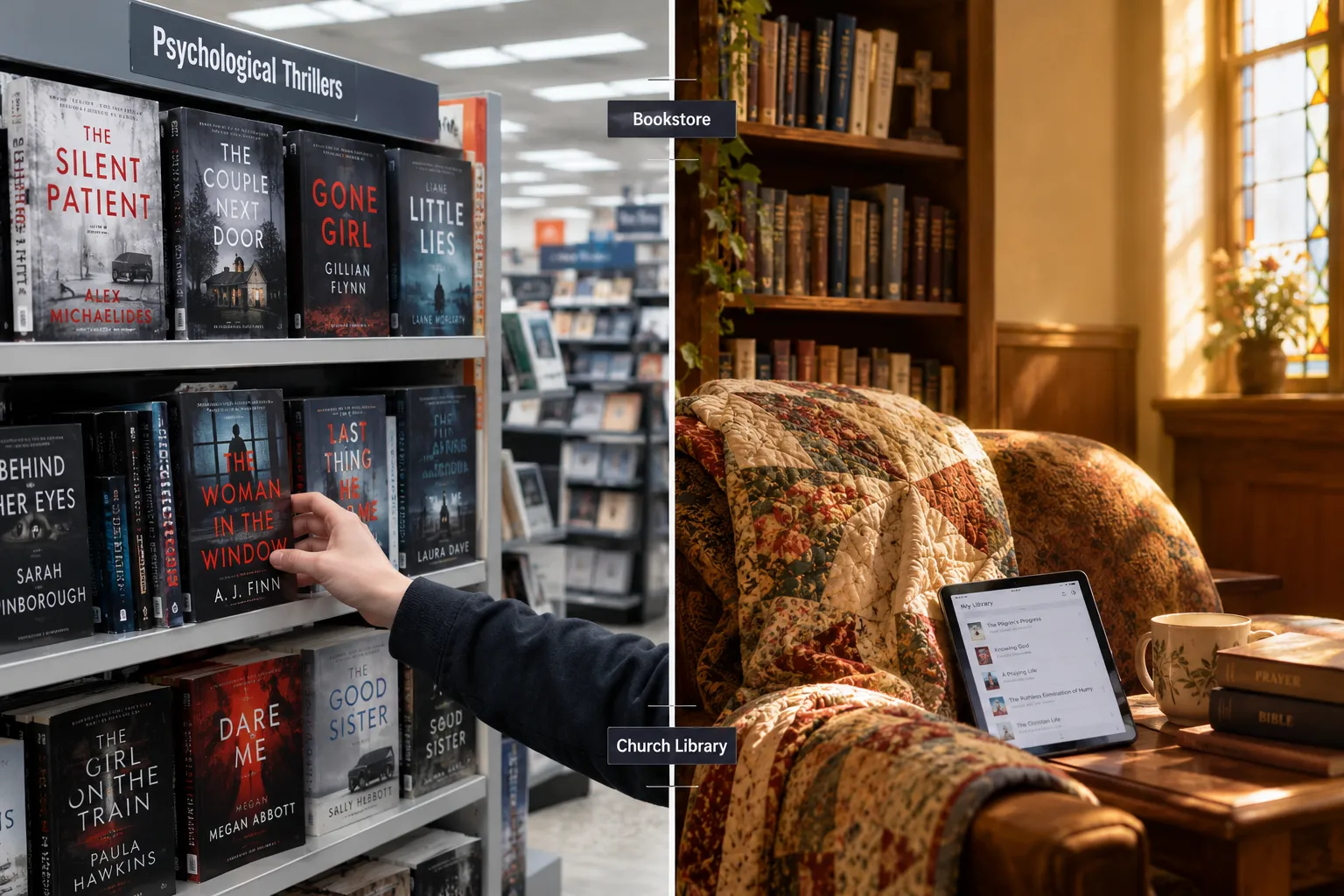
Lead with the story promise, let faith be the discovered layer. “A missing-person psychological suspense” travels further than a genre label stapled to the word Christian.
Dual-audience positioning:
- Blurb: hook, stakes, moral question. Faith shown through what the protagonist refuses to do.
- Categories: list in both psychological thriller and religious fiction where the platform allows.
- Cover: general-market thriller design language. No stained glass unless the plot earns it.
- Keywords: “clean,” “no profanity,” “small town,” “unreliable narrator.”
Mistake to avoid: a disclaimer line promising the book is clean. The prose should make that obvious by the end of page one.
Should I Add Romance, and Which Subgenres Work Best?
Romance is optional and often a drag on a psychological thriller’s tension, because a trustworthy love interest tells the reader who’s safe. Keep it only if the relationship is itself under suspicion.
Subgenres that run cleanest and sell best right now:
- Domestic thriller, strongest current fit. Paranoia and disrupted household normalcy is the dominant 2026 mode [4].
- Institutional/record thriller, counseling centers, churches, archives. Who controls the record of someone’s truth.
- Amnesia and hidden-identity, see Christian thrillers built on memory loss and moral reckoning.
- Paranormal, weaker in the Christian market; theological friction slows adoption. Domestic wins on volume.
If you do want romance, the conventions differ enough that it’s a separate craft, start with balancing tension and faith in Christian suspense romance.
What Mistakes Do Christian Authors Make Writing Thrillers?
The top five, in order of how often they sink a manuscript:
- Resolving faith before the plot costs anything. Grace shows up after price, not instead of it.
- Scripture as narration. Quote it when a character would say it, never as authorial commentary.
- A villain with no inner logic. Evil that doesn’t believe itself justified isn’t frightening.
- Sanding off the protagonist’s sin. A flawless lead has nothing to reckon with.
- Pacing like literary fiction, marketing like a thriller. Reader expectations break and reviews follow.
On keeping the message implicit, the structural work is covered in Christian thriller plot structures using trauma, memory, and grace.
FAQ
Is the psychological thriller boom measurable or anecdotal? Measurable. Psychological fiction sales grew 15% year over year in Canada’s Q2 2026, versus 9% in Q2 2025, with June alone up 64% [2].
Does clean content limit how frightening a book can be? No. Fear comes from uncertainty and stakes, not depiction.
Do I need an overt conversion scene? No, and readers increasingly distrust them. Show faith through choice and consequence.
Can a Christian thriller sell to general-market readers? Yes, if the story promise leads. Christian publishers now distinguish worldview from overt religious content [3].
Is Kindle Unlimited a good home for clean thrillers? Yes. KU readers binge series, which rewards consistent monthly or bi-monthly releases.
How long should a clean psychological thriller be? Most current market titles run 70,000-90,000 words. Shorter reads fine in KU.
Should each book have a new protagonist? It’s one viable model, fresh household, same spine question, and it avoids ensemble fatigue across a long series.
Are content warnings needed at all? Rarely, if the depiction stays restrained. Subject matter alone doesn’t require them.
Conclusion
The 2026 market is asking for exactly what faith-rooted suspense already does: suspicion, conscience, and the question of who gets to own somebody’s story. What 2026’s psychological thriller boom means for Christian clean-read authors is an opening, not a guarantee.
Next steps:
- Pick one domestic or institutional premise where a record is contested.
- Draft three chapter-end hooks before outlining anything else.
- Write the blurb with no genre label and no disclaimer.
- Study three current Haven and Love Inflight Trade, rather, Love Inspired Trade, mystery titles for positioning.
- Plan a three-book arc. Read-through is the asset.
Write the hard thing honestly. The hope lands harder when it’s been paid for.
References
- Autumn 2026 Deep Dive Trends Predictions and the Lay of the Land. thebookseller.com.
- Obsessed Our Growing Interest in Psychological Fiction. booknetcanada.ca.
- Mysteries on the Rise in Christian Fiction. publishersweekly.com.
- Capturing a Shifting Zeitgeist of Paranoia Betrayal and Disrupted Domestic Normalcy. authormedia.com.