

Last updated: August 13, 2026
Quick Answer: Christian psychological thriller plot structures work by placing trauma and memory at the center of the narrative engine, not as shock material, but as the hidden record a character must face before grace becomes possible. The tension comes from what the protagonist cannot yet remember, cannot yet say, or cannot yet believe about themselves. Faith enters not as a tidy answer but as the thing that costs the most to hold onto when the truth finally surfaces.
Key Takeaways
- Psychological tension in clean Christian fiction comes from unreliable narration, fragmented memory, and delayed disclosure, not from graphic violence or explicit scenes
- The crime/suspense structure maps naturally onto trauma: the “crime” is what happened, the “investigation” is the protagonist’s slow recovery of what they buried
- Grace in a thriller must be earned through cost, not delivered as a resolution speech, it lands hardest when a character chooses mercy after paying the full price of the truth
- Fragmentation, repetition, and withheld backstory are the three structural tools that create dread without gore
- Faith under fire is more compelling than faith on display, characters who doubt, suppress, and slowly return to belief carry more weight than characters who quote scripture at plot turns
- The difference between Christian psychological thriller and Christian horror is where the darkness points: toward human accountability and redemption, not toward despair or the demonic as spectacle
- Common mistakes include resolving tension too early, over-explaining trauma, and letting a character’s faith function as a shield rather than a stake
- Readers of clean Christian fiction want real stakes, the psychological thriller is one of the best containers for that because the danger is internal, not graphic
- Silas Bellhaven’s The Gathering Light series (When Hannah Sleeps, When the Voice Breaks, When the Prayer List Opens) demonstrates how institutional control of testimony can drive thriller tension without a single scene of physical violence [2]
What Makes a Psychological Thriller Work Without Graphic Violence or Gore
A psychological thriller generates tension through what the reader doesn’t know yet, and through the protagonist’s growing awareness that what they thought was true may not be. That mechanism doesn’t require a single drop of blood. The dread lives in perception gaps, in the slow realization that someone close to the protagonist is not who they claimed to be, in the moment a character finds their own words in someone else’s file.
Clean Christian fiction readers understand this instinctively. They’re not asking for stories with no stakes. They want stories where the stakes are real and the danger is credible, they just don’t want the camera to linger on gore. The psychological thriller is built for exactly that audience, because its primary weapon is cognitive dissonance, not visceral shock.
What makes it work structurally:
- Unreliable narration, the protagonist believes something the reader slowly learns is wrong
- Perception gaps, the character and the reader have different information at different moments
- Controlled revelation, the author withholds key facts not to trick the reader but to mirror the protagonist’s own suppressed knowledge
- Escalating cost, each new piece of truth makes the protagonist’s situation more precarious, not less
The suspense in a clean thriller isn’t “will someone get hurt?” It’s “will this person be able to face what they’ve been hiding from themselves?” That question can carry an entire novel. [2][5]
How Christian Authors Handle Trauma Themes Respectfully in Fiction
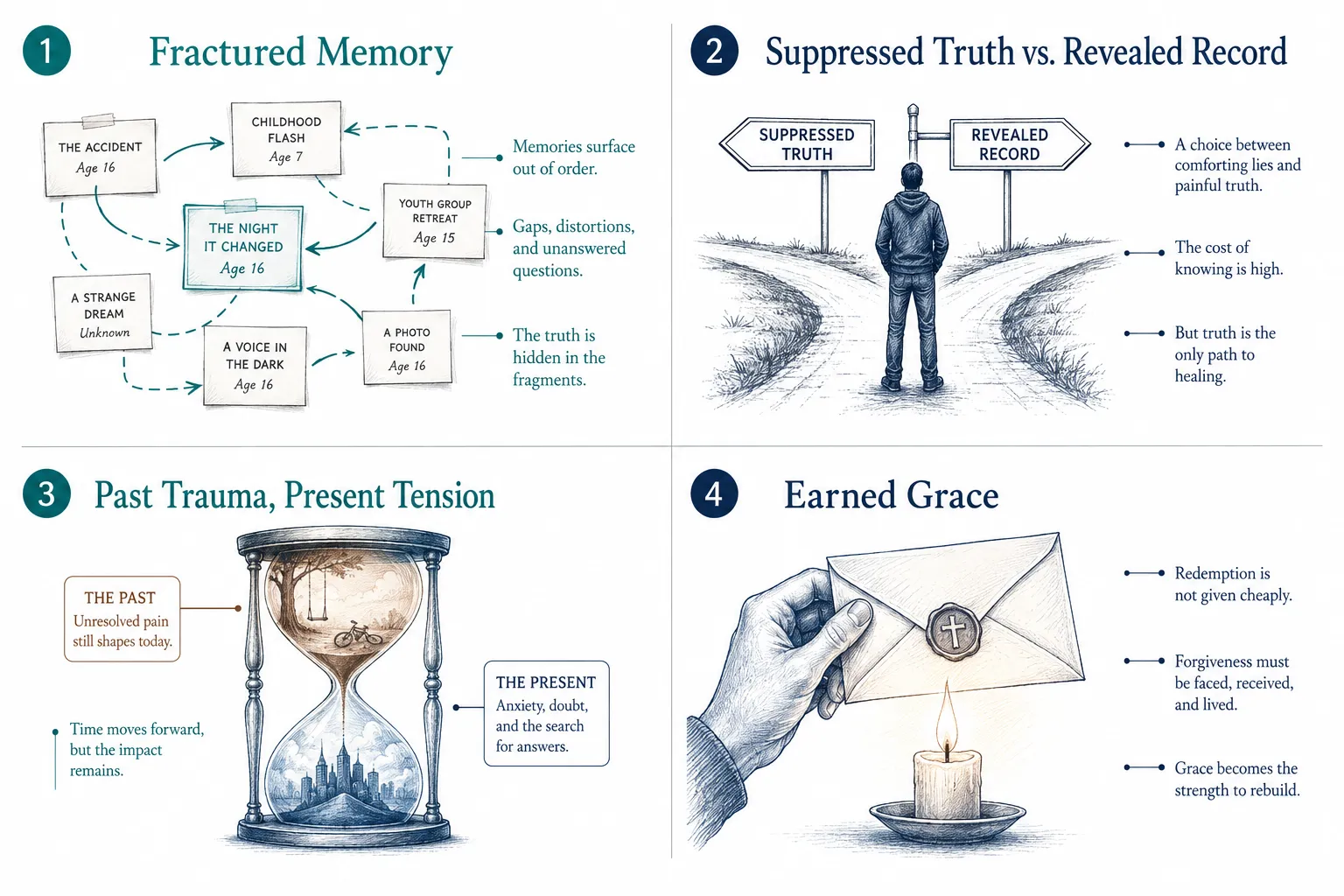
Trauma in Christian fiction works best when it’s treated as a wound with a specific shape, not as a general atmosphere of suffering. The author doesn’t need to describe the traumatic event in graphic detail, in fact, withholding the full account often makes the trauma feel more real, because that’s how trauma actually functions in a person’s memory.
The craft principle here comes from trauma-fiction scholarship: trauma disrupts linear time. A character who experienced something terrible doesn’t think about it chronologically. They circle it, avoid it, encounter it sideways in a smell or a phrase or a room that feels wrong. That fragmented, non-linear experience is both psychologically accurate and structurally useful for suspense, because the reader is piecing together the same puzzle the protagonist is.
Practical techniques for handling trauma respectfully:
- Show the aftermath, not the event. A character who flinches at a certain tone of voice tells the reader more than a flashback scene ever could.
- Use sensory displacement. Trauma surfaces through the body, a tightening in the chest, a sudden inability to speak, before it surfaces as memory.
- Let the character be wrong about what happened. Suppressed memory is often distorted. That distortion is the mystery.
- Don’t rush the healing. Grace that arrives before the character has paid the cost of honesty feels cheap. The reader knows it, even if they can’t name why.
A February 2026 Christian fiction roundup specifically labeled Relative Silence as “Mystery, trauma, and God’s healing”, which signals that readers are actively seeking this combination, and that the market is responding to it with named positioning. [8]
What’s the Difference Between Psychological Thriller and Horror in Christian Writing
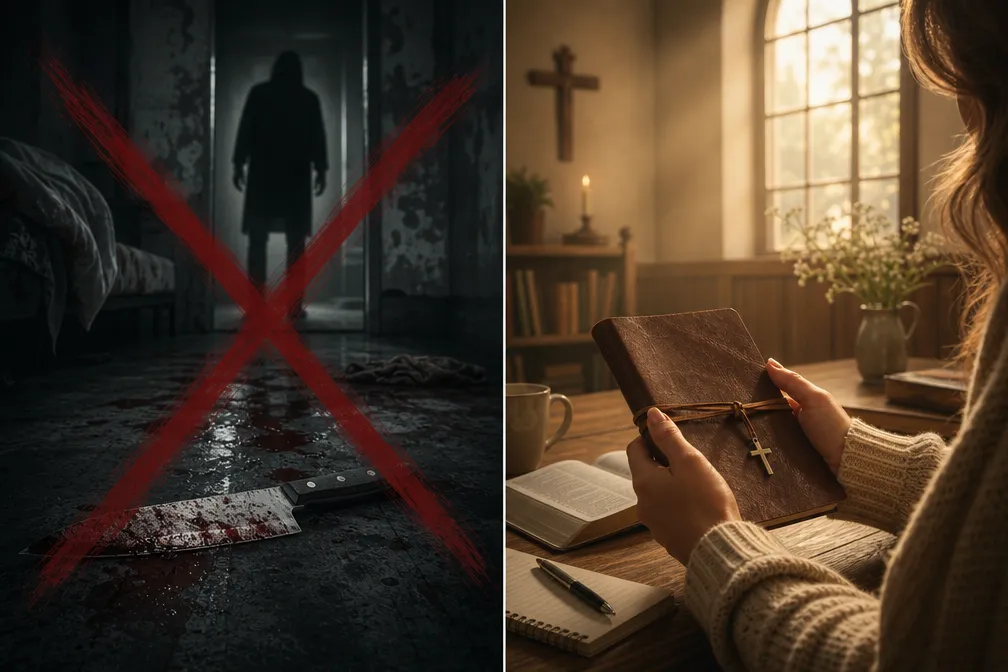
The line between psychological thriller and horror in Christian fiction is where the darkness points. Horror uses darkness to create despair, helplessness, or the sense that evil is sovereign. A Christian psychological thriller uses darkness to create accountability, the darkness exists to be faced, not to win.
In practical plot terms:
- Horror asks: “Can this person survive what’s out there?”
- Psychological thriller asks: “Can this person survive what’s in here?”
Christian horror, where it exists, tends to treat the supernatural as genuinely threatening and leaves the reader with a sense of cosmic danger. Christian psychological thriller keeps the threat human and internal, a manipulative institution, a suppressed memory, a record that’s been falsified, a relationship built on a lie.
The clean-read audience isn’t avoiding horror because they want easy stories. They’re choosing psychological thriller because the enemy in those stories is something a person can actually reckon with, and reckoning is what faith is for. [2][5]
How Memory Manipulation Drives Plot Tension in a Clean Thriller
Memory manipulation is one of the most powerful tools in Christian psychological thriller plot structures because it allows the author to create genuine suspense without any external threat. The protagonist becomes both the investigator and the crime scene.
Trauma-fiction research supports this directly: the structure of trauma maps onto the structure of crime fiction. The traumatic event is the “crime.” The protagonist’s fragmented, suppressed, or distorted memory of it is the “investigation.” The reader follows the character toward a truth that was always there, just buried. [24]
Three structural tools that make this work:
- Fragmentation, The narrative skips, loops, and interrupts itself. Chapters that seem to be about the present suddenly reveal they’re about the past. The reader feels the disorientation the character feels.
- Repetition, A phrase, an image, or a physical sensation recurs across the novel. Each repetition adds weight. By the third time a character can’t finish a sentence about a specific night, the reader is leaning in.
- Delayed disclosure, The author knows the full truth from page one. The protagonist doesn’t. The gap between those two positions is where the tension lives.
In When Hannah Sleeps (The Gathering Light, Book 1), Hannah Garrick has transcribed a hundred women’s testimonies, until her own words start appearing in someone else’s file. The threat isn’t physical. It’s the slow erosion of her ability to trust her own record of events. That’s memory manipulation as plot engine, and it requires no graphic content at all.
Best Examples of Christian Psychological Thrillers That Work Without Graphic Content
The Christian psychological thriller market is active and growing in 2026, with readers and publishers both treating it as a distinct subcategory rather than a subgenre of general suspense. [1][5]
Examples worth studying:
- The Gathering Light series by Silas Bellhaven (When Hannah Sleeps, When the Voice Breaks, When the Prayer List Opens), Each book follows a new protagonist inside the same retreat system, asking who controls the record of someone’s truth. The threat is institutional and psychological, never physical. [2]
- Sight by Grace Lynx Jenkins (June 2026 debut), Described as “a gripping murder mystery and psychological thriller” that explores depression, personal healing, and spiritual redemption. Positions trauma and faith as inseparable from the thriller structure. [6]
- The Girl Upstairs by Jessica R. Patch, Positioned as “Psychological Suspense” in a March 2026 release roundup, signaling that Christian publishers are actively developing this subcategory. [11]
- Relative Silence, Explicitly labeled “Mystery, trauma, and God’s healing” in a 2026 Christian fiction roundup, confirming reader appetite for this exact combination. [8]
What these titles share: the danger is relational and psychological, faith is tested rather than performed, and the resolution requires the protagonist to face something true about themselves before grace becomes available.
How to Write About Grace and Redemption in a Thriller Without Feeling Preachy
Grace in a thriller feels preachy when it arrives before the character has earned it, when a moment of prayer resolves a plot problem, or when another character delivers a theological explanation at the exact moment the protagonist needs one. Readers feel the shortcut even when they can’t name it.
Grace that lands in a thriller has to cost something. The character has to have tried every other option first. They have to have been wrong, and know they were wrong, and still choose the harder thing. That’s not a sermon. That’s a story.
Practical rules for faith integration that doesn’t preach:
- Let faith show up as a choice under pressure, not a declaration in calm water
- Use symbols and objects (a prayer list, a hymnal margin, a family Bible) to carry theological weight without narration doing the explaining
- Let characters doubt out loud, a character who wrestles with God is more compelling than one who quotes him
- Never resolve a faith question with a clean conversion scene; let the character arrive somewhere true but unfinished
- A craft-oriented Christian writing resource from 2026 puts it plainly: build internal conflict, use metaphor, and let faith emerge naturally through crisis and turning points, not through characters explaining their beliefs to each other [15]
The Silas Bellhaven brand principle applies here directly: walking with the reader, not talking at them. Faith that functions as a load-bearing wall in the plot is invisible until it’s the only thing still standing.
What Plot Structures Keep Readers Engaged in Psychological Thrillers
Christian psychological thriller plot structures that hold readers across a full novel tend to follow one of three core shapes, or combine them.
| Structure | Core Mechanism | Faith Integration Point |
|---|---|---|
| Buried Record | Protagonist holds a truth they can’t yet face; the plot forces them toward it | Confession as the turn, not to a priest, but to themselves or one trusted witness |
| False Record | Someone else controls the narrative of the protagonist’s life; the plot is the fight to reclaim it | The question of who gets to define a person, and whether God’s record differs from the institution’s |
| Fractured Witness | The protagonist witnessed something they can’t fully remember; the plot is the recovery of that memory | Truth-telling as an act of faith, speaking what you know even before you know all of it |
All three structures share a spine question that maps cleanly onto Christian themes: what will you do with the truth once you’re holding it? That question is both a thriller engine and a theological one, which is why the genre fits the worldview so well.
How Trauma and Faith Interact in Character Development for Thrillers
Trauma and faith create productive tension in a character because they pull in opposite directions, and then, slowly, toward the same place. Trauma says: the world is not safe, and I cannot trust what I thought was true. Faith says: there is something worth trusting, even now. A character holding both of those things at once is a character in genuine conflict.
That conflict is the engine of character development in a Christian psychological thriller. The protagonist doesn’t move from trauma to faith in a straight line. They move sideways, backward, through denial and anger and the specific kind of spiritual numbness that comes from having prayed and not heard an answer.
What this looks like in plot terms:
- Early chapters: faith is habitual, the character goes through the motions because they always have
- Mid-novel: faith becomes contested, the trauma has raised questions the character’s old beliefs can’t answer
- Late novel: faith becomes chosen, the character returns to it not because it’s comfortable but because it’s true, and they’ve paid enough to know the difference
That arc is the opposite of preaching. It’s the opposite of cheap grace. It’s faith under fire, and it’s what readers mean when they say they want Christian fiction that feels honest.
Common Mistakes Christian Authors Make When Writing Psychological Tension
The most common mistake is resolving the tension too early, letting a prayer, a scripture, or a wise mentor character defuse the dread before the protagonist has truly faced what the story is asking them to face. The reader feels the release of pressure and loses trust in the stakes.
Other mistakes worth naming:
- Over-explaining the trauma. A flashback that describes the traumatic event in full detail often reduces rather than increases emotional impact. What the character can’t say is more powerful than what they can.
- Making faith a shield. If the protagonist’s belief protects them from the full weight of the situation, the faith isn’t being tested, it’s being used as a plot device.
- Confusing mystery with confusion. Fragmented structure should disorient the reader in ways that feel intentional. If the reader is simply lost, the structure has failed.
- Redemption without cost. Grace that arrives without the character having genuinely reckoned with what they did, or what was done to them, reads as formula, not mercy.
- Secondary characters as sermon delivery systems. The pastor, the mentor, the wise friend who always says the right thing at the right moment is one of the most common ways faith becomes preachy in Christian fiction.
The clean-read audience is not a forgiving audience for cheap resolution. They’ve read enough Christian fiction to recognize the shortcuts. [15]
How Much Backstory Does a Psychological Thriller Need to Land Emotionally
A psychological thriller needs exactly as much backstory as the protagonist can bear to reveal, and not one scene more. The backstory isn’t delivered; it’s extracted. The plot forces it out of the character in pieces, and each piece arrives at the moment of maximum pressure.
This is where the “delayed disclosure” structure earns its keep. The reader doesn’t need to know what happened on the night in question at the start of the novel. They need to feel the weight of something unspoken. The backstory lands hardest when the reader has been waiting for it, when the character has been circling it for two hundred pages and finally has nowhere left to go.
Practical guideline: Introduce the wound in chapter one (a reaction, an avoidance, a silence that shouldn’t be there). Withhold the cause until the protagonist has no choice but to face it. Let the revelation reframe everything the reader thought they understood about the character’s earlier choices.
That structure is both good craft and good theology. The truth that costs something to tell is the truth that changes something when it’s finally spoken.
Can You Write a Page-Turner Thriller That’s Also Spiritually Meaningful
Yes, and the two goals reinforce each other rather than competing. The page-turner quality in a psychological thriller comes from the reader’s need to know what the protagonist doesn’t know yet. The spiritual meaning comes from what the protagonist does with the truth once they have it. Those are sequential, not simultaneous, which means the thriller can deliver its suspense first and its meaning second, and the meaning lands harder because the reader has earned it alongside the character.
Christian suspense publishing in 2026 is actively demonstrating this. New releases are being positioned explicitly around trauma, healing, and spiritual depth, and they’re finding audiences. [1][6][8] The market data suggests readers aren’t choosing between a page-turner and a spiritually meaningful book. They’re looking for both in the same novel, and they know the difference when they find it.
The key is not to separate the thriller mechanics from the faith content. The protagonist’s spiritual state should affect their ability to perceive the truth. Their faith, or their distance from it, should be part of what makes them an unreliable narrator. When those two things are woven together rather than running in parallel tracks, the result is a novel that’s genuinely both things at once.
What Techniques Replace Graphic Scenes to Create Suspense and Dread
Dread in a clean thriller is built from implication, restraint, and the reader’s imagination, which is almost always more powerful than explicit description. The author’s job is to point the reader’s attention precisely, then step back.
Techniques that create dread without graphic content:
- The interrupted sentence. A character starts to describe something and can’t finish. The reader fills in the gap.
- The wrong detail. In a scene that should feel normal, one small thing is off. The reader notices before the protagonist does.
- The calm voice in a terrible situation. A character who speaks quietly when they should be afraid is more frightening than one who screams.
- The thing that isn’t said. Two characters have a conversation that circles around something neither will name. The reader knows what it is. The tension is in watching them avoid it.
- Physical response without explanation. The protagonist’s hands shake. They can’t eat. They drive past the same street three times. The body knows before the mind does.
- The document, the record, the letter. A piece of paper that contains a truth the character hasn’t read yet is one of the most effective suspense devices in clean fiction, because the danger is entirely cognitive.
These techniques are not compromises. They’re the actual craft of psychological suspense, and they work better than graphic content precisely because they engage the reader’s participation rather than bypassing it. [2][5]
How to Balance Mystery, Theology, and Character Psychology in One Plot
The balance point is the spine question, one question that is simultaneously a mystery question, a theological question, and a psychological question. When all three layers are asking the same thing, the novel holds together without any of them feeling forced.
In The Gathering Light series, that question is: Who controls the record of someone’s truth? That’s a mystery question (who falsified the file?), a theological question (does God’s knowledge of a person supersede an institution’s record of them?), and a psychological question (can a person trust their own memory when someone else has been rewriting it?).
How to find your own spine question:
- Start with the psychological wound, what does the protagonist believe about themselves that may not be true?
- Ask what the mystery would have to reveal to make that belief impossible to hold
- Ask what the faith question is underneath both of those, what does the protagonist need to believe about God (or refuse to believe) for the wound to stay closed?
When those three answers point to the same place, the plot, the theology, and the psychology are already integrated. The author doesn’t have to work to balance them, they’re already the same story.
FAQ
What is a Christian psychological thriller? A Christian psychological thriller is a suspense novel that generates tension through unreliable narration, suppressed memory, and internal conflict rather than graphic violence, and where faith is a genuine stake in the protagonist’s struggle, not a decorative backdrop.
Can a Christian thriller have a villain who uses faith as a weapon? Yes, and this is one of the most effective setups in the genre. An antagonist who weaponizes scripture, testimony, or spiritual authority creates dread that is both psychologically real and theologically serious, without requiring any graphic content.
How do you write trauma without triggering readers? Focus on the aftermath rather than the event. Show the character’s avoidance, their physical responses, and their distorted thinking rather than depicting the traumatic event in detail. Restraint is both more respectful and more effective.
Is it possible to write a clean thriller with real stakes? Absolutely. The stakes in a psychological thriller are cognitive and relational, the protagonist’s sense of reality, their ability to trust themselves, their relationships with people who may or may not be safe. Those stakes are as high as any physical danger, and they don’t require graphic content to feel real.
What’s the difference between earned grace and cheap grace in fiction? Earned grace arrives after the character has paid the full cost of honesty, after they’ve faced what they did or what was done to them, and chosen the harder thing anyway. Cheap grace arrives as a shortcut, resolving plot tension before the character has genuinely reckoned with anything.
How long should the backstory be withheld in a psychological thriller? As long as the protagonist can credibly avoid it. The backstory should surface at the moment of maximum pressure, when the character has no more avoidance strategies left. That’s usually in the second half of the novel, often close to the climax.
What makes a Christian psychological thriller different from secular psychological suspense? The faith element changes what the protagonist is ultimately accountable to. In a secular thriller, the protagonist’s reckoning is with themselves, with other people, or with the law. In a Christian psychological thriller, the reckoning includes God, which raises the stakes of honesty and makes grace a genuine plot event rather than just an emotional resolution.
How do you keep faith from slowing down the thriller pacing? Don’t separate faith from action. Let the protagonist’s spiritual state affect their decisions in real time, their choice to tell the truth or stay silent, to trust or withhold, to stay or run. When faith is woven into the decision-making, it doesn’t slow the plot. It is the plot.
Are there successful Christian psychological thriller series in 2026? Yes. The Gathering Light series by Silas Bellhaven, Jessica R. Patch’s psychological suspense titles, and several 2026 debut releases demonstrate that the subcategory is active and finding readers. [1][6][10]
What’s the most common structural mistake in clean Christian thrillers? Resolving the psychological tension with a spiritual moment before the character has fully faced the truth. The grace has to come after the cost, not instead of it.
Conclusion
Christian psychological thriller plot structures work because the genre’s core mechanism, a protagonist moving toward a truth they’ve been hiding from themselves, maps directly onto the faith question every honest believer eventually faces: What will you do with the truth once you’re holding it?
The tools are specific and learnable. Fragmented memory, unreliable narration, delayed disclosure, sensory displacement, and the strategic use of documents and records can generate genuine dread and page-turning tension without a single graphic scene. Faith enters not as a resolution but as a stake, the thing the protagonist stands to lose or reclaim depending on whether they choose honesty over safety.
Actionable next steps for writers:
- Identify your spine question, the one question that is simultaneously a mystery, a theological, and a psychological question
- Map your protagonist’s faith arc across three stages: habitual, contested, chosen
- Practice the technique of implication: write one scene where the most important thing is what the character cannot say
- Study how The Gathering Light series handles institutional control of testimony as a thriller engine, it’s a model for how psychological threat can be both credible and clean
- Read the 2026 Christian suspense market actively: titles like Sight and The Girl Upstairs show where the genre is going and what readers are responding to [6][10]
Hope in the dark doesn’t mean pretending the dark isn’t there. It means writing characters who face it honestly, and finding, at the cost of everything they thought they knew, that grace was waiting on the other side of the truth.
Explore Silas Bellhaven’s Christian psychological thriller series, The Gathering Light, beginning with When Hannah Sleeps, clean, faith-rooted suspense where the danger is real and the grace costs something.
References
[1] Best Christian Suspense Books Of 2026 – https://gracefulreads.com/best-christian-suspense-books-of-2026/ [2] Christian Suspense Thrillers – https://christiansuspensenovels.com/christian-suspense-thrillers [5] New Christian Suspense Books – https://christiansuspensenovels.com/new-christian-suspense-books [6] Debut Author Grace Lynx Jenkins 100000554 – https://finance.yahoo.com/sectors/healthcare/articles/debut-author-grace-lynx-jenkins-100000554.html [8] Best Christian Fiction Books – https://becomingchristians.com/best-christian-fiction-books/ [10] Goodreads User Vote List – https://www.goodreads.com/list/user_vote/10557944 [15] Weaving Faith Into Fiction Plots – https://successfulchristianselfpublishing.com/weaving-faith-into-fiction-plots/