
Last updated: August 11, 2026
Quick Answer: Blending genres in Christian fiction works when the faith element functions as the story’s spine, not its decoration. Cozy mystery + romance, western + suspense, and fantasy + thriller are the three most productive combinations in 2026’s clean fiction market, but each pairing requires a different structural approach to keep both genres pulling in the same direction rather than fighting each other.
Key Takeaways
- Genre blending in Christian fiction is a growth pattern, not a niche experiment, market data through mid-2026 consistently identifies “clean, high-stakes genre blends” as the core driver of new readership [4][9]
- Faith must be load-bearing, not decorative, it needs to show up in character choice and consequence, not as a narrative aside
- Cozy mystery + romance works best when the mystery drives the plot and the romance deepens the stakes, never the reverse
- Western + suspense thrives on a conscience question: when law runs out, what does a person answer to?
- Fantasy + thriller demands that the supernatural element carry real spiritual weight, not just atmosphere
- The biggest blending mistake is treating one genre as the “main” story and the other as flavor; both must earn their place
- Christian readers in 2026 want faith represented honestly, doubt included, not preached at them from the page
- Clean content is the floor, not the ceiling; the real work is emotional honesty within that boundary
- Marketing a genre blend requires leading with the dominant genre’s emotional promise, then signaling the secondary genre as a reward
What Does It Mean to Blend Genres in Christian Fiction?
Genre blending in Christian fiction means building a story that delivers on the emotional promises of two distinct genres simultaneously, while keeping faith as the structural center rather than a tonal overlay. It is not about writing a mystery with a character who prays, or a western with a Bible verse in the epigraph. The faith has to be load-bearing, meaning the plot cannot resolve the same way if you remove it.
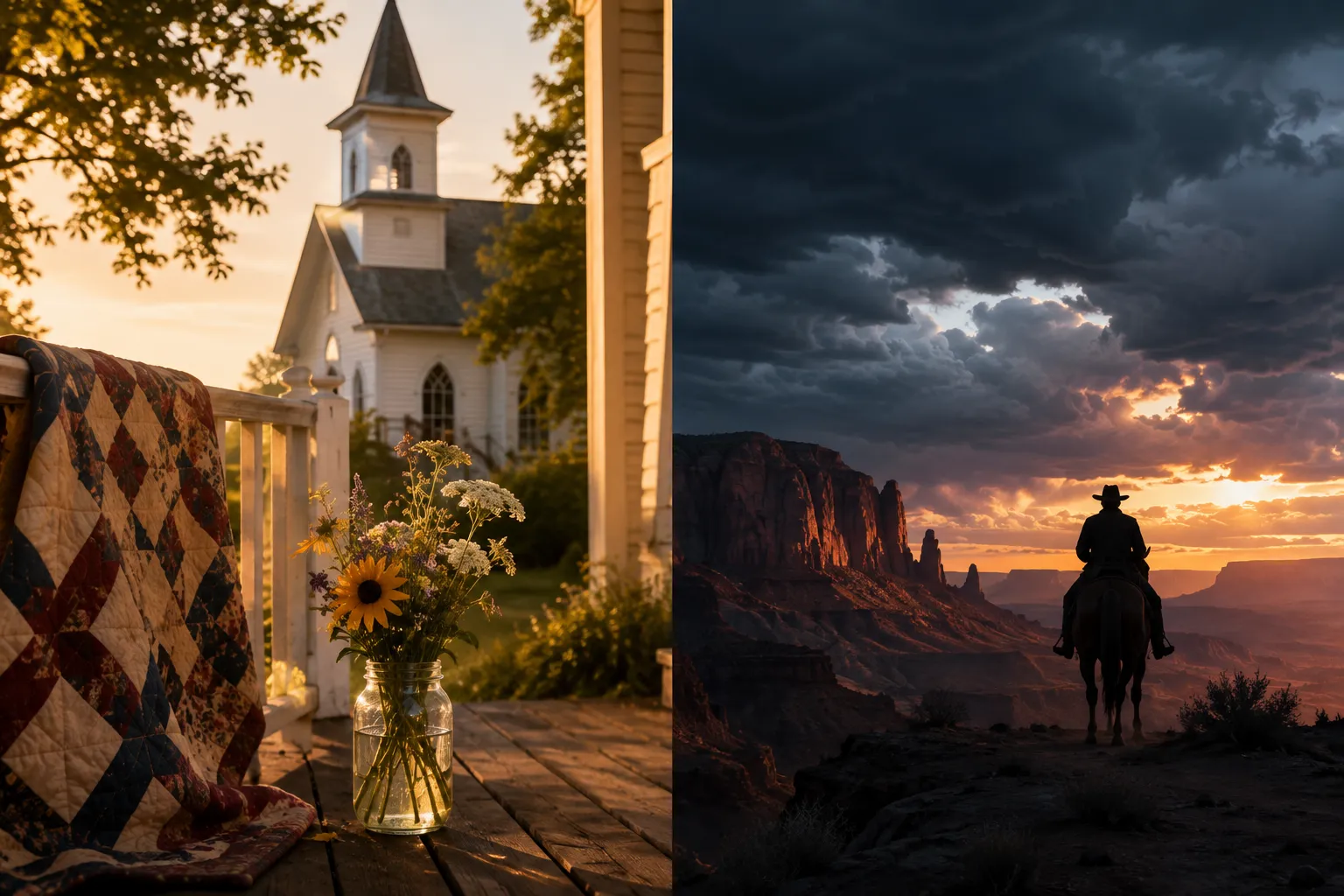
The most productive combinations right now are:
- Cozy mystery + romance, community, warmth, low-threat stakes with a thread of longing
- Western + suspense, frontier justice, moral pressure, high physical stakes
- Fantasy + thriller, world-building with urgency, spiritual warfare with real cost
Each combination asks something different from the writer, and each has a different failure mode.
How Do You Balance Cozy Mystery and Romance Without One Overshadowing the Other?
The mystery drives the plot; the romance deepens what’s at stake. When those two functions are clearly assigned, the genres stop competing. The mistake most writers make is letting the romance slow the mystery’s momentum, readers who picked up a cozy mystery want a puzzle to follow, and if the investigation stalls every time two characters make eye contact, the pacing collapses.
Structural rules that work:
- Let the mystery create the circumstances that force the romantic leads together
- Use the investigation to reveal character in ways that make the romance feel earned, not decorative
- Reserve romantic tension for scenes that also advance the mystery, a conversation that reveals a clue and deepens a relationship at the same time
- Keep the mystery’s resolution as the climax; let the romantic resolution follow naturally from it
On faith: In a Christian cozy mystery with romance, faith often shows up in the question of whether a character can trust again, in God, in community, in another person. That’s not a sermon. That’s a human question the genre is perfectly built to carry.
How much romance is appropriate? In clean Christian fiction, the romance should be warm but not consuming. Emotional intimacy, shared history, and moments of honest vulnerability are the currency. Physical content stays off the page. The Mercy House Mysteries series, for instance, maintains a romance-absent contract entirely, which demonstrates that the cozy mystery form holds its weight without romance at all. When romance is added, it should feel like a gift the story earned, not a formula requirement.
Best Examples of Christian Fiction That Mixes Western and Suspense
Christian western suspense works when the suspense question is a moral one, not just a physical one. The frontier setting does specific work: it strips away institutional protection and forces characters to answer to conscience alone. That’s a natural fit for faith-under-fire storytelling.
The Mercy Line series (Silas Bellhaven) is built precisely on this combination. The conscience line running through the series, “Where law runs out, a man finds what he answers to”, is not a tagline. It’s the structural question every book is built around. In The False Warrant, the suspense comes from a territorial seal that doesn’t make custody lawful, and the western setting makes the stakes physical and immediate. In The Ash Ledger, a fire-loss claim that doesn’t add up forces a character to speak the truth before it hardens into official record.
What makes western + suspense work in Christian fiction:
- The law is present but imperfect, which means characters cannot outsource their moral decisions to institutions
- Physical danger is real but not gratuitous, the threat exists to test character, not to shock
- Grace arrives after cost, not instead of it
- The landscape itself carries emotional weight, dust, distance, and silence are doing narrative work
New Christian western romance with suspense elements continued appearing on release calendars through early 2026, and the August 2026 Christian suspense release slate shows strong western and small-town crossovers, confirming the combination has durable reader demand [6][8].
Can You Write Fantasy Thriller with Christian Themes and Still Keep It Engaging?
Yes, but only if the thriller pacing is built into the world’s structure, not bolted on after the fact. Christian fantasy thriller fails when the fantasy world is richly developed but the stakes feel low, or when the spiritual warfare elements are so abstract they don’t create genuine narrative tension.
The key is that the threat must be specific and costly. Vague evil is not threatening. An empire that wants every act of mercy counted and contained, that’s threatening. A covenant word the auditors cannot own, that’s a thriller premise dressed in fantasy clothing, and it works because the stakes are concrete.
Christian fantasy thriller subgenres and what readers expect:
| Subgenre | Core Promise | Faith Element | Pacing |
|---|---|---|---|
| Spiritual warfare fantasy | Good vs. evil with cosmic stakes | Prayer, covenant, spiritual authority | High urgency |
| Covenant epic fantasy | Loyalty tested across generations | Faithfulness without confirmation | Slower build, high payoff |
| Fantasy psychological thriller | Identity and truth under pressure | Who controls the record of someone’s truth? | Tight, claustrophobic |
| Secondary-world suspense | Moral order in an unjust system | Justice and mercy in tension | Procedural with bursts of danger |
The Kethara Chronicles and The Sarel Chronicles both demonstrate that Christian epic fantasy can carry thriller-level urgency when the spiritual stakes are made concrete, a buried witness-stone that breaks through dust bearing a mark no empire can explain, or a black road that appears on a map-scribe’s skin during an official unveiling. The image carries the weight. The faith doesn’t need to be explained.
Christian fantasy and spiritual-warfare thriller remained central to Christian fiction coverage through June 2026, with new series continuing to blend spiritual themes with suspense pacing [9].

Common Mistakes Authors Make When Blending Genres in Christian Fiction
The most common mistake is using faith as a resolution device rather than a complicating force. When a character prays at the climax and the problem dissolves, the faith hasn’t earned anything, it’s just a shortcut. Readers who want honest Christian fiction will feel that immediately.
Other frequent errors:
- Treating one genre as decoration, adding “a little romance” to a western without structuring the story to support it
- Preaching through the plot, having characters explain their faith to each other in ways no real person would
- Cheap grace, letting characters off the hook spiritually before they’ve paid the cost the story set up
- Tonal whiplash, shifting from cozy warmth to graphic violence because “it’s a thriller now”
- Ignoring the genre’s emotional contract, cozy mystery readers expect community and comfort alongside the puzzle; if the book delivers only dread, they feel cheated
- Over-explaining the supernatural, in fantasy thriller, mystery is structural; explaining every spiritual element kills the tension
The fix in each case is the same: let faith show up in what the character chooses, not in what the narrator explains.
Is Blending Genres Harder in Christian Fiction Than Secular Fiction?
In one specific way, yes, the content boundary is fixed. No graphic violence, no explicit content, no profanity. That constraint doesn’t disappear because the story is a thriller or a fantasy with dark themes. What changes is the method: Christian fiction has to generate genuine tension and darkness through implication, consequence, and emotional weight rather than graphic depiction.
That’s actually a craft advantage for writers who master it. Gentle suspense over shock value is harder to write and more durable to read. The psychological thriller series The Gathering Light operates entirely within clean content parameters while asking genuinely disturbing questions about who controls the record of someone’s truth, and the restraint makes it more unsettling, not less.
Where Christian genre blending has a structural advantage over secular:
- The faith element gives the story a moral center that prevents genre blending from feeling arbitrary
- Clean content requirements force writers toward emotional specificity rather than sensory shock
- The reader’s trust is higher, they know what they’re getting, which means they’ll follow the story into darker emotional territory
Who Reads Christian Genre Blends and What Do They Want?
The core audience is women 35-65, primarily Kindle Unlimited subscribers, who want clean fiction with real stakes. They are not looking for stories that avoid hard things, they are looking for stories that handle hard things honestly, without graphic content and without cheap resolution.
What they want, specifically:
- Characters who actually doubt, faith that has been tested reads as real; faith that has never been questioned reads as performance
- Stakes that matter, the mystery has to be genuinely dangerous, the romance has to risk something, the fantasy world has to have real consequences
- Community and place, small-town settings, secondary worlds, and frontier landscapes all work when treated with emotional specificity
- Earned endings, redemption that costs something is satisfying; redemption that arrives without cost feels dishonest
Reviewers in 2025 and into 2026 consistently noted widespread blending of mystery, romance, and historical settings as the pattern that drives repeat readership in Christian fiction [4][5][6].
How to Market a Book That’s Christian Western Suspense
Lead with the dominant genre’s emotional promise, then signal the secondary genre as a reward. A Christian western suspense book should lead with the western’s visual and moral world, frontier setting, physical danger, a man with a conscience and a problem, and let the suspense element emerge from the premise description rather than being announced as a genre label.
Practical marketing approach:
- Name the setting and the moral pressure in the first sentence of copy, not the genre
- Let the faith element show in the copy’s tone, not in a disclaimer (“this is a clean Christian book”)
- Use series positioning, readers who find one book in a linked-protagonist western series will read the rest if the conscience question is consistent across titles
- Target KU readers directly, the Kindle Unlimited subscriber base for clean Christian fiction is large and loyal; genre blends that deliver on both promises generate strong read-through rates
- Avoid stacking genre labels in the title or subtitle, “Christian Western Suspense Romance” as a subtitle signals uncertainty about what the book is
The August 2026 Christian suspense release slate shows strong western and small-town crossovers performing well, which suggests marketing copy that leads with place and moral stakes is resonating with current readers [8].
Does the Christian Fiction Audience Accept Paranormal Fantasy Thrillers?
Yes, with one condition: the supernatural must operate within a coherent spiritual framework, not a borrowed secular one. Christian readers are comfortable with angels, spiritual warfare, covenant power, and secondary worlds with their own theological logic. What creates friction is paranormal content that borrows from occult traditions without engaging the spiritual implications, readers will notice, and it breaks trust.
What works:
- Spiritual warfare with real cost and real protection
- Secondary worlds where the Maker/Creator is present but not controlling, faith is still required
- Prophecy and covenant as structural plot elements
- The supernatural as a source of moral pressure, not just spectacle
What creates friction:
- Divination, necromancy, or occult elements presented as neutral tools
- Spiritual power that operates without accountability
- Paranormal romance tropes (vampires, werewolves as romantic leads), these carry secular genre associations that clash with the content contract
The Sarel Chronicles and Kethara Chronicles demonstrate the range available within those parameters, from a map-scribe whose skin becomes a living record of unanswered prayers, to a covenant word that an empire’s auditors cannot own or contain. Neither series requires a secular paranormal framework. The Christian theological imagination is large enough.
Christian Fiction Genre Blending Rules and When You Can Break Them
The rules exist to protect the reader’s trust, not to limit the story. Clean content, faith as lived experience, earned grace, these are not arbitrary restrictions. They are the promises the genre makes to its audience. Breaking them doesn’t make the story more literary; it makes it a different book that happened to get shelved in the wrong section.
That said, the rules have flexibility:
- Darkness is allowed, what’s not allowed is gratuitous darkness that exists for shock rather than meaning
- Doubt is required, a character who never questions their faith is not a Christian fiction character; they’re a cardboard saint
- Romance can be absent, the cozy mystery form and the western form both hold their weight without it
- The faith resolution doesn’t have to be tidy, mercy and justice can remain in tension at the end of a book; not every story needs a conversion moment
The one rule that cannot bend: grace must cost something. If a character receives mercy without the story having established what it cost, the character, another character, or the world, the reader will feel cheated. That’s not a Christian fiction rule. That’s a story rule. Christian fiction just makes it explicit.
Frequently Asked Questions
Q: What’s the easiest genre combination to start with in Christian fiction? Cozy mystery + light romance is the most structurally forgiving combination. The cozy mystery form already builds in community, warmth, and a puzzle, romance adds emotional stakes without requiring a major structural overhaul.
Q: Can a Christian western have a female protagonist? Yes. The Mercy Line series uses a romance-absent, masculine-lead structure for specific thematic reasons, but Christian western fiction with female protagonists is a well-established category. The frontier setting works for any character whose conscience is under pressure.
Q: How dark can a Christian fantasy thriller get? Dark enough to be honest, not dark enough to be gratuitous. Psychological dread, moral horror, and genuine spiritual threat are all available. Graphic violence and explicit content are not. The constraint forces writers toward emotional and spiritual darkness rather than sensory shock, which is usually more effective anyway.
Q: Do Christian readers want the faith element explained or shown? Shown. Always shown. A character who makes a costly choice because of what they believe is doing more theological work than three paragraphs of internal monologue about their faith.
Q: Is Kindle Unlimited a good fit for Christian genre blends? Yes. KU subscribers in the Christian fiction category read widely across subgenres and respond strongly to series with consistent faith handling. Genre blends that deliver on both genre promises generate strong read-through rates.
Q: How long should a Christian cozy mystery with romance be? Standard cozy mystery length, roughly 60,000-80,000 words, works well. The romance adds emotional texture without requiring additional length if it’s integrated into the investigation structure rather than running parallel to it.
Q: Can you blend more than two genres in Christian fiction? Yes, but the structural complexity increases significantly. Three-genre blends (western + suspense + romance, for example) require a very clear hierarchy of which genre’s emotional promise is primary. Without that hierarchy, the book satisfies no one completely.
Q: What’s the difference between Christian suspense and Christian thriller? Suspense builds dread through anticipation, the reader knows something bad is coming. Thriller builds urgency through active threat, the danger is present and escalating. Christian suspense tends toward psychological and relational stakes; Christian thriller tends toward physical and systemic stakes. Many books blend both.
Q: How do I signal to readers that my book blends genres without confusing them? Lead with the dominant genre in your cover design and opening copy. Let the secondary genre emerge from the premise. A reader who picks up a western and discovers it has thriller pacing feels rewarded; a reader who can’t tell what kind of book they’re holding feels uncertain.
Q: Does the Christian fantasy market accept LitRPG? It’s an emerging category. The Measured Debt series demonstrates that LitRPG mechanics (earned progression, position records, debt systems) can carry genuine Christian themes about grace and accountability. The audience is smaller but loyal.
Q: Is historical setting a genre blend or a subgenre? Historical is a setting, not a genre, but it functions like a genre blend because it adds a layer of research and world-building expectations. Historical Christian cozy mystery is one of the most popular combinations in the current market [4][6].
Q: What does “earned grace” mean in a genre fiction context? It means the character has paid a real cost, loss, failure, exposure, or sacrifice, before mercy arrives. The grace is not withheld cruelly, but it is not given cheaply either. The story has to establish what the grace cost before the reader can feel its weight.
Conclusion
Blending genres in Christian fiction is not a marketing trick. It’s a structural decision that either serves the story’s faith question or undermines it. The combinations that work in 2026, cozy mystery + romance, western + suspense, fantasy + thriller, all succeed for the same reason: the faith element gives the blend a moral center that neither genre could provide alone.
Actionable next steps for writers:
- Identify your dominant genre first, know which genre’s emotional promise you are primarily delivering
- Assign a structural function to the secondary genre, it should deepen stakes, not just add texture
- Build the faith element into the plot’s cause-and-effect chain, not into the narration
- Test every grace moment, ask what it cost before it arrived
- Read across the catalog, the Mercy House Mysteries, The Mercy Line, The Kethara Chronicles, and The Gathering Light all demonstrate different approaches to the same core question: what will a person do with the truth once they’re holding it?
The reader who picks up a clean Christian genre blend is not looking for a safe story. They are looking for a true one, hope in the dark, mercy and justice held in honest tension, and faith under fire that comes out the other side having actually cost something.
That’s the work. The genre is just the room it happens in.
References
[4] 15 New Christian Fiction Books You Won’t Want To Miss In 2025 – https://www.ibelieve.com/christian-living/15-new-christian-fiction-books-you-wont-want-to-miss-in-2025.html
[5] 11 Uplifting Christian Fiction Picks To Feed Your Soul: Romance, Mystery & More – https://www.libbylife.com/blog/2025-04-14-11-uplifting-christian-fiction-picks-to-feed-your-soul-romance-mystery-more
[6] Top Fall 2025 Christian Books: Amish Romance, Mysteries and Historical Fiction – https://carlabruns.com/top-fall-2025-christian-books-amish-romance-mysteries-and-historical-fiction/
[8] Christian Fiction New Releases May 2025 – https://www.narelleatkins.com/christian-fiction-new-releases-may-2025/
[9] New Releases In Christian Fiction June 2025 – https://janetsketchley.ca/new-releases-in-christian-fiction-june-2025/