Last updated: October 14, 2026
Quick Answer
Christian psychological thriller books for readers who love domestic suspense and unreliable narrators do exist, and the strongest current examples build tension from memory gaps, marriage secrets, and controlled records rather than graphic violence. Start with Jessica R. Patch’s The Girl Upstairs (Love Inspired Trade, April 2026), Lisa Harris’s The Lies We Believe and the three-book Shadow Stalkers continuation, Colleen Coble and Rick Acker’s I Think I Was Murdered, and Silas Bellhaven’s The Gathering Light series. Search by mechanism, memory loss, hidden motive, missing child, falsified testimony, not by the genre label, because Christian suspense is an umbrella, not a standardized shelf.
Key Takeaways
- Unreliable narration is fully compatible with Christian fiction. The unreliability sits in human perception; the truth still exists and still surfaces.
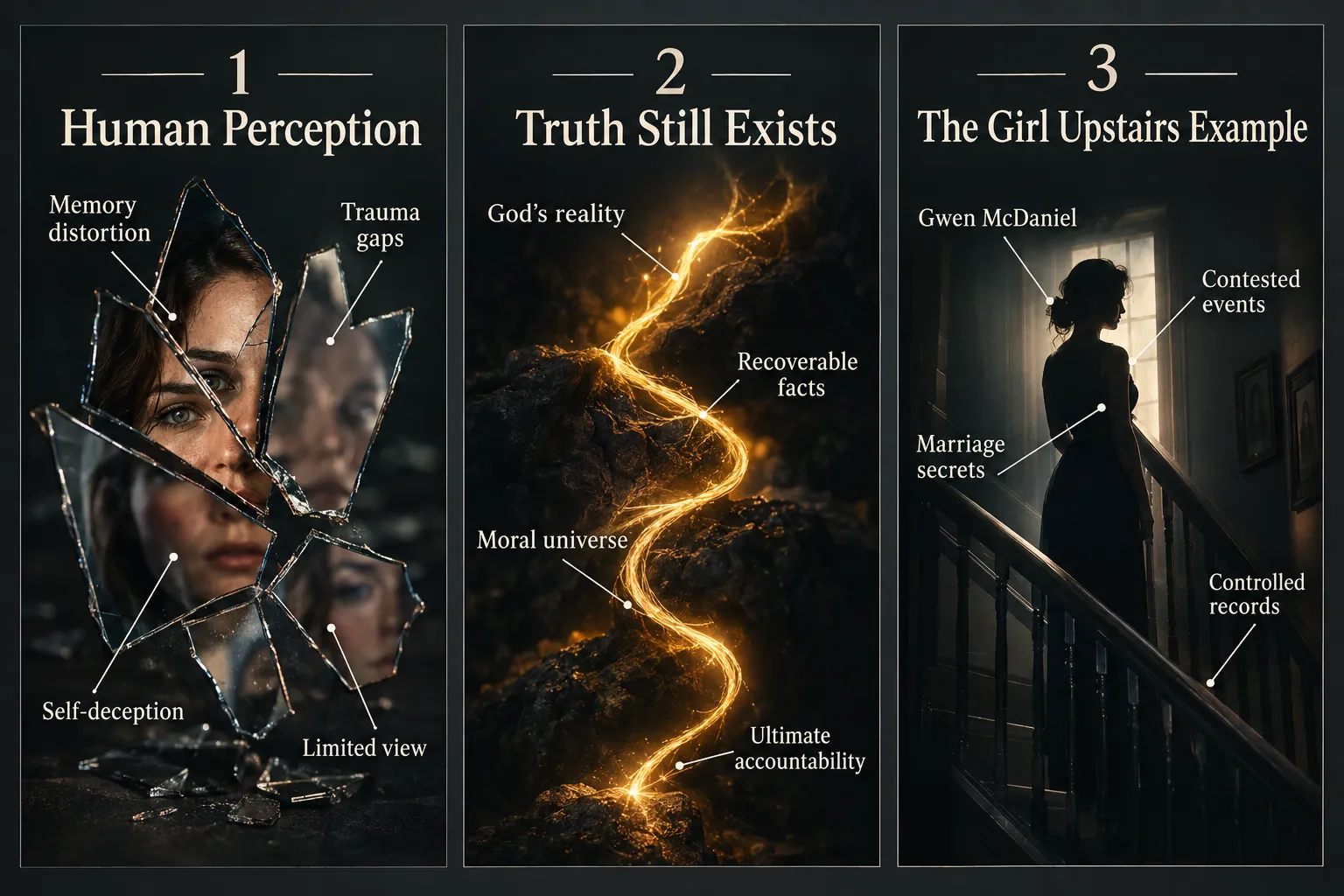
- The closest title match right now is The Girl Upstairs by Jessica R. Patch, whose protagonist Gwen McDaniel cannot tell trauma from hallucination from real danger.
- Lisa Harris’s The Lies We Believe is the nearest domestic-suspense analogue, with a mother whose memory fails while her twelve-year-old daughter disappears.
- Christian thrillers are generally less graphic, not less dangerous. Violence happens off the page or in aftermath; dread is built through perception and consequence.
- Most October 2026 Christian suspense releases are romantic or procedural suspense, not domestic psychological suspense, so niche hunting matters [2][3].
- Faith-rooted thrillers rarely end “happily.” They end honestly, with restoration that cost the character something.
- Readers who dislike heavy religious content should look for lived-belief fiction, where faith shows up in choices and consequences instead of sermons.
- Search by premise words, amnesia, gaslighting, prayer list, transcript, custody, ledger, retreat, rather than by “Christian psychological thriller.”
What Makes a Psychological Thriller Christian Fiction?
A psychological thriller becomes Christian fiction when the story’s moral universe assumes God is real and that truth is recoverable, even when the narrator can’t see it. The genre machinery stays the same: a destabilized protagonist, a contested version of events, escalating domestic pressure. What changes is the floor underneath it.
In secular domestic suspense, the final twist often proves nothing is trustworthy, not the narrator, not the marriage, not the institution. In faith-rooted suspense, unreliability is a condition rather than a conclusion. Someone eventually tells the truth, and it costs them.
Practical markers you’ll find in the subgenre:
- Faith expressed through decisions, not through narration or scripture-dropping
- Clean content, no profanity, no graphic violence, no explicit scenes
- Consequence that lands before grace arrives, not instead of it
- A moral question the plot actually tests, usually about what someone owes the truth
Grace that shows up before the cost is paid isn’t mercy. It’s convenience. Faith-rooted thrillers know the difference.
For a fuller breakdown of how faith functions mechanically inside suspense structure, see the psychology of faith in thriller narratives.
Best Christian Domestic Suspense Books With Unreliable Narrators
The four titles below are the most defensible recommendations for readers who want genuine unreliable narration inside clean Christian suspense. Each uses a different unreliability mechanism, which matters more than genre labels when you’re trying to find your next read.
| Title | Author | Unreliability mechanism | Best for |
|---|---|---|---|
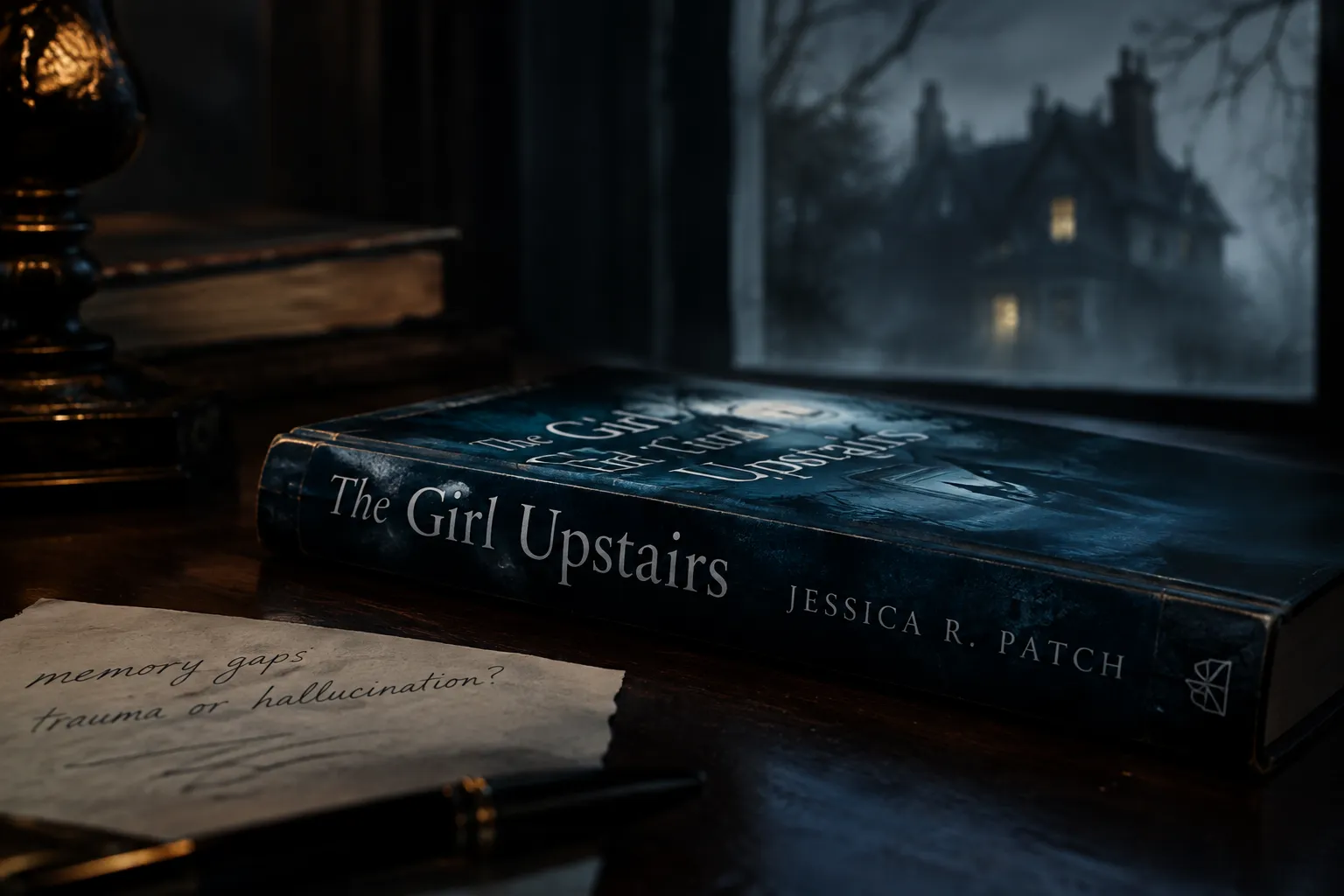
| The Girl Upstairs (April 2026) | Jessica R. Patch | Trauma, hallucination, and real threat blurred in one perception | Readers who want the narrator herself in question |
| The Lies We Believe | Lisa Harris | Failing memory, sightings of a dead ex-husband, a missing daughter | Fans of mother-in-peril domestic suspense |
| I Think I Was Murdered | Colleen Coble & Rick Acker | An AI chatbot claiming a death was murder, unreliable intermediary, not unreliable mind | Readers who like grief, family secrets, and a modern hook |
| The Gathering Light series | Silas Bellhaven | Institutional records that rewrite a woman’s own testimony | Readers drawn to controlled-information dread |
Notes that help you choose:
- The Girl Upstairs expanded in October 2026 into paperback, e-book, and audiobook, with Lisa Larsen narrating, plus a $3.99 Chirp promotion running October 1-31, 2026. That makes it the cheapest entry point into the niche this month.
- The Lies We Believe opens Harris’s four-book Shadow Stalkers line, continuing with The Secrets We Keep, The Enemy Between Us, and The Truth We Seek. Choose this if you want continuing domestic stakes instead of one twist and out.
- I Think I Was Murdered carried a 4.5-of-5 rating across 36 Christianbook reviews as of October 2026.
- The Gathering Light runs on a single spine question, who controls the record of someone’s truth?, with a new protagonist and household each book: When Hannah Sleeps, When the Voice Breaks, and When the Prayer List Opens.
Decision rule: if you want the narrator unreliable, start with Patch. If you want the information unreliable, start with Coble and Acker or Bellhaven.
Christian Psychological Thrillers Like Gone Girl and Before We Were Yours
The honest answer: no Christian novel replicates Gone Girl exactly, because that book’s payoff depends on a nihilistic read of marriage that faith-rooted fiction won’t deliver. What you can get is the same engine, a marriage where two people hold two irreconcilable versions of events, resolved toward truth rather than mutual destruction.
Closest structural matches by element:
- Marriage with a buried second story: The Girl Upstairs, a couple rebuilding in a new house that holds someone else’s secrets
- Hidden institutional history, dual perspectives: the dual-timeline approach described in this guide to two-timeline Christian thrillers
- Missing child, unreliable mother: The Lies We Believe
- Records that hid children and families: The Gathering Light, where a retreat preserves every testimony word for word, and that preservation is the problem
How Do Christian Authors Handle Dark Themes in Psychological Thrillers?
Christian thriller authors generally handle dark themes through aftermath rather than spectacle, the reader sits with consequence instead of watching the act. Abuse, coercive control, child endangerment, addiction, and institutional cover-up all appear; what’s withheld is the camera angle that turns suffering into entertainment.
Techniques you’ll notice repeatedly:
- Off-page violence, on-page cost. The reader learns what happened through a wound, a record, a silence at dinner.
- Perception as the horror. Dread lives in what the protagonist can’t verify, not in what she sees.
- No tidy conversion. Characters doubt, fail, and repent across a whole book, not in one dramatic paragraph.
- Named evil, refused glamour. Villains are specific and small and awful, never admirable.
Writers working in this space can go deeper in this piece on morally complex protagonists without glorifying darkness.
Are Christian Thrillers Less Graphic Than Secular Psychological Thrillers?
Yes. Christian psychological thrillers are consistently less graphic in language, violence, and sexual content, while often matching secular domestic suspense for psychological intensity. The restraint is a craft constraint, not a softening of stakes.
What’s typically absent: profanity, explicit scenes, torture detail, on-page child harm, gore. What’s typically present: gaslighting, stalking, coerced silence, grief, custody threat, financial control, spiritual manipulation inside a church or ministry setting.
Common mistake: assuming “clean” means “low stakes.” A novel can show a woman realizing her own counselor edited her testimony without a single graphic line, and that discovery will keep a reader up later than a body count would. The full comparison is laid out in Christian psychological thrillers vs. secular thrillers.
What’s the Difference Between Christian Suspense and Regular Thrillers?
The difference is the ending’s logic, not the intensity of the middle. Regular thrillers can end in cynicism, ambiguity, or a reset to normal. Christian suspense ends with someone accountable to something larger than the plot.
| Element | Secular psychological thriller | Christian psychological thriller |
|---|---|---|
| Source of dread | Violence, violation, chaos | Deception, lost record, lost self |
| Narrator trust | Often collapses permanently | Collapses, then is restored through truth |
| Moral frame | Varies, sometimes absent | Assumed and tested |
| Content ceiling | None | Clean, no explicit content or graphic violence |
| Ending | Twist, shock, or bleak reveal | Costly restoration, hope that was paid for |
Note also that Christian suspense isn’t a standardized publishing category. Lisa Harris’s own author FAQ spans medical thriller, police procedural, psychological suspense, romantic suspense, and post-disaster survival fiction. Christianbook’s suspense catalog mixes all of these under one browse page [2].
Christian Domestic Suspense Authors to Read (and Who’s Publishing Now)
Four names cover most of this niche, and each serves a different reader.
- Jessica R. Patch, the truest unreliable-narrator fit in Christian domestic suspense right now
- Lisa Harris, memory, missing children, and continuing series stakes across Shadow Stalkers
- Colleen Coble (often with Rick Acker), grief-driven family suspense with modern hooks
- Ted Dekker, more than 40 novels, including work Publishers Weekly has described as psychological Christian thriller
Who Dekker is not for: readers wanting marriage-and-neighborhood realism. His conflicts run metaphysical, identity, spiritual warfare, memory, transformation, rather than the social realism of a Lisa Jewell or Shari Lapena novel.
What’s releasing now: October 2026 Christian suspense is active, but mostly romantic and action suspense. Christianbook’s listings include Deadly Charade by Lynette Eason and Kelly Underwood (around October 28, 2026, with FBI agents undercover as newlyweds), Coble’s Conspiracy, She Will End This by Coble and Acker, and Dani Pettrey’s Three Steps Behind [2][3][6]. Multi-author collections like Don’t Blink Twice offer a short, low-commitment way to sample the genre. Christian fiction overall has been reported as a growing segment, with publishers continuing to invest in the category [5][10].
Christian Psychological Thrillers for People Who Don’t Like Heavy Religion
Look for fiction where belief shows up as behavior. The test is simple: if you can remove the faith content and the plot still works, it was decoration. If removing it collapses the story’s central choice, it’s load-bearing, and load-bearing faith almost never reads as preachy.
Green flags:
- Characters who doubt out loud and don’t get corrected by the narration
- Church or ministry settings treated with real texture, including their failures
- No chapter-ending scripture tag to summarize the lesson
- A protagonist who prays badly, sporadically, or not at all
Red flags: a conversion scene that resolves the mystery, a mentor who speaks only in aphorisms, villains defined by unbelief.
Readers sorting the shelf for the first time will find this guide to what “clean” actually means to readers useful, along with finding clean reads on Kindle Unlimited.
Can You Have a Truly Unreliable Narrator in Christian Fiction?
Yes, and the theology arguably supports it better than secular fiction does. Christian fiction already assumes human perception is limited and self-interest distorts memory. An unreliable narrator isn’t a trick inside that framework; it’s an accurate portrait.
Three workable approaches:
- Perception unreliability, illness, trauma, medication, grief, exhaustion. The narrator reports honestly and is still wrong.
- Self-deception, the narrator believes a flattering version of her own conduct. The reader catches it first.
- Unreliable setting or record, the narrator is sound, but the institution around her keeps altering the evidence. This is the mechanism behind The Gathering Light, and it’s broken down in how to use an unreliable setting instead of an unreliable narrator.
Edge case to watch for: a narrator who lies to the reader with full knowledge works in secular fiction but often breaks the implicit covenant in faith-rooted fiction, where the reader is positioned as a witness rather than a mark.
Christian Books About Marriage Secrets, Deception, and Morally Gray Characters
Marriage-secret suspense is where Christian domestic thrillers do their best work, because the genre takes covenant seriously enough for its breach to hurt. The question is rarely “is my spouse a monster.” It’s “what has he not told me, and what have I chosen not to ask.”
Where to find it:
- Marriage under threat with a buried history: The Girl Upstairs, where rebuilding a marriage in a new house unearths what the house was hiding
- Grief, family history, and a widow’s search: I Think I Was Murdered
- Undercover marriage proximity: Deadly Charade, role-played marriage, though its engine is romantic suspense rather than unreliable narration
- Morally gray protagonists: The Gathering Light, where Hannah Garrick, Caris Weller, and Taryn Vickers each helped build the careful language that sanitized other women’s pain, long before that language was turned on them
That last point matters for readers seeking moral complexity. The protagonists aren’t innocent bystanders. They were complicit in the system, and the book makes them pay for it before it lets them stand up again.
Psychological Thriller Christian Books With Female Protagonists
Female protagonists dominate this niche, which is one reason it suits readers coming from mainstream domestic suspense. Gwen McDaniel (The Girl Upstairs), Riley Bishop (The Lies We Believe), and the three women of The Gathering Light all share a profile: competent, embedded in a family or institution, and systematically disbelieved.
What varies is the arena. Harris puts her protagonist in a custody-and-memory crisis. Patch puts hers inside a house and a marriage. Bellhaven puts his inside a restoration retreat where every testimony is preserved word for word.
Do Christian Psychological Thrillers Have Happy Endings?
Mostly they have hopeful endings, which is a different thing. Expect restoration rather than reversal: the truth gets told, someone is held accountable, and the protagonist carries a permanent mark from the telling.
What you can usually count on:
- The deception is named out loud
- Someone chooses the costly truth over the comfortable record
- Faith is steadier at the end than at the start, but not unexamined
What you usually won’t get: an ending where no one lost anything, or where the villain’s exposure fixes the marriage, the ministry, and the family in one scene. Readers who want hope that stays hopeful without avoiding hard material should see clean Christian psychological thrillers with hopeful endings.
FAQ
Is there a Christian equivalent of Gone Girl? Not a direct one. The nearest matches use the same contested-marriage structure but resolve toward recoverable truth, The Girl Upstairs by Jessica R. Patch is the closest current title.
Which Christian thriller has the strongest unreliable narrator? The Girl Upstairs (April 2026). Review coverage specifically identifies Gwen McDaniel as an unreliable narrator caught between trauma, hallucination, and actual danger.
Are Christian psychological thrillers available on Kindle Unlimited? Many indie-published ones are, including Silas Bellhaven’s The Gathering Light. Traditionally published titles from Love Inspired and Thomas Nelson usually are not.
Do Christian thrillers include profanity or graphic violence? Typically no. Clean content standards across the subgenre exclude profanity, explicit scenes, and graphic violence, while still permitting serious subject matter handled through aftermath.
Is Ted Dekker good for domestic suspense readers? Only partly. Dekker writes psychological Christian thriller with metaphysical and identity-driven conflict rather than household realism.
What’s the cheapest way to try this subgenre right now? The Girl Upstairs was listed at $3.99 on Chirp for audiobook and e-book from October 1-31, 2026. Multi-author collections like Don’t Blink Twice are another low-commitment option.
Are these books standalone or series? Both. Lisa Harris’s Shadow Stalkers runs four books; The Gathering Light uses a new protagonist and household each book, so any entry point works.
How do I search for these titles effectively? Search mechanisms, not labels: “amnesia,” “missing daughter,” “gaslighting,” “church cover-up,” “unreliable narrator clean fiction.” Christian suspense isn’t a standardized category, so mechanism search beats genre search.
Conclusion: Where to Start This Week
Three concrete next steps:
- Pick your mechanism first. Unreliable mind → The Girl Upstairs. Unreliable information → I Think I Was Murdered. Unreliable institution → When Hannah Sleeps.
- Sample before committing to a series. Read the first 10% of two books from different mechanisms and notice which kind of dread actually holds you.
- Build a short list by searching premise words, not genre labels, and save anything that promises a record, a transcript, a prayer list, or a missing memory.
The best of these books don’t ask whether the narrator is lying. They ask what it will cost her to tell the truth once she’s finally holding it, and then they make her pay it.
References
[1] Psychological Thriller – https://www.fundinmental.com/tag/psychological-thriller/ [2] Suspense And Intrigue – https://www.christianbook.com/page/fiction/suspense-and-intrigue [3] New Release Fiction – https://www.christianbook.com/page/fiction/new-release-fiction?event=Fiction%7C1000184 [5] Christian Fiction 14 7 Yearly Surge Dramatic Market Expansion Data – https://www.firmenpresse.de/pressrelease734029/christian-fiction-14-7-yearly-surge-dramatic-market-expansion-data.html [6] Christian Fiction New Releases October 2026 – https://www.narelleatkins.com/christian-fiction-new-releases-october-2026/ [10] 91841 Publishers Remain Faithful To Fiction – https://www.publishersweekly.com/pw/by-topic/industry-news/religion/article/91841-publishers-remain-faithful-to-fiction.html