
Last updated: August 12, 2026
Quick Answer: Spiritual themes become preachy the moment they stop serving the story and start instructing the reader. Across Christian mystery, western, fantasy, and LitRPG, the line between faith that deepens a narrative and faith that derails it comes down to one test: is the character’s belief being proven by what happens in the plot, or is it being announced in the narration? Faith in fiction across genres, how much is too much, and how to balance spiritual themes with story, is a craft question with genre-specific answers, and those answers matter more in 2026 than they ever have.
Key Takeaways
- Faith becomes preachy when it explains itself. Show a character’s belief through the choices they make under pressure, not through internal monologue or dialogue that sounds like a sermon.
- Each genre has a different tolerance threshold. Cozy mystery readers expect faith woven into community and conscience; LitRPG readers expect it embedded in progression mechanics, not layered on top.
- Earned grace is the craft standard. Mercy that costs nothing reads as cheap. Redemption that arrives before the character has paid anything feels dishonest.
- 68% of CBA Top 25 titles in early 2026 blend at least two primary genres, signaling that readers want faith and story complexity together, not one at the expense of the other. [29]
- The biggest mistake is the Deus ex machina ending, where God simply resolves the plot without character growth. This fails in every genre, but it’s especially damaging in mystery and LitRPG where earned resolution is the core contract with the reader. [11]
- Faith-forward vs. faith-lite is not a quality distinction. Both can be done well. The difference is how central spiritual transformation is to the plot’s engine.
- Readers 35-54 now account for 51% of Christian novel purchases (up from 42% in 2023), and this demographic consistently favors nuanced treatments of suffering and justice over simple moral tales. [29]
- Online discovery has replaced church book clubs as the primary entry point for new Christian fiction readers, and online discourse is sharply critical of “preachy” fiction across all genres. [29]
- Fantasy and LitRPG are the hardest genres for authentic spiritual integration because world-building distance can make faith feel either too allegorical or too imported.
- The north star for any genre: write fiction that walks with readers, not fiction that talks at them.
What Makes Faith Themes Feel Natural in Fiction vs. Preachy
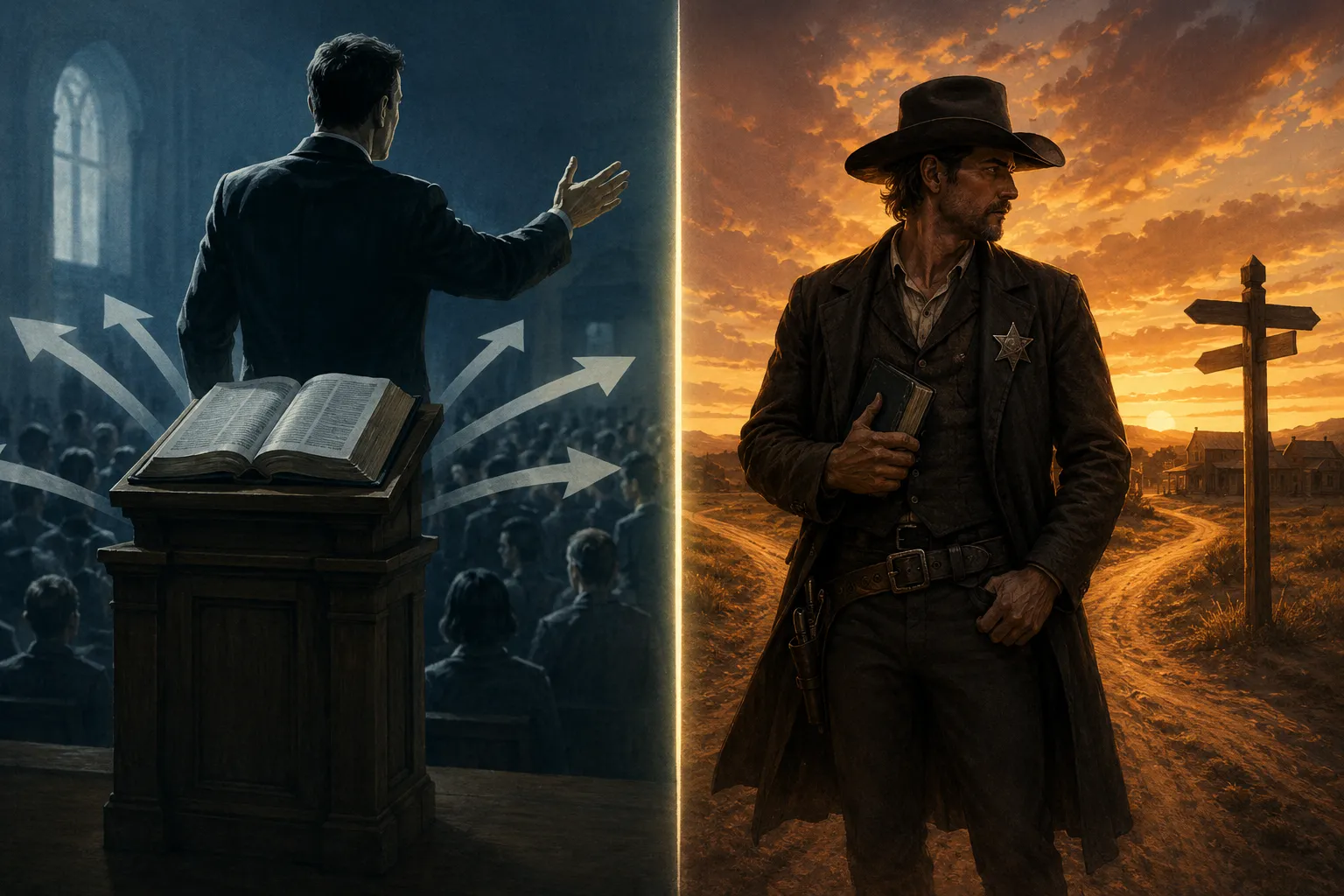
Faith feels natural in fiction when it functions as a load-bearing element of the story, something the plot actually tests, costs, and proves. It feels preachy when it functions as commentary on the story, delivered through a character who exists mainly to voice the author’s convictions. [1]
The practical difference:
- Natural faith: A frontier lawman refuses to falsify a land record because his conscience won’t let him, and that refusal costs him the marshal’s appointment he’s spent three years earning. The reader understands what he believes by watching what he loses.
- Preachy faith: A character pauses mid-scene to reflect on three Bible verses and explain what they mean for the situation at hand. The story stops. The lesson starts.
The rule that holds across every genre: faith under fire reveals character; faith explained in narration lectures the reader. [4] When a character doubts, wrestles, and still chooses the harder right thing, that is a testimony the reader can feel. When the narration tells the reader what to conclude about that choice, the testimony is undercut.
“Walking with them, not talking at them”, that phrase is the clearest single benchmark for whether spiritual content is serving the story or stopping it.
How Do Christian Mystery Novels Balance Plot With Spiritual Messages
In Christian mystery, the detective work is the spiritual work, and that parallel has to hold all the way to the resolution. The mystery genre’s core contract is that the answer is earned through observation, logic, and consequence, not handed down. [3]
Where faith belongs in a Christian mystery:
- In the detective’s motivation, why they care about justice, not just solutions
- In the community, the church, the neighborhood, the relationships that make the setting feel like a place where belief is lived
- In the cost, what the protagonist has to give up or face honestly to bring the truth to light
Where faith breaks the mystery:
- When a prayer produces a clue that couldn’t have been discovered any other way (Deus ex machina, the mystery reader feels cheated) [11]
- When secondary characters exist only to deliver spiritual wisdom rather than to be full people with their own stakes
- When the killer’s motive is reduced to “they rejected God” without human complexity
In the Mercy House Mysteries, set in Juniper Gap, Tennessee, the faith of the community is present in every scene, the church social, the donated quilt, the hymnal with a note in the margin, but the mystery itself is solved through attention, memory, and the willingness to ask uncomfortable questions. The spiritual weight comes from what the truth costs the person who finds it, not from divine intervention.
Why Do Some Western Novels Incorporate Faith Better Than Others
Christian westerns work when faith is part of the moral architecture of the frontier, not imported from a church back east, but tested by dust, distance, and the absence of any institution to enforce it. The best faith-rooted westerns understand that the frontier is exactly the kind of place where a man finds out what he actually answers to. [9]
What works in a Christian western:
- Faith expressed as a code that the protagonist holds when no law requires it
- Mercy that costs the protagonist something concrete, a contract, a reputation, a safe exit
- The tension between justice and grace played out through plot events, not dialogue
What doesn’t work:
- A preacher character who appears to deliver the moral of each chapter
- Conversion scenes that arrive without sufficient prior doubt or cost
- A protagonist whose faith makes them immune to real temptation or failure
The Mercy Line series builds its conscience question into the setting itself: “Where law runs out, a man finds what he answers to.” That’s not a spiritual tagline, it’s the plot engine. Every book in the series tests a different man against a different kind of record, and the faith in those stories is proven by what each man does when no one is watching and no institution will enforce the right thing.
Best Examples of Faith in Fantasy Without Alienating Secular Readers
Faith integrates cleanly into fantasy when it’s structural rather than imported, when the world’s spiritual logic is built into the setting’s rules, history, and conflict rather than mapped directly onto real-world theology. [6]
The key distinction: a fantasy world where a covenant between a people and their Maker shapes land rights, naming customs, and political power is doing something different from a fantasy world where characters occasionally quote scripture. The first is world-building. The second is an overlay that secular readers will notice and resist.
Principles that keep faith-rooted fantasy accessible:
- Ground spiritual truth in consequence, covenants that carry real weight in the plot
- Let the divine be present but not talkative, a Maker who answers prayers through event rather than voice
- Give the antagonist a coherent alternative worldview, not just a rejection of the protagonist’s faith
In the Kethara Chronicles, an empire wants every act of mercy counted and contained. The covenant the protagonists carry isn’t explained, it’s demonstrated through what it costs them to hold it. Secular readers can engage with that as a story about institutional power versus individual conscience. Faith readers will recognize something deeper. Both readings are valid, and neither is wrong.
Can You Write Fantasy With Christian Themes Without It Feeling Like Allegory
Yes, and the difference between allegory and incarnation is where most authors go wrong. Allegory assigns meaning: the lion represents Christ. Incarnation embeds meaning: the covenant is the story, and the story carries theological weight without requiring a decoder. [6]
Allegory signals to watch for (and avoid):
- Characters or objects that exist only to represent a spiritual concept with no independent story function
- Plot events that track too closely to a specific biblical narrative without earning that parallel through the story’s own logic
- Moments where the spiritual meaning is explained by a character rather than felt by the reader
What incarnated faith looks like in fantasy:
- A map-scribe who discovers that the official record of answered prayers has been falsified, and must decide whether to carry the truth of an unanswered prayer that the institution refused to record (The Map of Unanswered Prayers)
- A covenant word that an empire cannot own or quantify, carried by two women through a highland that wants to erase them
- Earned progression, grace that shows up after cost, not instead of it
The test: could a reader who doesn’t share the author’s faith still find the story meaningful on its own terms? If yes, the faith is incarnated. If the story only makes sense as a spiritual lesson, it’s allegory.
What’s the Difference Between Faith-Forward and Faith-Lite Fiction
Faith-forward fiction places spiritual transformation at the center of the plot’s engine. The character’s relationship with God, or their resistance to it, is what drives the story forward and what the climax resolves. Faith-lite fiction uses faith as setting texture: the community is Christian, the values are Christian, but the plot could function without the spiritual dimension. [8]
Neither is inherently better. The mistake is misrepresenting which one you’re writing.
| Faith-Forward | Faith-Lite | |
|---|---|---|
| Faith’s role | Core plot driver | Atmospheric/cultural texture |
| Climax resolves | Spiritual transformation | External conflict |
| Reader expectation | Deep spiritual engagement | Clean, values-aligned story |
| Risk if done poorly | Preachy, didactic | Shallow, label-only |
| Genre fit | Psychological thriller, epic fantasy | Cozy mystery, western |
The Gathering Light series (When Hannah Sleeps, When the Voice Breaks, When the Prayer List Opens) is faith-forward: the spine question, who controls the record of someone’s truth, is a theological question as much as a thriller question, and the resolution requires the protagonist to make a spiritual choice, not just a tactical one.
The Mercy House Mysteries lean faith-lite in structure: the mystery drives the plot, and the faith of Juniper Gap is the water the story swims in. Both approaches are honest. Both serve different readers.
How Much Religious Content Is Too Much in LitRPG Stories
In LitRPG, faith becomes “too much” the moment it bypasses the progression system. The genre’s core contract is earned advancement, stats, skills, and power that accumulate through cost, failure, and deliberate choice. [11] A divine intervention that skips that process doesn’t just feel preachy; it breaks the genre’s fundamental promise to the reader.
What works in Christian LitRPG:
- Faith expressed through the values that guide how the protagonist uses their growing power
- Spiritual cost built into the progression system, choosing mercy when the optimal play is ruthlessness, and paying a real price for it
- The debt metaphor: power that was borrowed, not earned, and must eventually be accounted for
What breaks LitRPG:
- Divine stat boosts that arrive without prior cost or character decision
- Enemies who lose because God intervenes rather than because the protagonist outgrew them
- Faith content that pauses the progression narrative to deliver a spiritual lesson
The Measured Debt series (The Cost of Being Chosen, The Remembered Route, The Borrowed Yield) builds its faith directly into the LitRPG mechanics: Eamon Kersey’s power is real, but the position series keeps asking why he’s always the one left standing. The debt against his borrowed yield is the story. Readers who want earned progression get it. Readers who want faith under fire get it. The two aren’t in tension because the cost is the faith.
Who Is the Audience for Faith-Based Fiction in Each Genre
Knowing the audience shapes how much faith content is appropriate, and what form it should take. [7]
By genre:
- Christian cozy mystery: Primarily women 35-65, Kindle Unlimited subscribers, readers who want community, conscience, and clean stakes. Faith as lived texture. They want to feel at home in the setting, not instructed by it.
- Christian western: Skews slightly more male than other Christian fiction subgenres, but women read it too. Readers want moral weight and frontier consequence. Faith as code, not creed.
- Christian epic fantasy: Broad age range, readers who came through Tolkien or Lewis. They want world-building that carries spiritual weight without feeling like Sunday school. Faith as structural world logic.
- Christian LitRPG: Younger demographic, often readers who came from secular LitRPG and are looking for something with more moral complexity. Faith as progression cost, not overlay.
- Christian psychological thriller: Women 35-55 who want real stakes and honest darkness handled cleanly. Faith as the thing that holds when everything else is being questioned.
In 2026, 73% of first-time Christian fiction buyers discovered the genre through TikTok or curated email newsletters, not church book clubs. [29] That means new readers are arriving without a prior tolerance for overt spiritual content, and they’re the ones most likely to leave a review calling a book “preachy” if the faith doesn’t earn its place in the story.
Common Mistakes Authors Make When Adding Spiritual Themes to Mystery
The most common mistake is using the mystery structure as a delivery vehicle for a spiritual message rather than letting the spiritual dimension emerge from the mystery itself. [3]
The five mistakes that appear most often:
- The wise pastor character who appears at key moments to explain what the protagonist should be feeling spiritually. He’s not a person; he’s a footnote.
- The conversion climax where the killer’s motive is resolved by a dramatic turn to faith. It sidesteps the justice question the mystery raised.
- The prayer that produces evidence, a Deus ex machina that breaks the mystery contract. [11]
- Overexplaining the symbolism. If a family Bible holds a secret, the reader doesn’t need a paragraph explaining what Bibles mean to Christians. Trust the image. [4]
- Faith as insulation, the protagonist’s belief protects them from real doubt, real temptation, or real moral complexity. Readers stop trusting a character who can’t be genuinely shaken.
The fix for all five: ask whether the faith content is serving the mystery’s tension or releasing it. Every spiritual element should raise the stakes, complicate the choice, or deepen the cost, not resolve it early.
How to Know If Your Story Needs Faith Themes or If They Feel Forced
Faith themes are native to a story when removing them would change the plot. They’re forced when removing them would only change the tone. [2]
Questions to test the integration:
- Does the protagonist’s faith create a specific conflict in this story that a secular protagonist wouldn’t face?
- Does the resolution require a spiritual choice, or just a tactical one?
- Could the faith content be lifted out and replaced with a secular value system without changing a single plot event?
If the answer to the last question is yes, the faith is decorative. That’s not always wrong, faith-lite fiction has a real and honest audience, but it should be a deliberate choice, not an accidental one.
Signs faith is genuinely load-bearing:
- The protagonist faces a choice where the spiritually right answer and the pragmatically safe answer are different things
- The cost of holding to a belief is specific and concrete, not vague and inspirational
- Hope in the dark shows up after the character has genuinely faced the darkness, not as a way of avoiding it
What Genres Are Hardest to Incorporate Authentic Spiritual Themes Into
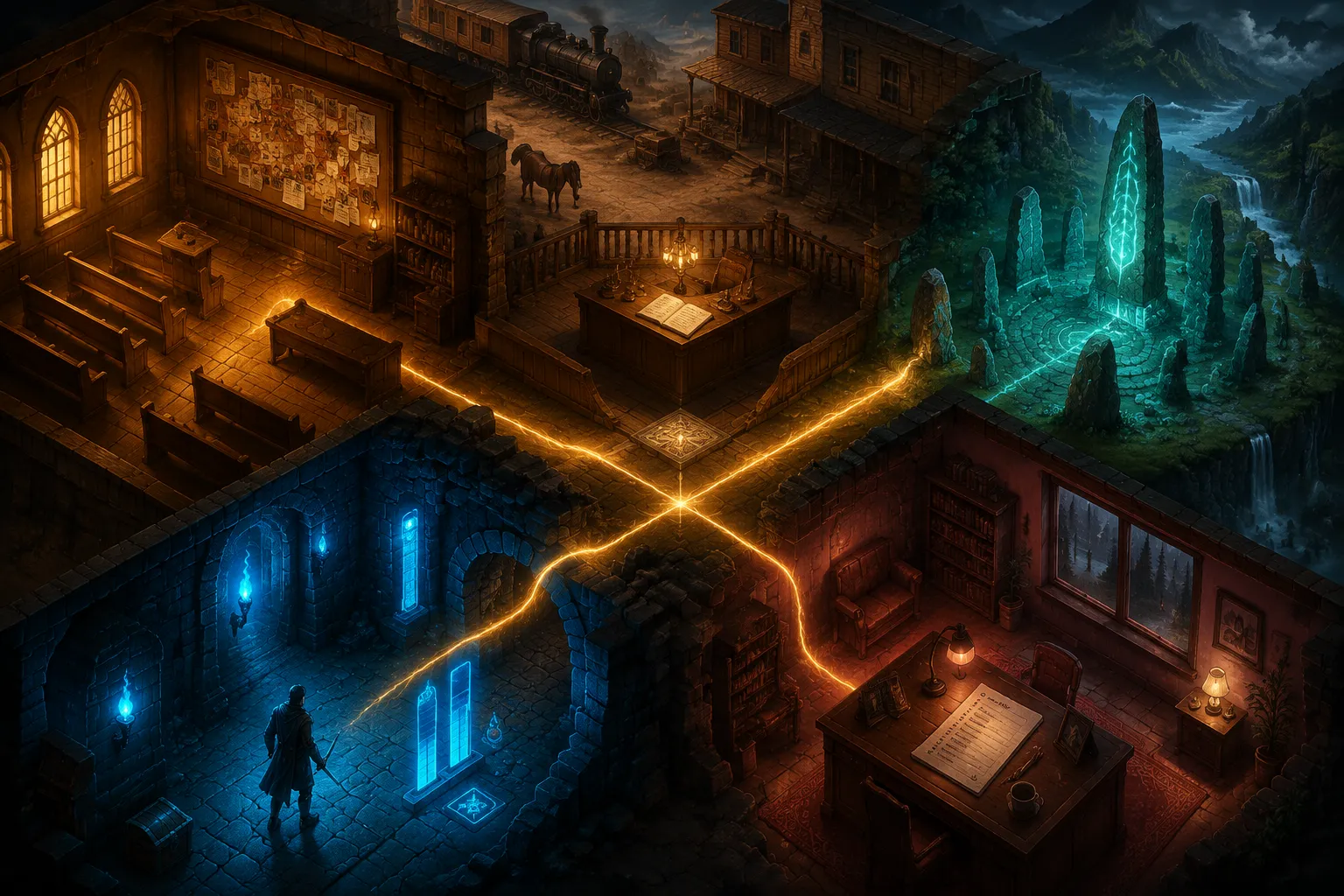
LitRPG and hard-system fantasy are the hardest genres for authentic spiritual integration, because both rely on explicit, mechanical rules, and faith, by its nature, operates in the space where rules run out. [6]
The tension is structural: LitRPG readers expect a progression system that is internally consistent and fair. Faith that intervenes in that system feels like a cheat code. Fantasy readers who invest in a magic system or world-logic feel the same way when divine intervention overrides it.
The solution in both cases is the same: make faith part of the system’s cost structure, not its exception clause. In LitRPG, that means spiritual choices carry mechanical weight, choosing mercy costs stat points, choosing truth closes a route, choosing grace means arriving at the next level with less than you could have had. In fantasy, it means the covenant has rules, the Maker has a logic, and the protagonist can’t simply pray their way past a consequence they earned.
The genres that integrate faith most naturally are cozy mystery and frontier western, because both already operate in spaces where community, conscience, and moral consequence are genre expectations. Faith doesn’t need to be imported, it’s already part of the furniture.
FAQ
What is the simplest test for whether faith content is preachy? Ask whether the spiritual content stops the story or serves it. If a scene could be cut without losing a plot event, if it exists only to deliver a message, it’s preachy. If it creates tension, raises stakes, or reveals character through consequence, it belongs.
Can secular readers enjoy faith-rooted fiction? Yes, if the faith is incarnated in the story’s logic rather than explained to the reader. Secular readers engage with moral weight, conscience under pressure, and earned redemption as story elements. They disengage when they feel the story is trying to convert them.
What does “earned grace” mean in a fiction context? Earned grace means mercy arrives after cost, not instead of it. A character who receives forgiveness before they’ve faced what they did, lost something real, or made a genuine choice hasn’t earned the grace, and readers feel that dishonesty even if they can’t name it.
Is faith-lite Christian fiction less valuable than faith-forward fiction? No. Faith-lite fiction serves readers who want values-aligned stories without deep spiritual transformation as the plot engine. The problem isn’t being faith-lite, it’s marketing a faith-lite book as faith-forward, or vice versa.
How do you handle doubt in Christian fiction without undermining the faith message? Doubt is the mechanism that makes faith meaningful. A character who never doubts doesn’t have faith, they have certainty, which is a different thing. Let the doubt be real, let it cost something, and let the character choose to hold on anyway. That’s the story worth telling.
Why is the Deus ex machina ending particularly damaging in mystery and LitRPG? Both genres are built on the promise that the resolution is earned through the protagonist’s effort, intelligence, and cost. Divine intervention that bypasses that process doesn’t just feel theologically lazy, it breaks the genre contract. The reader feels cheated twice: once as a mystery or LitRPG reader, once as a faith reader who recognizes cheap grace when they see it. [11]
What’s the difference between a faith-rooted western and a western with a Christian character? A faith-rooted western builds its moral architecture on the tension between law, conscience, and grace, and the protagonist’s belief shapes every significant choice. A western with a Christian character has a protagonist who happens to attend church. The first is a genre. The second is a detail.
How much scripture is appropriate in Christian fiction? Enough to be honest, not enough to be a concordance. One verse quoted at the right moment, when a character is genuinely reaching for something to hold onto, carries more weight than three verses explained in narration. The moment scripture becomes a teaching tool rather than a human moment, it stops serving the story. [4]
Is Christian LitRPG a real market in 2026? Yes, and it’s growing. Readers who came from secular LitRPG and want stories with moral complexity and genuine spiritual stakes are an underserved audience. The key is building faith into the progression mechanics rather than layering it on top of a secular system.
How do you write a Christian villain without making them a stereotype? Give them a coherent moral logic, not just a rejection of the protagonist’s faith. The most compelling antagonists in faith-rooted fiction aren’t people who hate God, they’re people who have a different answer to the same question the protagonist is wrestling with.
Conclusion
The question of faith in fiction across genres, how much is too much, and how to balance spiritual themes with story, doesn’t have a single answer. It has five genre-specific answers, one craft standard, and one north star.
The craft standard: faith that earns its place in the story creates tension, reveals character through consequence, and arrives at grace only after cost. Faith that doesn’t earn its place explains itself, resolves conflict it didn’t create, and asks the reader to accept a lesson rather than experience a story. [8]
The north star: fiction that walks with readers, not fiction that talks at them.
Practical next steps for authors:
- Test every faith element against the question: does removing this change the plot, or only the tone?
- Map your genre’s tolerance, cozy mystery readers want faith as community texture; LitRPG readers want faith as progression cost. Know which contract you’re signing.
- Audit your resolution, if God solves the problem without character growth, rewrite the ending.
- Trust the image. Don’t explain what the Bible on the table means. Let the character pick it up and make a choice.
- Let doubt do its work. Hope in the dark is only earned after the dark has been genuinely faced.
For readers who want to see what this looks like in practice, faith that is load-bearing without being loud, mercy that costs something, and stories that treat belief as lived rather than performed, the full catalog is at the Silas Bellhaven author page.
References
[1] How Christian Fiction Blends Storytelling And Spirituality – https://www.authorjeanwhite.com/how-christian-fiction-blends-storytelling-and-spirituality/ [2] Aligning Your Faith And Your Writing – https://successfulchristianselfpublishing.com/aligning-your-faith-and-your-writing/ [3] How To Write Christian Novels – https://bobbystrangeauthor.com/how-to-write-christian-novels/ [4] Weaving Faith Into Fiction Plots – https://successfulchristianselfpublishing.com/weaving-faith-into-fiction-plots/ [6] How To Weave Faith Into Fiction – https://racheldrussell.com/how-to-weave-faith-into-fiction/ [7] 319 How To Write A Christian Novel That Actually Helps People Without Being Preachy – https://christianindiewriters.net/319-how-to-write-a-christian-novel-that-actually-helps-people-without-being-preachy/ [8] Balancing Faith Fiction Crafting Stories That Uplift Inspire – https://buymeacoffee.com/amyjromine/balancing-faith-fiction-crafting-stories-that-uplift-inspire [9] Incorporating Faith And Fiction – https://michellegriep.com/blog/incorporating-faith-and-fiction [11] The Ultimate Guide to Writing Soul-Stirring Christian Fiction – https://www.laynemcdonald.com/post/the-ultimate-guide-to-writing-soul-stirring-christian-fiction-everything-you-need-to-succeed [29] Best-Selling Christian Novels 2026: Data-Driven Market Analysis – https://www.alibaba.com/product-insights/best-selling-christian-novels-2026-data-driven-market-analysis-top-titles.html