
Last updated: August 4, 2026
Quick Answer: LitRPG where power actually costs something is a subgenre approach in which every stat gain, level-up, or new ability carries a real, in-world price, health, memory, sanity, years of life, social bonds, or accumulated debt. These systems work because cost creates genuine stakes. When a character can gain unlimited power for free, readers stop caring about the numbers. When advancement requires sacrifice, every choice on the screen matters.
Key Takeaways
- Cost-based LitRPG ties power gains to meaningful sacrifices: mana burn, aging, sanity loss, debt to a patron, or permanent stat penalties.
- The best examples make readers feel the cost before they see the reward, setup chapters earn the power spike.
- Systems built around resource limits, debt mechanics, or biological consequences force strategic thinking rather than passive number-watching.
- Craft guides from 2026 confirm that the single biggest predictor of a working LitRPG is deciding what advancement trades away, not just what it grants. [4][7]
- Readers fatigued by weightless power fantasies are the primary audience for this approach, they want earned grace, not cheap wins.
- The Measured Debt series (Silas Bellhaven) uses a ledger mechanic where every strength gain is recorded as a debt that eventually comes due, a direct answer to the “free power” complaint.
- Strategic power usage, permanent penalties, and sanity/humanity costs are the three most discussed cost types in the LitRPG reader community.
- Writers who pre-define cost structures before drafting produce more consistent progression arcs than those who add costs retroactively. [4][11]
What Is LitRPG Where Power Has a Cost?
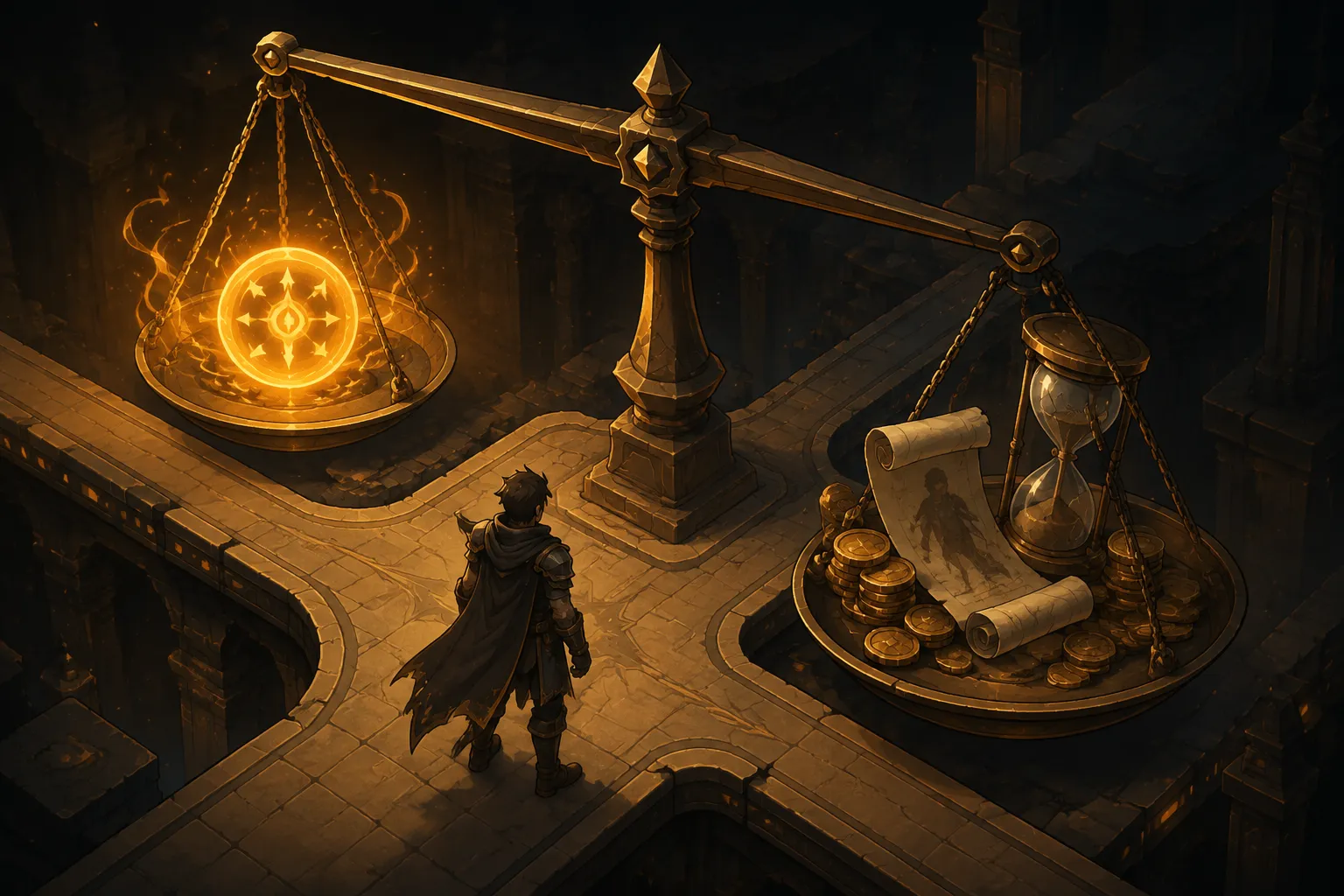
LitRPG where power has a cost is any story in the LitRPG genre that deliberately attaches a meaningful price to every significant advancement. The cost can be physical, psychological, social, or metaphysical, but it must be real, not decorative.
Standard LitRPG gives characters experience points and levels that arrive like vending machine prizes: insert effort, receive power. Cost-based LitRPG inverts that logic. The power is still there, but the system is designed so that gaining it changes something the character cannot get back.
Three defining features of this approach:
- Scarcity: Resources that fuel power (mana, vitality, sanity, years) are genuinely finite and visibly tracked.
- Irreversibility: At least some costs cannot be undone, a memory lost stays lost, a year aged off a life does not return.
- Consequence propagation: The cost ripples outward. Losing a memory affects relationships. Aging affects how NPCs treat the character. Debt to a patron creates obligation that shapes future choices.
This is the difference between a system that mentions cost and one that builds story from it.
How Does a Cost-Based Power System Work in LitRPG?
A cost-based power system works by attaching a defined, trackable price to every major advancement before the author writes the scene. The cost is not invented after the fact to add drama, it is baked into the system’s rules from the start. [4]
Craft guidance published in 2026 describes this as a “power curve map” approach: authors set level ceilings per book, require plateau arcs where no advancement happens for multiple chapters, and attach explicit costs to each gain before drafting begins. AI tools are then used to audit chapters for unearned power-ups. [4]
Common cost structures in LitRPG:
| Cost Type | What It Drains | Story Effect |
|---|---|---|
| Mana burn | Health or stamina | Tactical limits per scene |
| Aging | Years of life | Long-term mortality pressure |
| Memory loss | Relationships, identity | Emotional stakes |
| Sanity/humanity | Psychological stability | Character arc erosion |
| Debt to patron | Future autonomy | Obligation-driven plot |
| Permanent stat penalties | Baseline attributes | Strategic tradeoffs |
The system works when readers can predict the cost structure and watch characters navigate it, not when costs appear randomly to manufacture tension.
Best LitRPG Books Where Gaining Power Requires Sacrifice
The best LitRPG books in this category share one quality: the sacrifice is shown on the page, not summarized in a stat window. Readers remember the cost long after they forget the exact numbers. [7]
Notable examples and what they cost:
- The Measured Debt series (Silas Bellhaven), Eamon Kersey’s strength is recorded as a ledger debt at Federated Record. Every gain is an entry. The numbers keep clearing him until the debt finally comes due in The Borrowed Yield. The cost is not dramatic in a single scene, it accumulates quietly, the way real debt does. Series page
- Will Wight’s Cradle series, Readers often cannot cite exact advancement tiers but remember every cost clearly: months of grinding labor, broken relationships, physical suffering. The progression feels earned because it is. [7]
- He Who Fights with Monsters, Uses a mana system with real overuse consequences, though the cost structure is lighter than some readers want (see below for comparisons).
Choose this subgenre if: You want to feel the weight of every level-up, not just watch numbers climb.
LitRPG Series With Resource Management and Power Limits
LitRPG series built around resource management treat the power system like a budget, there is only so much to spend, and every expenditure has an opportunity cost. These series reward strategic readers.
The key difference from standard LitRPG is that resource limits are load-bearing. The story cannot proceed without the character making hard choices about what to spend and what to save. [11]
What good resource management looks like:
- Mana or stamina pools that do not fully regenerate between fights
- Skills that degrade or become unavailable after heavy use
- Advancement gates that require sacrificing one stat to raise another
- External resource systems (currency, favor, time) that compete with power gains
Reddit discussions in the LitRPG community consistently flag “numbers that don’t matter” as the top frustration with the genre, the sense that stats are decorative rather than functional. [8] Resource management systems directly address this by making every number a real constraint.
LitRPG Where Magic or Abilities Drain Health or Sanity
When abilities drain health, the character is literally spending their life to win a fight. When they drain sanity, the character is spending who they are. Both create stakes that stat inflation cannot dissolve.
Health-drain systems work best when the drain is visible across scenes, a character who burns health in chapter three should still be recovering in chapter five. Sanity-drain systems work best when the loss is specific: not a vague “madness meter” but a concrete thing the character can no longer do or remember.
LitRPG where power costs sanity or humanity is particularly effective because the cost is not just physical, it threatens identity. A character who gains power by losing pieces of themselves creates a natural story question: at what point does the power belong to someone who no longer exists?
“Every advancement costs the protagonist something they care about, relationships, safety, or months of grueling, on-screen work.” [7]
This is the principle that separates memorable LitRPG from forgettable number sequences.
LitRPG Where Characters Lose Memories or Years for Power
Memory-loss and aging costs are among the most emotionally resonant power prices in the genre because they cannot be farmed back. A character can grind more gold. They cannot grind back a year of their life or a memory of their child’s face.
Why these costs work:
- They are permanent by nature, which raises the stakes of every decision
- They affect relationships, not just combat, the story expands beyond the dungeon
- They create a ticking-clock structure without requiring an external villain
- They ask the same question Silas Bellhaven’s fiction returns to across genres: what does it cost to hold the record of who you are?
The Measured Debt series uses a ledger version of this, not literal memory loss, but a recorded debt that accumulates against Eamon’s identity and reputation until the account must be settled. The mechanism is different; the emotional weight is the same.

LitRPG With a Debt or Loan System for Gaining Abilities
A debt or loan system is one of the most structurally elegant cost mechanics in LitRPG. The character borrows power now and pays it back later, with interest. This creates a built-in story engine: the debt must eventually come due, and the longer it is deferred, the worse the reckoning.
How debt systems differ from other cost types:
- Costs are deferred, not immediate, which means early books can feel like power fantasies while later books deliver the consequence
- Interest mechanics allow the author to escalate tension without adding new external threats
- The debt holder (a patron, a system, a god) becomes a character with their own agenda
The Measured Debt series is built entirely on this architecture. Eamon Kersey’s position series at Federated Record keeps clearing him, every collapse he survives adds to a record that looks like strength and reads like debt. The Borrowed Yield is the book where the numbers stop working in his favor. Series page
This is also where the series’ faith dimension becomes structural rather than decorative: the question of what a record proves versus what it costs is not just a LitRPG mechanic. It is a question about grace.
Is LitRPG With Power Costs Harder to Write Than Regular LitRPG?
Yes, cost-based LitRPG requires more pre-planning than standard progression fantasy, but the difficulty is front-loaded. Authors who define the cost structure before drafting produce more consistent arcs than those who add costs retroactively. [4][11]
The specific challenges:
- Consistency: Costs must apply every time, not only when the plot needs tension. Readers notice when the rules bend.
- Calibration: Costs that are too light feel decorative; costs that are too heavy make the protagonist unreadable.
- Plateau management: Characters cannot advance every chapter. Plateau arcs, where no levels are gained, require the author to generate tension from non-power sources. [7]
- Earned release: The power spike, when it comes, must feel proportional to the setup. This is the same principle as earned grace: mercy that arrives after cost lands differently than mercy that arrives instead of it.
The craft is harder. The reader experience is richer.
How Do Authors Balance Progression in Cost-Based LitRPG?
Authors balance progression by treating the cost-to-gain ratio as a story variable, not a math problem. The goal is not perfect fairness, it is felt fairness, where readers sense that the character earned what they received. [7]
Practical balancing principles:
- Pre-define the ceiling. Set the maximum level or power state for each book before writing chapter one. [4]
- Require plateau arcs. At least some chapters must pass with no advancement, tension comes from other sources. [7]
- Make costs specific. “Lost 10 sanity points” is decorative. “Forgot his sister’s laugh” is a cost.
- Let at least half of problems resist power solutions. If leveling up solves everything, the cost system is cosmetic. [7]
- Audit for free wins. Read back through drafts and flag every power gain that arrived without setup. [4]
The Measured Debt series follows this architecture. Eamon’s gains are real, but the ledger is always running. The books do not resolve the debt cheaply, and that restraint is what makes the eventual reckoning matter.
FAQ
What makes LitRPG where power costs something different from standard LitRPG? Standard LitRPG gives power as a reward for effort. Cost-based LitRPG gives power as a trade, something is always given up. The difference is whether advancement creates stakes or dissolves them.
What is the most common cost type in LitRPG? Mana or stamina drain is the most common, but it is also the weakest because it resets between scenes. Memory loss, aging, and debt mechanics create lasting consequences that carry across the whole story.
Is The Measured Debt series LitRPG or something else? It is Christian LitRPG, the game mechanics are real and load-bearing, but the story’s central question is about record, debt, and what grace costs. The faith is structural, not decorative.
What is a debt-based power system in LitRPG? A debt-based system lets characters borrow power now and repay it later, often with interest. The debt holder, a patron, a system, or a divine record, becomes a story force in its own right.
Can cost-based LitRPG still be fast-paced? Yes. Costs do not slow pacing, they redirect it. A character spending health to win a fight is still action. The difference is that the cost follows them into the next scene.
What LitRPG series is best for readers who want strategic power usage? Series with hard resource limits and debt mechanics reward strategic thinking most. The Measured Debt series, Will Wight’s Cradle, and systems with permanent stat penalties all require the character, and the reader, to think before spending.
Why do readers get fatigued by standard LitRPG progression? When numbers climb without cost, they stop meaning anything. Readers report that stats feel decorative rather than functional, the story could remove them entirely and nothing would change. [8] Cost mechanics restore the meaning.
Does LitRPG where power costs sanity work long-term? It works if the sanity loss is specific and cumulative. Vague madness meters fade. Concrete losses, a skill gone, a relationship severed, a memory erased, build across a series into a genuine character arc.
Where can I find The Measured Debt series? The full series is available on Amazon. The Cost of Being Chosen is Book 1. The series page lists all three books.
Is Christian LitRPG a real subgenre? It is small but growing. The defining quality is not scripture-dropping, it is that the system mechanics carry thematic weight rooted in faith. Debt, record, earned grace, and the cost of being chosen are all legitimate LitRPG mechanics that also happen to be theological ones.
Conclusion
The complaint is real and it is widespread: LitRPG power systems that cost nothing eventually mean nothing. Numbers climb, stats inflate, and readers stop caring whether the protagonist wins because the outcome was never in doubt.
LitRPG where power actually costs something fixes this at the structural level. When advancement requires sacrifice, memory, years, sanity, or a debt that will eventually come due, every choice carries weight. The reader cannot skim the cost scenes, because the cost scenes are where the story lives.
Actionable next steps:
- If you are a reader fatigued by weightless progression, start with a debt-mechanic series. The Cost of Being Chosen opens with Eamon Kersey’s record looking clean, and the slow realization that clean records and honest ones are not the same thing.
- If you are a writer, define your cost structure before chapter one. Set a level ceiling per book, require plateau arcs, and make at least one cost per book permanent and specific. [4][7]
- If you want more Silas Bellhaven fiction built on the same earned-progression principle, grace that arrives after cost, not instead of it, the full catalog is at the author page.
The ledger is always running. The question is whether you are reading it honestly.
References
[4] Ai Litrpg Power Progression Pacing – https://www.entangledtext.com/guides/ai-litrpg-power-progression-pacing
[7] Game Mechanics In Fiction – https://writersdailypractice.com/litrpg-writers/game-mechanics-in-fiction/
[8] Ive Yet To Read A Litrpg Where Numbers Dont – https://www.reddit.com/r/litrpg/comments/1i5kzvy/ive_yet_to_read_a_litrpg_where_numbers_dont/
[11] How To Write Litrpg – https://writersdailypractice.com/litrpg-writers/how-to-write-litrpg/