Last updated: August 5, 2026
Quick Answer: Progression fantasy for readers who want real stakes is a subgenre where characters grow in measurable ways, power, skill, rank, but that growth costs something genuine. The best entries in this space treat failure, loss, and permanent consequence as load-bearing story elements, not just obstacles the protagonist clears on the way to the next level.
Key Takeaways
- Progression fantasy is defined by measurable growth plus escalating challenges, but real stakes require that growth to carry a cost, not just a reward
- The genre does not require a game system; cultivation fantasy, covenant fantasy, and LitRPG all qualify under the same core definition
- “Plot armor”, the sense that the main character cannot truly lose, is the single biggest killer of tension in long progression series
- Permanent character death, resource attrition, and irreversible choices are the most reliable signals that a series takes its stakes seriously
- Progression fantasy is not just for gamers; any reader drawn to earned transformation will find something here
- The gap between “payoff” and “padding” in long series is where reader trust either builds or collapses
- Faith-rooted progression fiction (such as Silas Bellhaven’s The Measured Debt) applies the same earned-consequence logic to spiritual and moral growth, not just combat power
- Completed series carry more perceived weight than ongoing ones, completion is a trust signal for stakes
- The best high-stakes progression stories use failure as a structural tool, not an emotional detour
What Is Progression Fantasy and How Is It Different from Regular Fantasy
Progression fantasy is a subgenre built around one promise: the reader will watch a character grow in a measurable, systematic way, and that growth will be tested by escalating challenges. Where traditional fantasy might track a hero’s destiny or a kingdom’s politics, progression fantasy tracks the character’s own development, levels, ranks, cultivated power, earned skills, as the primary engine of the plot.
The difference from regular fantasy isn’t just the presence of stats or systems. It’s the contract with the reader: you will see the work, and you will see what the work costs. Regular fantasy can skip the training montage. Progression fantasy cannot, the training montage is the point.
What makes it distinct:
- Growth is explicit and measurable, not implied
- Challenges are calibrated to the character’s current level, then exceed it
- The reader tracks progress alongside the protagonist
- Setbacks are structural, not decorative
The formal genre definition now explicitly calls out “stakes and consequences” as a core axis alongside growth and challenge [1]. That’s a meaningful shift, it signals that the community itself has started distinguishing between progression fantasy that earns its power-ups and progression fantasy that hands them out.
Progression Fantasy vs. LitRPG: What’s the Difference
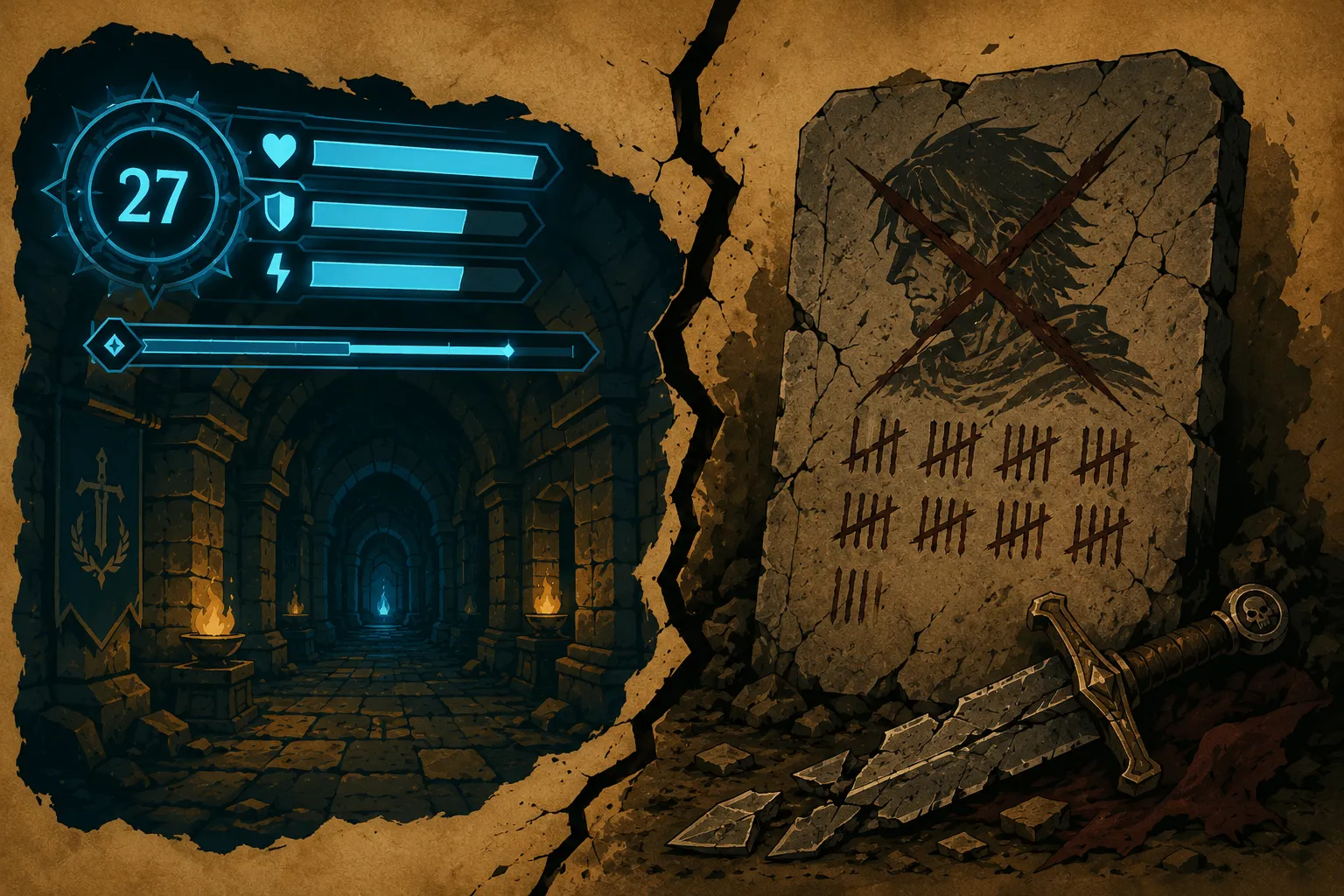
Progression fantasy and LitRPG overlap significantly but are not the same thing. LitRPG requires explicit game mechanics, stat screens, skill notifications, experience points rendered as in-world text. Progression fantasy is the broader category: it includes LitRPG, but also cultivation fantasy (where power grows through internal spiritual or physical discipline), covenant fantasy (where growth is tied to vows, faith, or relational bonds), and dungeon-crawl fiction that uses no game interface at all.
A simple way to think about it:
- All LitRPG is progression fantasy
- Not all progression fantasy is LitRPG
- Cultivation fantasy sits in progression fantasy but rarely uses game-style UI
- Faith-rooted progression fiction can use any of these structures while grounding growth in moral and spiritual consequence
Does progression fantasy have to have a game system? No. The system just needs to be legible, the reader needs to understand what the character is working toward and what it costs to get there. A covenant sworn before a Maker, a cultivation rank that demands sacrifice, a ledger of debts that must be paid, all of these function as progression systems without a single stat screen.
What Makes Progression Fantasy Feel Like Real Stakes Matter
Real stakes in progression fantasy come from one thing: the possibility of permanent loss. Not temporary setbacks that the protagonist recovers from in two chapters, actual, irreversible cost.
The community has been vocal about this distinction [5]. A character who loses a fight but gains a power-up from the loss hasn’t really lost anything. A character who loses a companion, a limb, a reputation, or a deeply held belief, and cannot get it back, has paid something real.
Signs a series takes its stakes seriously:
- Supporting characters die and stay dead
- The protagonist fails at objectives that matter to the plot, not just side quests
- Power gained comes with visible cost, time, relationships, moral compromise
- The world changes in response to what the protagonist does (or fails to do)
- Completed arcs don’t quietly undo earlier losses
The “payoff vs. padding” problem is the most common way long series lose their tension. When readers sense that the author is extending a series rather than building toward something, every setback starts to feel like delay rather than danger [1]. Completion is a trust signal, readers treat a finished series as proof that the author was willing to let the story end, which means they were willing to let things go wrong for real.
Progression Fantasy Where Characters Actually Die and Don’t Come Back
This is one of the most-searched questions in the genre, and for good reason. Death that sticks is rare in long-running progression series, because authors and publishers both have commercial incentives to keep beloved characters alive.
The series that earn a reputation for permanent consequence tend to share a few structural choices:
- Ensemble casts rather than single-protagonist focus, so the story can survive character loss
- Rotating protagonists across books, which signals from the start that no single character is guaranteed to survive
- Attrition as a theme, not just a plot device, the world grinds people down, and that grinding is the point
Aethon Books’ July 2026 launch slate leaned explicitly into “gritty” and “blood of battle” marketing language [3], which suggests publisher awareness that readers are actively seeking this. The July 2026 community release lists show a steady flow of titles with “apocalypse,” “cataclysm,” and “death” in their descriptions [6], not as shock value, but as a signal to readers that the author intends to follow through.
For readers who hate plot armor specifically: the tell is usually in the first major fight. If the protagonist wins through a power they didn’t earn in the story so far, that’s the pattern you’ll see repeated. If they win by paying a cost the reader felt, that’s the pattern that holds.
Progression Fantasy Recommendations for Readers Who Hate Plot Armor
Three different approaches to earned consequence in the genre, each handling stakes differently:
1. The attrition model, power grows, but so does what it costs to maintain. Cultivation fantasy in this vein treats the protagonist’s advancement as a slow burn where every rank gained narrows the margin for error. The community consistently rates cultivation/LitRPG crossovers highly for this reason [10], the grinding itself becomes evidence that nothing is free.
2. The ledger model, progression is tracked against a running debt. Silas Bellhaven’s The Measured Debt series applies this structure explicitly: Eamon Kersey’s strength is real, but the position series at Federated Record keeps asking why he’s always the one left standing after a collapse. The numbers that built his reputation were never fully his, and the debt against them eventually comes due. This is progression fantasy where the moral and spiritual cost is as legible as the power gain, earned grace, not cheap grace see The Cost of Being Chosen.
3. The consequence cascade model, each choice the protagonist makes changes the world in ways that cannot be undone, and those changes circle back. High-profile long-runners hitting or approaching final arcs in 2026 are generating renewed reader interest precisely because the accumulated consequences are finally landing [7].
Choose based on what kind of loss you find most meaningful:
- If you want physical, tactical stakes → attrition model
- If you want moral and relational stakes → ledger model
- If you want world-level stakes where the protagonist’s choices reshape everything → consequence cascade
Common Mistakes in Progression Fantasy That Ruin Tension
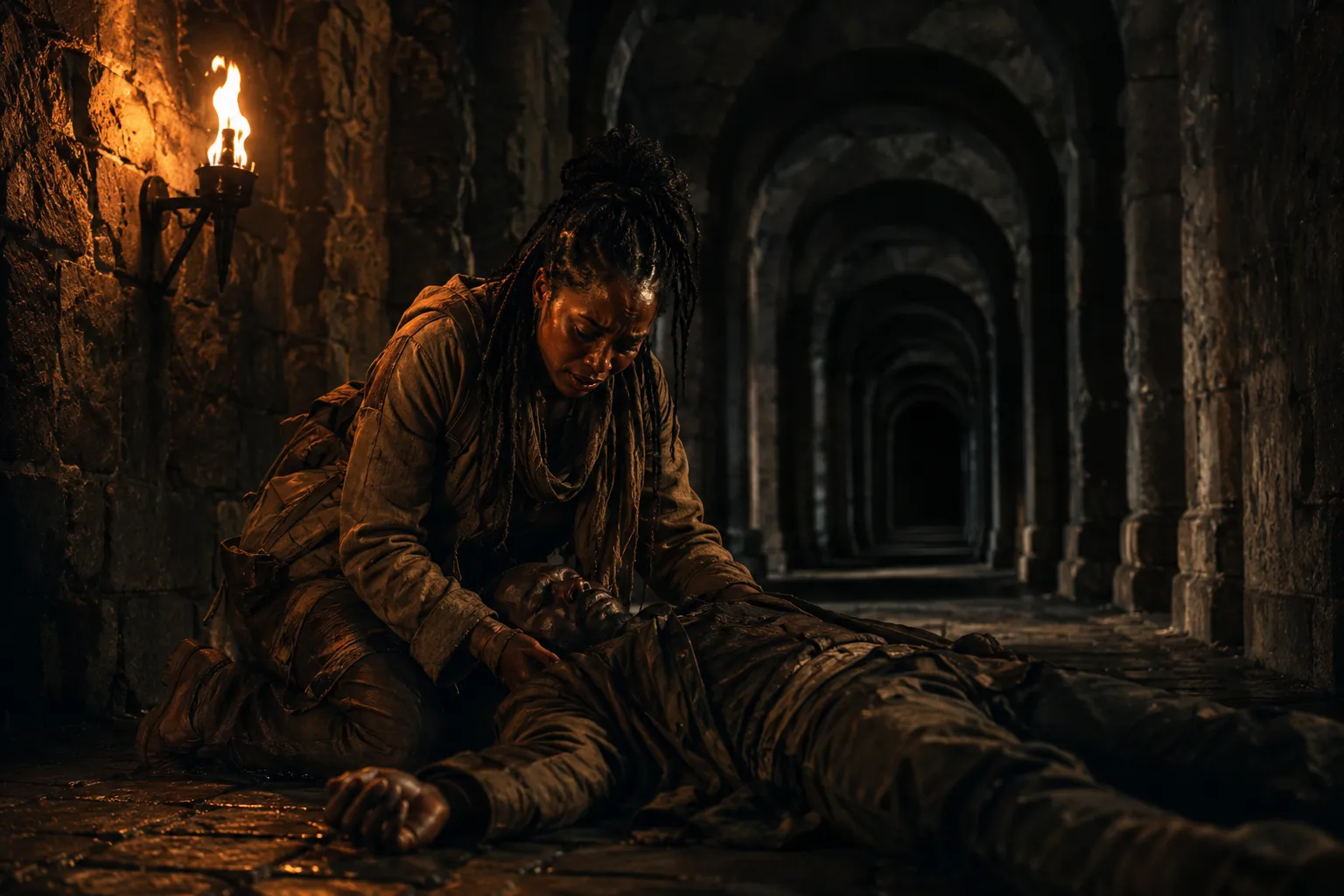
These are the patterns readers identify most often when a series loses them [5]:
- The convenient power-up, a new ability appears exactly when the protagonist needs it, with no prior setup
- The reset button, losses are reversed by the next book, so nothing accumulates
- Invincible allies, side characters who exist only to support the protagonist never face real danger
- Consequence-free moral compromise, the protagonist does something genuinely wrong and faces no lasting fallout
- Padding arcs, extended sections where the protagonist trains or travels without the world changing around them
- Villain monologue syndrome, antagonists who could end the threat choose not to, for no credible reason
The faith-rooted approach to progression fiction specifically guards against the last two. When grace shows up after cost rather than instead of it, the story cannot afford to pad its way to a resolution. Mercy has to mean something because something had to be lost first.
Is Progression Fantasy Just for Gamers or Can Anyone Enjoy It
Progression fantasy is not just for gamers. The genre’s appeal is broader than its LitRPG surface suggests.
At its core, progression fantasy is about transformation that the reader can track. That’s a human interest, not a gamer interest. Readers drawn to character development, to the satisfaction of watching someone become capable through genuine effort, to stories where growth is earned rather than inherited, all of these readers are already reading progression fantasy, sometimes without knowing the genre label.
The gamer-coded surface (stat screens, level-ups, skill trees) is one delivery mechanism. Cultivation ranks, covenant vows, and ledger-based progression systems are others. The emotional contract is the same across all of them: show me the work, show me the cost, and show me what it means.
For Christian fiction readers specifically, the progression fantasy structure maps naturally onto the arc of sanctification, the slow, costly, measurable work of becoming someone worth trusting with more. That’s not a metaphor layered onto the genre from outside. It’s already built into the structure.
Progression Fantasy Series That Don’t Rely on Power Scaling Alone
Power scaling, the protagonist simply becoming stronger than every new threat, is the weakest form of progression. It creates a treadmill, not a story.
The series that hold up over multiple books tend to use at least one of these alternative progression axes:
- Knowledge and discernment, the protagonist learns to read situations, people, and systems more accurately
- Relational trust, alliances are built, tested, and sometimes broken, and those relationships carry weight
- Moral and spiritual formation, the protagonist’s character is tested alongside their power, and the two don’t always grow at the same rate
- Institutional stakes, the protagonist’s actions affect communities, not just personal combat outcomes
The Sarel Chronicles by Silas Bellhaven (The Map of Unanswered Prayers) uses the third and fourth axes: Elya Renn’s progression as a map-scribe is inseparable from her growing discernment about what the Great Map records and what it refuses to see. Her power grows, but so does her understanding of what power costs the people it leaves off the record.
How to Write Progression Fantasy That Feels Dangerous
For writers working in this space, the core principle is simple: every gain must be paid for in the same currency as the loss it prevents.
If the protagonist gains power to protect someone, the cost should be something that puts someone else at risk. If they gain knowledge, the cost should be something they can no longer claim not to know. The reader will feel the stakes as real when the accounting is honest.
Practical craft principles:
- Establish what the protagonist values most before you threaten it
- Let antagonists win sometimes, not as a twist, but as a structural reality
- Make the world remember what happened; don’t reset between books
- Give side characters their own stakes so their losses carry independent weight
- Resist the urge to explain away moral failures with extenuating circumstances
Faith under fire, in fiction as in life, is only meaningful if the fire is real. A character who never faces genuine danger of losing what they believe cannot demonstrate that their belief holds.
Conclusion: Where to Go from Here
Progression fantasy for readers who want real stakes is not a niche within a niche, it’s the genre at its most honest. The power-up is only as satisfying as the cost that preceded it. The victory is only as meaningful as the genuine possibility of defeat.
In 2026, the genre is actively sorting itself. Publishers are signaling grit and consequence in their marketing [3][8], community lists are tagging explicitly for tone [6], and readers are voting with their reviews for series that follow through. The low-stakes cozy progression titles have their own audience, but so does the reader who needs to know the story is willing to hurt them a little before it helps them.
Next steps for readers:
- If the ledger-based, faith-rooted approach interests you, start with The Cost of Being Chosen, the first book in The Measured Debt series
- For covenant fantasy with genuine moral stakes, The Stone That Remembered opens The Kethara Chronicles
- For a broader comparison of how different series handle earned consequence, look for dedicated series comparison guides, they’ll help you match your specific tolerance for loss and your preferred type of cost
Redemption that costs something is worth reading about. That’s true in every genre, and it’s especially true here.
FAQ
What is the simplest definition of progression fantasy? Progression fantasy is a subgenre where a character grows in a measurable, systematic way, through levels, ranks, cultivation, or earned skills, and faces challenges that escalate alongside that growth. The reader tracks the progress explicitly, not just as background.
Does progression fantasy have to use a game system or stat screen? No. Game systems (LitRPG) are one approach, but cultivation fantasy, covenant fantasy, and other forms all qualify without a single stat screen. The system just needs to be legible to the reader.
What’s the difference between LitRPG and progression fantasy? LitRPG is a subset of progression fantasy that uses explicit game mechanics, experience points, skill notifications, stat windows rendered as in-world text. Progression fantasy is the broader category that includes LitRPG but is not limited to it.
Why do so many progression fantasy series lose their tension over time? The most common cause is the “payoff vs. padding” problem: as series extend, setbacks stop feeling permanent and start feeling like delays. When readers sense that no loss will stick, stakes collapse. Completion of a series is often the strongest signal that the author was willing to let things go wrong for real.
What is plot armor and why do readers hate it? Plot armor is the informal term for a protagonist who cannot truly lose, who survives or succeeds through convenient circumstances rather than earned capability or genuine cost. It breaks the implicit contract of progression fantasy, which promises that growth is earned and loss is real.
Can Christian readers enjoy progression fantasy? Yes. The progression fantasy structure maps naturally onto themes of sanctification, moral formation, and earned grace, all of which are central to faith-rooted fiction. The genre’s emphasis on cost and consequence aligns well with a theology that takes redemption seriously.
What makes a progression fantasy death feel meaningful rather than cheap? Meaningful deaths are set up structurally, the reader has been given reason to care about the character, the loss changes the story’s trajectory, and it is not reversed. Cheap deaths are surprise-value moments that the story quickly moves past without lasting consequence.
Is progression fantasy appropriate for readers who prefer clean fiction? It depends on the series. The genre ranges from graphic to entirely clean. Faith-rooted progression series like The Measured Debt are explicitly clean, no graphic violence, no profanity, no explicit content, while still maintaining genuine tension and real stakes.
How long do most progression fantasy series run? Series length varies widely. Some complete in three books; others run ten or more. Longer series carry higher risk of tension erosion, which is why completed series with consistent stakes are especially valued by readers who want the full arc.
What should I read first if I’m new to progression fantasy? Start with a completed series or a series with strong reader consensus on stakes. The Cost of Being Chosen by Silas Bellhaven is a strong entry point for readers who want faith-rooted progression with genuine moral cost.
References
[1] 2026 07 22 New Litrpg Releases Worth Your Time July 2026 Roundup – https://litrpgcritic.com/blog/2026-07-22-new-litrpg-releases-worth-your-time-july-2026-roundup/
[3] July 2026 Litrpg Progression Fantasy Releases – https://aethonbooks.com/2026/06/12/july-2026-litrpg-progression-fantasy-releases/
[5] Stakes And Progression – https://www.reddit.com/r/ProgressionFantasy/comments/1m0v8nn/stakes_and_progression/
[6] July 2026 Litrpg Ebook List Happy Reading – https://www.reddit.com/r/ProgressionFantasy/comments/1ulg7aw/july_2026_litrpg_ebook_list_happy_reading/
[7] As Of 2026 What Is Your Vote For The Single Best – https://www.reddit.com/r/ProgressionFantasy/comments/1sx1f7j/as_of_2026_what_is_your_vote_for_the_single_best/
[8] Brand New Litrpg And Progression Fantasy Series Launching August 2026 – https://aethonbooks.com/2026/07/09/brand-new-litrpg-and-progression-fantasy-series-launching-august-2026/
[10] 2026 03 27 Best Cultivation Litrpg Books Ranked – https://litrpgcritic.com/blog/2026-03-27-best-cultivation-litrpg-books-ranked/