Last updated: September 1, 2026
Quick Answer: Stephen King for Christian Readers, including The Long Walk and other suspense novels adapted for faith-based audiences, is a real conversation happening in 2026, driven by King’s 2025 film adaptation and renewed interest in his moral themes. Many of his novels carry genuine threads of grace, sacrifice, and the cost of evil, but they also contain content that gives thoughtful Christian readers pause. This guide helps you read critically, identify what holds up spiritually, and find clean alternatives when King’s darkness goes further than you want to follow.
Key Takeaways
- The Long Walk (both novel and 2025 film) contains strong moral themes, condemnation of exploitative power, the value of every human life, and sacrificial companionship, that align with biblical teaching [1]
- King’s fiction regularly engages good vs. evil, conscience, and redemption, which is why theologians and Christian critics have long treated him as a serious moral voice [2][6]
- The novel contains no graphic sexual content, but the violence is sustained and bleak; Christian reviewers are divided on whether the spiritual weight justifies the darkness [3][8]
- Faith-based adaptations and “faithspotting” analysis reframe King’s themes through Scripture, particularly Psalm 46 and Philippians 4, without changing the source text [1]
- Several King novels (The Stand, Desperation, The Green Mile) carry more explicit faith content than his horror work; others (It, Pet Sematary) are harder to recommend without significant caveats
- No major faith-based publisher has formally adapted King’s work; the “adaptation” happening is critical and interpretive, not editorial
- Christian readers who want similar tension without King’s content profile have strong alternatives in clean psychological thriller and suspense fiction
- Reading King critically as a person of faith means distinguishing between darkness that serves a moral purpose and darkness that simply accumulates
What Makes Stephen King’s Books Appealing to Christian Readers
Stephen King’s fiction appeals to Christian readers because it takes evil seriously, not as atmosphere, but as a moral force with real consequences. His best work insists that choices matter, that sacrifice means something, and that the world contains genuine darkness worth naming.
Theologian Paul Zahl, writing at Mockingbird, argued that King functions as a parable-teller of grace and sacrificial love, that his stories, read carefully, keep returning to the question of what a person will do when the cost of doing right becomes unbearable [6]. That’s not a peripheral concern for Christian fiction. That’s the center of it.
King himself has spoken openly about his Protestant upbringing and the way faith shaped his moral imagination [7]. His villains tend to be genuinely evil, not merely misunderstood. His heroes are ordinary people who find, at the worst possible moment, that they have to choose. That structure, ordinary person, impossible cost, grace that arrives late and hard, is one Christian readers recognize.
“King’s stories keep asking what a person is made of when everything comfortable has been stripped away. That’s a question faith has always lived inside.”, [Mockingbird analysis][6]
Is The Long Walk Appropriate for Christian Audiences
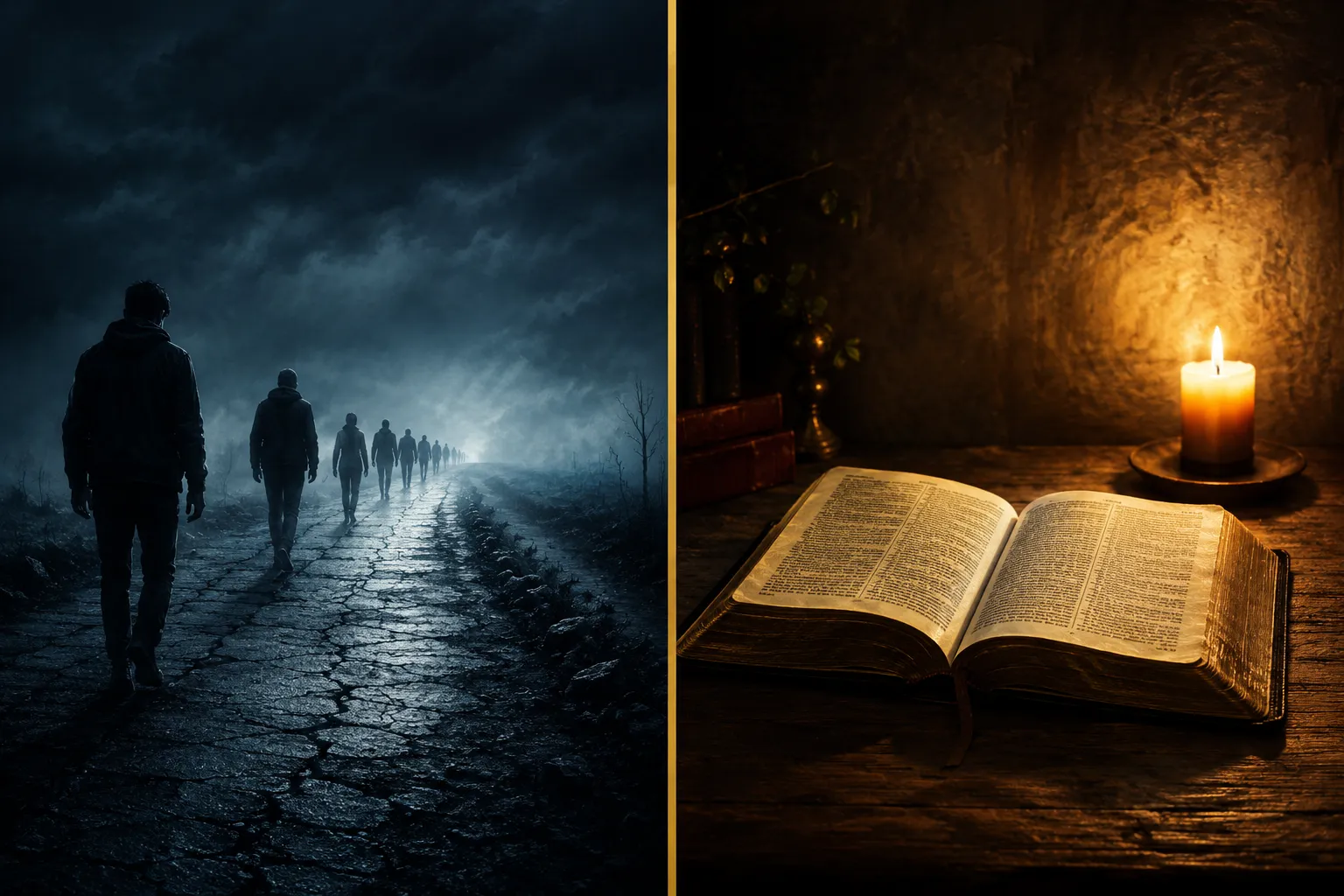
The Long Walk sits in complicated territory for Christian readers. The premise, 100 teenage boys walk until only one survives, with the state executing any boy who slows below four miles per hour, is a direct indictment of power that treats human life as entertainment. That moral argument is clear and, from a Christian standpoint, correct.
Christian reviewers analyzing the 2025 film (released on HBO Max in July 2026) identified several themes that align with biblical teaching [1][8]:
- All life has value, the boys’ expendability mirrors biblical warnings against treating people as instruments
- Condemnation of gladiatorial spectacle, reviewers drew direct comparisons to Roman gladiatorial culture and Christ’s teaching on the dignity of persons [1]
- Responsible leadership as shepherding, the Major functions as an anti-type of the shepherd-king, exploiting rather than protecting [1]
- Contentment vs. greed, the crowd’s appetite for the Walk echoes Philippians 4 and Psalm 46 on the danger of spectacle-driven desire [1]
Where Christian readers hesitate: The novel’s bleakness is sustained and unrelenting. One Christian reviewer described it as “spiritually oppressive,” arguing that the darkness never resolves into anything redemptive, it simply accumulates [3]. The 2025 film received a more nuanced reception, with some faith-based critics finding the visual storytelling gave the moral themes more room to breathe [8][10].
Decision rule: If you can engage dark material when it serves a clear moral argument, The Long Walk has genuine spiritual weight. If sustained bleakness without resolution drains rather than challenges you, the film may serve better than the novel, or skip both and engage the themes through critical reading guides like Faithspotting [1].
Stephen King Novels With Redemption and Faith Themes
Several King novels carry redemption and faith themes substantial enough that Christian readers have engaged them seriously. These are not sanitized texts, but they are morally purposeful ones.
Strongest faith content:
| Novel | Core Faith Theme | Content Caution |
|---|---|---|
| The Green Mile | Sacrificial innocence, grace through the condemned | Moderate violence, some language |
| The Stand | Apocalyptic good vs. evil, prophetic calling | Graphic violence, sexual content |
| Desperation | Direct engagement with God’s will and suffering | Graphic violence, disturbing imagery |
| The Long Walk | Human dignity, cost of complicity | Sustained violence, bleak ending |
| It | Childhood faith, the cost of forgetting | Graphic violence, controversial content |
The Green Mile is the title most frequently recommended by Christian readers for its portrait of unearned suffering and quiet grace. Desperation is the most theologically explicit, characters wrestle openly with whether God is good, but it earns that conversation through genuine cost rather than easy answers [2][6].
For readers interested in how redemption arcs function in Christian thrillers and dark fiction, King’s better work provides useful contrast with fiction that handles those arcs more cleanly.
Does Stephen King Write About Morality and Good vs. Evil
King writes about morality and good vs. evil more consistently than almost any other mainstream suspense author. His worldview, shaped by his Protestant background, treats evil as real, consequential, and ultimately answerable, not as a neutral force or a social construct [7].
CNN’s Spanish-language analysis described King as “a Christian preacher behind his horror stories,” noting that his narratives consistently punish cruelty, reward sacrifice, and insist on moral accountability [7]. That doesn’t make every King novel appropriate for every Christian reader, but it does mean the moral architecture is there to engage.
What King’s moral framework looks like in practice:
- Evil characters tend to be genuinely corrupt, not sympathetically redeemed without cost
- Ordinary characters are tested, fail, and sometimes find grace, but rarely cheaply
- Communities that ignore evil tend to suffer for it; communities that face it together sometimes survive
- Children often function as moral witnesses, their perception of evil is treated as accurate, not naive
This is closer to a biblical moral imagination than most mainstream fiction manages. The question for Christian readers isn’t whether the moral framework is present, it usually is, but whether the content surrounding it is worth the cost of engagement.
The Long Walk Religious Symbolism Explained
The Long Walk carries religious symbolism that rewards careful reading, particularly around sacrifice, witness, and the corruption of legitimate authority.
The Walk itself functions as an inverted pilgrimage, movement that leads not toward God but toward death, presided over by a state that has replaced divine authority with spectacle. The Major, who oversees the Walk, is a false shepherd: he holds power over life and death but uses it to entertain rather than protect [1].
Key symbolic elements:
- The crowd, represents complicity; watching the Walk makes the audience participants in the killing, echoing prophetic warnings about cultures that celebrate violence
- Garraty’s endurance, can be read as a kind of martyrdom without transcendence, which is precisely what makes the ending so spiritually unsettling for Christian readers [3]
- Companionship among the walkers, the bonds formed between boys who know they’re dying for each other’s entertainment carry genuine sacrificial weight [10]
The Faithspotting analysis of the 2025 film drew on Psalm 46 (“God is our refuge and strength”) and Philippians 4 (“rejoice in the Lord always”) as counterpoints to the Walk’s logic, the Walk is what a world without those anchors produces [1].
How Faith-Based Adaptations Change Stephen King Stories
No major faith-based publisher has formally adapted King’s novels for religious audiences, the “adaptation” is interpretive, not editorial. What exists is a growing body of critical and devotional reading that reframes King’s themes through a Christian lens without changing the source text.
This takes several forms in 2026:
- Faithspotting analysis, podcast and written reviews that identify biblical themes, symbolic resonance, and moral questions in King’s work, used as discussion frameworks for Christian readers [1]
- Theological essays, writers like Paul Zahl at Mockingbird have argued for King as a grace-parable writer, treating his fiction the way C.S. Lewis treated myth: as a carrier of truth that points beyond itself [6]
- Christian book club guides, discussion questions that pair King novels with Scripture passages and ask readers to evaluate the moral framework rather than simply experience the narrative
- Critical rejection, some Christian reviewers, particularly Catholic critics, have argued that King’s more recent work (Never Flinch, June 2025) has moved away from moral coherence toward ideology and amorality, making critical engagement harder [4]
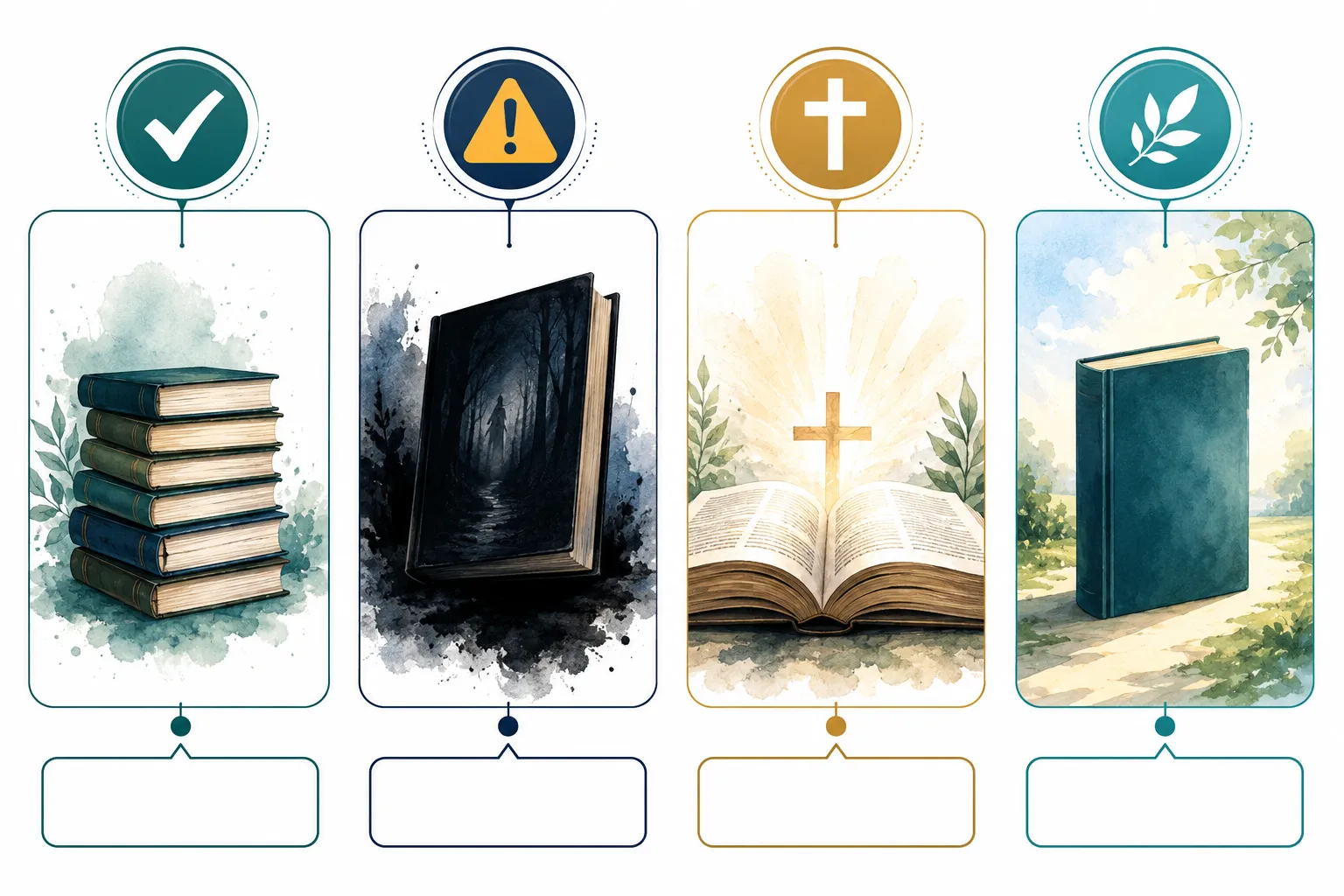
The honest answer for Christian readers is that faith-based engagement with King requires active critical reading, you bring the framework, the text provides the raw material. That’s different from reading fiction that is already rooted in faith, where the framework is built into the story’s structure.
For readers who want suspense fiction where faith is already load-bearing rather than imported, psychological thriller built on Christian faith as its engine offers a different experience entirely.
Best Stephen King Books for Christians to Read
The best King books for Christian readers are those where the moral architecture is clearest and the content is most purposeful relative to its darkness.
Recommended with thoughtful engagement:
- The Green Mile, the most accessible entry point; sacrificial grace, quiet dignity, and a portrait of innocence that carries genuine weight
- The Long Walk, strong moral argument against exploitative power; bleakness is the point, not a flaw, but requires tolerance for sustained darkness
- Desperation, the most theologically direct; characters argue openly about God’s goodness and the novel doesn’t flinch from the cost of faith
Approach with significant caution:
- It, contains a notorious scene that many Christian readers find impossible to move past regardless of the surrounding themes
- Pet Sematary, the theological argument (death is final, resurrection is horror) is a direct inversion of Christian hope; engaging it requires knowing that going in
- The Stand, richest in biblical imagery but also most graphic; best approached as a long-form moral fable rather than a thriller
Skip or engage only with critical guides:
- Never Flinch (2025), Catholic critics have argued this novel has abandoned the moral coherence of King’s earlier work in favor of ideological messaging [4]
Stephen King Books to Avoid If You’re Religious
Christian readers who are sensitive to graphic content, spiritual oppression, or direct challenges to resurrection theology should approach several King titles with real caution, or avoid them entirely.
Pet Sematary is the clearest case: its central argument is that bringing back the dead produces only horror, which is a direct theological inversion. That’s not a content warning, it’s a worldview conflict at the story’s core. Gerald’s Game and Dolores Claiborne contain sustained depictions of abuse that some readers find traumatic rather than redemptive. Misery is psychologically intense in ways that can be distressing without offering moral resolution.
One Christian reviewer described The Long Walk novel specifically as “spiritually oppressive”, not because it endorses evil, but because it offers no light at all, even at the cost of its moral argument [3]. That’s a legitimate response. Darkness that serves truth is different from darkness that simply settles.
For readers who want real stakes and genuine tension without that content profile, clean Christian mystery fiction and Christian psychological thriller offer the same structural tension, conscience under pressure, secrets with weight, choices that cost something, without the content that makes King’s darker work difficult.
How to Read Stephen King Critically as a Person of Faith
Reading King critically as a person of faith means bringing a clear framework to the text rather than hoping the text provides one. King is a moral writer, but he is not a Christian writer in the sense that his fiction is designed to strengthen faith. He is a writer whose moral imagination was shaped by faith, and that’s a meaningful but important distinction.
A practical framework for critical Christian reading:
- Identify the moral argument, what does the story insist is true about good, evil, and human accountability?
- Evaluate whether the darkness serves that argument, is the content purposeful, or does it exceed what the story’s moral weight requires?
- Note where grace appears, King’s grace tends to arrive late, cost something, and leave scars. That’s honest. Does it arrive at all?
- Ask what the story does with hope, not whether it ends happily, but whether it treats hope as a real category or an illusion
- Use critical guides, resources like Faithspotting [1] and Mockingbird [6] can help frame the conversation before and after reading
The Living Church has argued that horror as a genre, when handled with moral seriousness, can function as a form of spiritual preparation, confronting evil in fiction so that it is less disorienting when encountered in life [2]. That’s a defensible position. It requires, however, that the horror be morally serious rather than merely visceral.
Readers who want fiction that does this work from the inside, where faith is the load-bearing structure, not the interpretive overlay, might find how Christian psychological thrillers use unreliable perception without undermining hope a useful companion read.
Christian Book Clubs That Discuss Stephen King
Christian book clubs discussing King are more common than the publishing world acknowledges. The 2025 film release of The Long Walk and its HBO Max streaming debut in July 2026 brought renewed discussion to faith-based reading communities, particularly around the film’s themes of human dignity and state power [8].
How Christian book clubs typically approach King:
- Pairing a King novel with a theological essay (Mockingbird’s Zahl analysis [6] is frequently used)
- Using Faithspotting episode guides as discussion frameworks [1]
- Focusing on a single moral question rather than the full text, “What does this story say about the value of a human life?” rather than “Did you enjoy it?”
- Inviting members to opt out of titles with specific content concerns without disrupting the discussion
The most productive Christian book club discussions of King tend to treat his fiction the way they might treat a difficult psalm, as honest engagement with darkness that doesn’t pretend the darkness isn’t there, but insists on asking what it means.
Are Stephen King Horror Novels Compatible With Christian Values
Some King novels are compatible with Christian values at the level of moral argument, while others present content or worldview conflicts that make compatibility genuinely difficult. The answer depends on which novel, which reader, and what “compatible” means.
Compatible at the moral framework level: The Green Mile, The Long Walk, Desperation, The Stand (with caveats)
Worldview conflict at the core: Pet Sematary (resurrection as horror), Revival (nihilistic theology), Bag of Bones (grief without transcendence)
Content concerns that exceed moral purpose: It (specific scene), Gerald’s Game, Dolores Claiborne
The honest position is that King’s fiction is not hostile to Christian values, it is shaped by a Protestant moral imagination that takes evil seriously and insists on accountability. But it is also not designed with Christian readers in mind, and it does not hold back content out of pastoral concern. Reading it requires discernment, not avoidance, but discernment is real work.
For readers who want faith under fire in their fiction without navigating King’s content profile, clean Christian suspense delivers the same structural tension, conscience tested, truth pursued at cost, grace that shows up after the hard thing happens, without requiring that discernment work on every page.
Conclusion: Where Faith and Suspense Meet
Stephen King for Christian readers, whether The Long Walk, The Green Mile, or the wider catalog of suspense novels examined through a faith-based lens, is not a simple yes or no. It is a conversation about what darkness is for, what moral weight fiction can carry, and what a reader is willing to pay for the experience of encountering truth in a hard story.
King’s best work insists that evil is real, that choices matter, and that grace, when it appears, costs something. Those are not peripheral Christian convictions. They are central ones. The question is whether the content surrounding those convictions is purposeful enough to justify the cost of engagement.
Actionable next steps for Christian readers in 2026:
- Start with The Green Mile if you want King’s moral imagination with the most accessible content profile
- Use Faithspotting’s analysis [1] before watching the Long Walk film to frame the themes before the darkness lands
- Read Mockingbird’s Zahl essay [6] for the strongest theological case for King as a grace-parable writer
- Know your limits, “spiritually oppressive” is a legitimate response [3], not a failure of sophistication
- Explore clean Christian suspense that delivers the same structural tension, conscience under pressure, secrets with weight, earned grace, without requiring the same discernment work
If you want fiction where faith is already built into the bones of the story, where redemption costs something, where hope in the dark is earned rather than assumed, the Gathering Light psychological thriller series and the Mercy House Mysteries offer that experience. No critical framework required. The faith is already there, walking with you through the story.
FAQ
Can Christian readers enjoy Stephen King without compromising their faith? Yes, with discernment. King’s moral framework is shaped by Protestant Christianity, and his best work takes evil and accountability seriously. The content in some novels is genuinely difficult, but engaging it critically is different from endorsing it.
Is The Long Walk appropriate for teenagers in a Christian household? The 2025 film is more accessible than the novel for younger readers, but both deal with sustained death and state-sanctioned killing. Parental preview is strongly recommended. The themes are valuable; the content requires maturity.
Does Stephen King believe in God? King has spoken publicly about his Protestant background and the role faith played in shaping his moral imagination [7]. He does not write as a confessional Christian author, but his worldview is not secular, it treats evil as real and moral accountability as meaningful.
What is Faithspotting and how does it help Christian readers engage King? Faithspotting is a podcast and review resource that identifies biblical themes, moral questions, and spiritual resonance in mainstream films and fiction, including the 2025 Long Walk film [1]. It functions as a critical framework for Christian readers who want to engage mainstream storytelling thoughtfully.
Are there faith-based publishers releasing King adaptations? No major faith-based publisher has formally adapted King’s work. The “adaptation” happening is critical and interpretive, theologians, podcasters, and Christian reviewers reframing his themes through a biblical lens, not editorial revision of the source text.
What is the best King novel for a Christian reader who has never read him? The Green Mile is the most consistent recommendation, sacrificial grace, human dignity, and a moral argument that holds from first page to last, with content that is serious but not gratuitous.
Is The Long Walk novel or the 2025 film better for Christian audiences? Most faith-based reviewers found the 2025 film gave the moral themes more room to breathe than the novel’s sustained bleakness [8][10]. If the goal is engaging the themes rather than the full King experience, the film is the more accessible entry point.
What clean Christian fiction delivers similar tension to King’s suspense novels? The Gathering Light series (When Hannah Sleeps, When the Voice Breaks, When the Prayer List Opens) delivers psychological thriller tension with faith as the load-bearing structure. The Mercy House Mysteries offer suspense with genuine stakes in a clean, faith-rooted setting.
Did King’s newer work (Never Flinch, 2025) receive positive reviews from Christian critics? No. Catholic critics argued that Never Flinch abandoned the moral coherence of King’s earlier work in favor of ideology and amorality, making it one of his harder titles to recommend to faith-based readers [4].
How do I find Christian book club guides for Stephen King discussions? Faithspotting [1] and Mockingbird [6] both offer resources that can anchor book club discussions. Pairing a King novel with a theological essay and a specific moral question tends to produce the most productive conversations.
References
[1] Faithspotting The Long Walk – https://www.faithspotting.com/faithspotting-the-long-walk/ [2] The Virtues Of Horror – https://livingchurch.org/covenant/the-virtues-of-horror/ [3] Long Walk By Stephen King – http://reading-decent-writing.blogspot.com/2011/06/long-walk-by-stephen-king.html [4] Stephen Kings New Novel Ruined By Ideology Stereotypes And Amorality – https://www.catholicworldreport.com/2025/06/18/stephen-kings-new-novel-ruined-by-ideology-stereotypes-and-amorality/ [6] Do Ya Ken It Stephen Kings Parables Of Grace In Action – https://mbird.com/literature/do-ya-ken-it-stephen-kings-parables-of-grace-in-action/ [7] Stephen King Un Predicador Cristiano Detras De Sus Historias De Terror – https://cnnespanol.cnn.com/2012/06/09/stephen-king-un-predicador-cristiano-detras-de-sus-historias-de-terror [8] Longwalk2025 – https://christiananswers.net/spotlight/movies/2025/longwalk2025.html [10] The Long Walk Review – https://chrisicisms.substack.com/p/the-long-walk-review