
Last updated: September 29, 2026
Quick Answer
A Christian psychological thriller with a dual timeline tells one story through two connected time periods, usually a historical thread and a present-day investigation, where each timeline holds a piece of the truth the other one is missing. The structure works because it lets faith, doubt, memory, and evidence collide without needing graphic violence to create suspense. Two versions of the same event can both be partly true, and untangling them is what leads a character toward earned grace instead of a tidy answer.
Key Takeaways
- A Christian psychological thriller with a dual timeline braids two eras together so that the earlier story explains the psychological pressure of the later one.
- Dual timelines are not the same device as an unreliable narrator, though Christian suspense often uses both together.
- Publishers have tracked strong reader demand for this structure, with authors like Jaime Jo Wright and Gabrielle Meyer selling well past 100,000 copies each in the subgenre [6].
- A hopeful ending is still possible even when both versions of the truth carry real weight and real cost.
- The biggest mistake in dual-timeline writing is a historical thread that feels like decoration instead of an active cause.
- Faith in this genre works best when it’s tested by the plot, not narrated over it.
- Readers of clean Christian suspense want tension without exploitation, and dual timelines deliver that naturally.
What Makes a Psychological Thriller Christian?
A psychological thriller becomes Christian fiction not because a character prays on cue, but because the story treats belief as something with real consequences inside the plot. The suspense comes from the mind, memory, and moral pressure, and faith is one of the forces a character has to actually wrestle with, not a tidy resolution stapled on at the end.
In secular psychological thrillers, the tension usually resolves through a twist that exposes who was lying. In a Christian psychological thriller with a dual timeline, the twist matters, but the deeper question is what a character does once the truth is in their hands. Does she protect her family with a lie, or tell the harder truth and let grace cost her something? That’s the difference between a plot device and a faith-rooted story.
- Christian themes that show up naturally: confession, inherited guilt, the difference between mercy and justice, and whether forgiveness can survive a full accounting of the facts.
- Faith and doubt work together, not in opposition. A character who never doubts reads as flat. A character who doubts and still chooses to act in good faith reads as real.
- The line between preachy and authentic is usually the narrator’s mouth. When faith gets explained, it feels like a sermon. When faith gets shown through a costly choice, it feels earned.
For a deeper look at how suspense gets built without leaning on darkness for its own sake, see how Christian authors build suspense without darkness in psychological thrillers.
How Do Dual Timeline Narratives Work in Fiction?
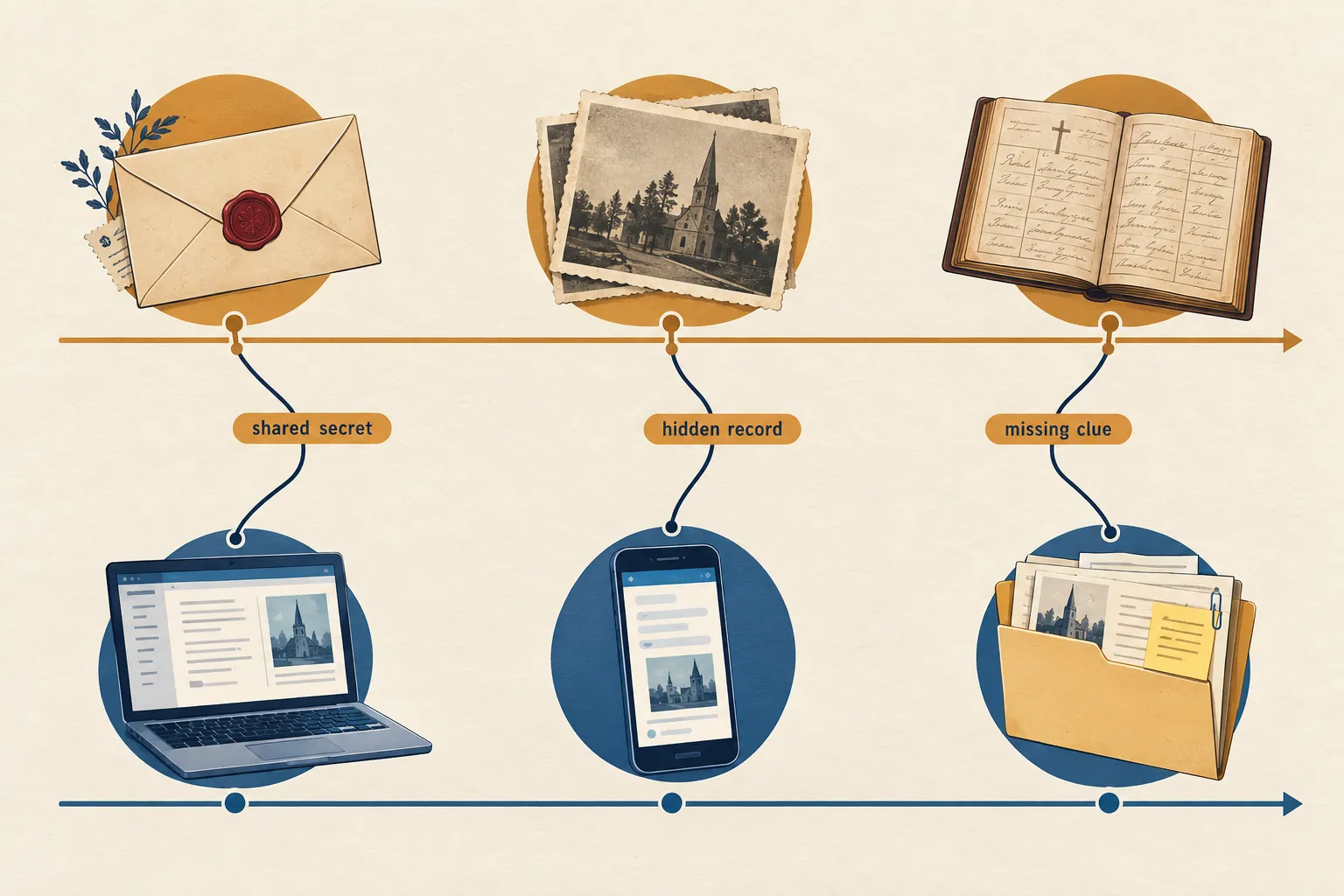
A dual timeline narrative alternates between two time periods, usually chapter by chapter, so that events in the past directly shape or explain a mystery unfolding in the present. The structure works when the two threads are asking the same underlying question from different sides of history.
Industry coverage of Christian fiction has noted a real surge in this format. Publishers Weekly reported that Christian publishers were seeing strong sales for dual-timeline and time-slip novels moving between decades or even centuries while keeping faith themes central to the plot [6]. Bethany House’s associate marketing manager pointed to Jaime Jo Wright’s dual-timeline backlist, which has reportedly sold more than 175,000 copies, as proof the readership was already established [6]. Gabrielle Meyer’s Timeless series has sold more than 130,000 copies using a related structure, where characters live out two possible versions of their own life [6].
Author Lynn Austin has said readers are drawn to different eras but “hunger for something more complicated” than a straight historical plot [6]. That hunger is exactly what a dual timeline satisfies:
- The past thread plants the wound. Something happened decades ago that was buried, misfiled, or misremembered.
- The present thread digs it up. A descendant, an investigator, or an ordinary woman on an ordinary Tuesday finds a document, a letter, or a photograph that doesn’t match the official story.
- The two threads converge. By the final chapters, the reader understands both versions well enough to see how they fit, or don’t.
Jaime Jo Wright has described dual-time fiction as a way for the past’s “ghosts” to visit the present through memory rather than through anything supernatural [6]. That framing matters for Christian fiction specifically: the earlier timeline isn’t set dressing. It’s the active explanation for the guilt, silence, or inherited secrecy the present-day character is carrying.
How Is a Dual Timeline Different From an Unreliable Narrator?
A dual timeline splits the story across two time periods with (usually) two different narrators who are each telling the truth as they understand it. An unreliable narrator is a single voice whose account of one timeline cannot be fully trusted. They solve different problems, and strong Christian suspense sometimes uses both at once.
| Device | What It Does | Where the Tension Comes From |
|---|---|---|
| Dual Timeline | Alternates between two eras, usually with different narrators | The gap between what happened then and what’s known now |
| Unreliable Narrator | One voice whose perception can’t be fully trusted | The gap between what a character believes and what’s actually real |
A good example of the unreliable-narrator approach in secular psychological thrillers is Alex Michaelides’ The Silent Patient, which one podcast review breaks down as a story built almost entirely on a narrator whose account can’t be trusted until the final pages [8]. That’s a single, warped lens on one timeline. A Christian dual-timeline thriller like Jessica R. Patch’s The Girl Upstairs blends both devices: the protagonist’s own perception is unreliable inside the present-day thread, while a second timeline supplies information she doesn’t have access to at all.
Choose a dual timeline if the story’s real engine is a buried historical event. Choose an unreliable narrator if the story’s real engine is a single mind under pressure.
What Makes Truth Ambiguous in Storytelling?
Truth becomes ambiguous when two characters, or two eras, each hold a version of events that is honest as far as it goes, but incomplete. Neither person is lying outright. Each one is missing the piece the other one is holding.
This is different from a mystery where someone is simply concealing facts. In a dual-timeline Christian thriller, the ambiguity usually comes from:
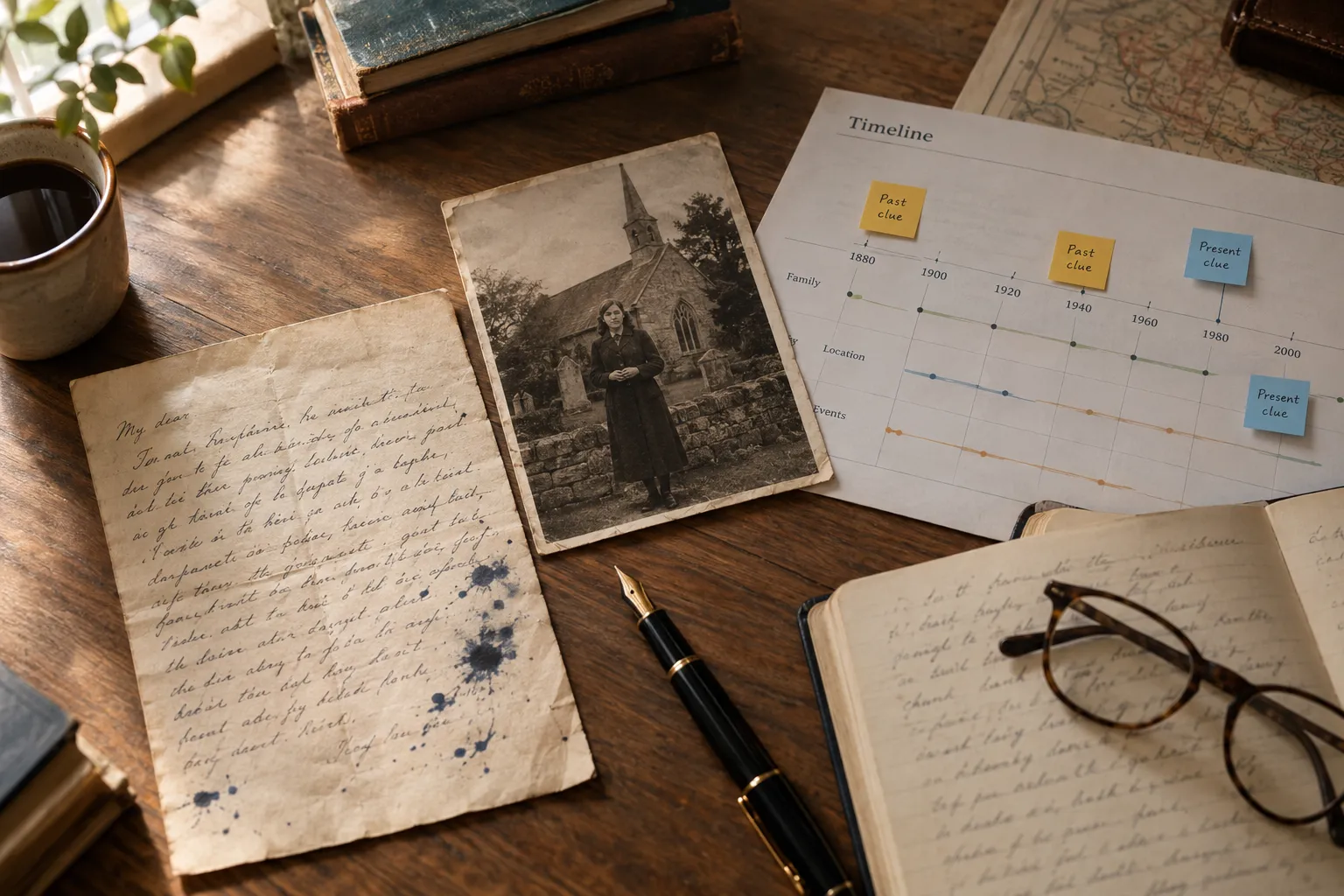
- A record that was never meant to survive, a diary, a church ledger, a confession letter, being read decades later without its original context.
- Memory that has softened or hardened over time, so a grandmother’s account of a tragedy is emotionally true but factually incomplete.
- A family choosing silence out of what felt like mercy, which later reads as a cover-up to someone with less context and more suspicion.
Melanie Dobson’s The Lost Story of Via Belle uses this exact mechanism, moving between a 1940s bestselling novel and a present-day screenwriter investigating what really happened to its author, with hidden authorship as the central unresolved question. Lynn Austin’s The Lumber Baron’s Wife follows a related pattern, pairing a missing frontier wife with a modern search for what became of her [7]. In both cases, two versions of the truth exist because two different eras each preserved only part of the record, not because anyone set out to deceive.
“The past doesn’t visit the present as a ghost story. It visits as memory, and memory is never the whole truth by itself.”
Can a Christian Psychological Thriller With a Dual Timeline Have a Hopeful Ending?
Yes, and the hope has to be earned rather than assumed. A hopeful ending in this genre doesn’t mean every fact gets resolved cleanly or every character is vindicated. It means the truth, once fully assembled from both timelines, becomes something a character can carry instead of something that destroys them.
This is where Christian suspense diverges most clearly from secular psychological thrillers, which often end on ambiguity or dread as the point. A dual-timeline structure is actually well suited to hope, because the reader has already watched two generations survive their worst chapter by the time the present-day character faces hers. The historical thread becomes proof that hard truth and survival aren’t opposites.
- Hope in the dark doesn’t mean the dark wasn’t real. It means the story refuses to let the dark have the last word.
- Redemption that costs something, a confession that damages a reputation, a relationship that has to be rebuilt from nothing, reads as earned rather than sentimental.
- Mercy and justice can coexist in the resolution. A character can forgive the person who wronged her family a generation ago without pretending the wrong never happened.
The Gathering Light series works from a version of this same tension, following women at a restoration retreat whose own testimonies are recorded, reused, and eventually turned against them by the very system meant to protect them. The hope in those books never arrives by skipping the cost, it shows up after the cost is paid.
What Are the Best Christian Psychological Thrillers to Read Right Now?
The strongest current titles combine faith, restrained suspense, and either a dual timeline or a carefully built unreliable perspective, without relying on graphic content to hold tension. Reader guides tracking clean thrillers with strong twist endings continue to highlight this exact combination as a growing category [3].
A short list worth starting with:
- Jaime Jo Wright’s dual-timeline catalog, including her upcoming The Resurrection of Evania James, which Publishers Weekly describes as Gothic-tinged suspense linking two women through a house tied to grave robbers.
- Gabrielle Meyer’s Timeless series, for readers who want the speculative version of two truths, two lives, both real, both costing something.
- Jessica R. Patch’s The Girl Upstairs, for readers who want the unreliable-narrator version of the genre without a second timeline.
- Lynn Austin’s and Melanie Dobson’s 2026 releases, both of which pair a historical disappearance with a present-day search for the real record [7].
For a broader curated list of clean, faith-rooted suspense, see this guide to the best Christian psychological thriller books for clean-read fans, and this comparison of psychological thriller films versus Christian psychological fiction for readers deciding which format fits their tolerance for tension.
What Audience Likes Christian Psychological Thrillers With a Dual Timeline?
The core audience is Christian fiction readers, largely women between 35 and 65, who want real stakes without graphic violence or explicit content. Many read on Kindle Unlimited and split their attention between cozy mystery, historical romance, and suspense, genres that share an appetite for a slow-burn reveal.
- They want faith represented honestly, not preached at, characters who doubt and still choose to act in good faith.
- They want a mystery with staying power. A dual timeline gives them two mysteries to hold in mind at once, which extends the payoff.
- They’re comfortable with heavier emotional material, grief, family secrets, inherited guilt, as long as the content itself stays clean.
Market coverage of Christian fiction sales in 2026 continues to show suspense and mystery holding a steady share of the best-selling titles in the category, alongside historical and cozy subgenres [9]. That crossover appetite is part of why the dual-timeline structure keeps expanding past Gothic suspense into historical family mystery and frontier stories [7].
How Do You Write a Convincing Christian Psychological Thriller With a Dual Timeline?
A convincing dual-timeline thriller needs both eras to carry real narrative weight, with clues planted in each timeline that only make full sense once the reader has both halves of the picture.
A working checklist:
- Give each timeline its own emotional stakes. The historical character needs a want and a fear that has nothing to do with being “backstory.”
- Plant clues that mean two different things in two different eras. A ledger entry that reads as routine bookkeeping in 1962 should read as evidence in the present.
- Let the present-day investigator misread the past at least once. A wrong assumption, corrected later, keeps the mystery honest instead of convenient.
- Resolve the historical thread on its own terms before or alongside the present-day one, don’t let it exist only to service the modern plot.
- Match the pacing. Long, uneven gaps between timeline switches lose momentum; keep chapters tight enough that a reader can hold both threads in mind.
Common mistakes to avoid:
- Treating the historical timeline as pure atmosphere instead of an active cause.
- Withholding a clue from the reader that a character logically would have shared, just to manufacture a twist.
- Letting the present-day faith arc resolve faster than the mystery, so the ending feels rushed or sentimental.
- Explaining a character’s faith instead of showing the choice that reveals it.
A recent craft discussion on structuring suspense for Christian fiction reinforces the same point: tension holds together when the reader trusts that every clue was fairly placed, even the ones they missed the first time [10]. For more on avoiding cheap shock value while keeping real danger on the page, see this breakdown of Christian psychological thrillers that don’t rely on graphic violence.
When Does a Christian Psychological Thriller Feel Preachy Instead of Authentic?
A story feels preachy the moment faith gets explained by the narrator instead of demonstrated through a character’s choice and its cost. It reads as authentic when the belief shows up under pressure, tested, doubted, and acted on anyway, rather than announced.
- Preachy: A character stops mid-scene to reflect on a Bible verse that neatly resolves the chapter’s tension.
- Authentic: A character makes a costly, faith-shaped choice, telling a hard truth, forgiving someone who hasn’t asked for it, and the narration simply lets the consequences play out.
This is the same principle behind stories that hold moral complexity without sliding into either sermon or nihilism, a balance explored in this look at moral ambiguity and redemption through a Dexter-adjacent lens for Christian readers, and in this comparison of Stephen King-style tension with faith-friendly psychological thriller alternatives.
FAQ
What is a dual timeline in a Christian thriller? A dual timeline splits the story between two time periods, usually a historical thread and a present-day one, that turn out to be causally connected. Both threads carry equal narrative weight rather than one serving as backstory for the other.
Is a dual timeline the same as a time-slip novel? Not exactly. A time-slip novel usually involves a character physically or spiritually experiencing a different era, while a dual timeline simply alternates narration between two separate periods with different characters.
Do dual-timeline Christian thrillers need a twist ending? No, but many readers expect one. The stronger pattern is a reveal that recontextualizes both timelines at once, rather than a shock twist confined to just the present-day plot.
Can a Christian psychological thriller include real danger without graphic content? Yes. Tension can come from withheld information, moral pressure, and slow-building dread rather than violent description, which keeps the story within clean-content standards.
Why do Christian publishers keep releasing dual-timeline novels? Sales data cited in trade coverage shows sustained reader demand, with individual authors’ backlists selling well past 100,000 copies using this exact structure [6].
Is the historical timeline always about faith directly? Not always. Sometimes the historical thread is about a hidden crime, a lost identity, or a family secret, and faith enters through how the present-day character chooses to respond once she learns the truth.
How long should each timeline chapter be? There’s no fixed rule, but consistency matters more than length. Readers track two threads more easily when chapter length and pacing stay roughly even between the two eras.
Conclusion
Two versions of the truth don’t have to compete for which one wins. In a well-built Christian psychological thriller with a dual timeline, both versions get to be true at once, and the story’s real work is showing what it costs a character to hold them together honestly. That’s not a plot trick. It’s the same pattern found in earned grace throughout Christian fiction: nothing gets resolved by skipping the hard part.
Readers looking for their next dual-timeline read should start with the historical suspense authors named above, then look for the same DNA in contemporary psychological thrillers built around records, testimonies, and buried family history, the Gathering Light series among them. Writers working on their own dual-timeline manuscript should start smaller: pick one clue that means something different in each era, and build outward from there. The rest of the structure tends to follow once that single connection is solid.
References
[1] The Ledge – https://www.goodreads.com/book/show/213209601-the-ledge [3] Clean Thriller Books With Plot Twists – https://fruitfulreader.com/clean-thriller-books-with-plot-twists/ [6] Christian Novelists Give Time A New Twist – https://www.publishersweekly.com/pw/by-topic/industry-news/religion/article/99925-christian-novelists-give-time-a-new-twist.html [7] Christian Fiction New Releases May 2026 – https://www.narelleatkins.com/christian-fiction-new-releases-may-2026/ [8] Stuck in the Middle Podcast: The Silent Patient Book Review – https://music.amazon.com/es-us/podcasts/33d38a94-134f-46c9-b5f1-ba43dc79e956/episodes/3464cbc6-adae-49c3-adf4-ae97f37f97e5/stuck-in-the-middle-podcast-she-shot-her-husband-5-times-in-the-face-never-spoke-another-word-the-silent-patient-book-review [9] Best Selling Christian Novels 2026 – https://www.alibaba.com/product-insights/best-selling-christian-novels-2026.html [10] sarahhamakerfiction – https://sarahhamakerfiction.com/2026/01/14/3748/