
Last updated: September 21, 2026
Quick Answer: Christian epic fantasy for fans of Percy Jackson offers the same rush of mythology, quests, and supernatural wonder, but with a worldview rooted in faith rather than a pagan pantheon. These books feature magic systems built on covenant, prayer, and divine authority rather than borrowed Greek gods, and they deliver real adventure without the content concerns that make Percy Jackson a complicated recommendation for many Christian families. The genre is growing fast in 2026, with strong options available on Kindle Unlimited. [8][10]
Key Takeaways
- Christian epic fantasy shares Percy Jackson’s love of mythology, quests, and supernatural power, but grounds those elements in a biblical or faith-consistent worldview
- Magic systems in the best Christian fantasy are built on covenant, calling, or divine gift, not arbitrary power, and not occult practice
- The genre serves both YA-adjacent readers (ages 12+) and adults, with distinct series for each audience
- Faith in these stories shows up through character choice and consequence, not through sermon-style narration
- Authors like Andrew Peterson (The Wingfeather Saga), N.D. Wilson (100 Cupboards), and Jonathan Rogers (The Wilderking Trilogy) helped establish the modern tradition
- Silas Bellhaven’s The Sarel Chronicles and The Kethara Chronicles are current Kindle Unlimited options built on covenant-based magic and earned grace
- The best Christian fantasy doesn’t feel preachy, faith is load-bearing, not decorative
- These books work for non-religious readers who simply want clean, morally serious adventure fiction
- Redemption arcs in Christian fantasy cost something, grace isn’t handed over cheaply
- Finding recommendations is easier than it used to be, with ACFW new release lists and faith-focused book communities growing steadily [2][5]
What Is Christian Epic Fantasy and How Does It Differ from Regular Fantasy
Christian epic fantasy is secondary-world or mythological adventure fiction in which the underlying worldview is explicitly or structurally Christian, meaning a creator God, moral accountability, and the possibility of grace are built into the world’s logic, not bolted on afterward.
The difference from regular fantasy isn’t tone or content rating alone. It’s architecture. In standard epic fantasy, power systems are often morally neutral: a wizard is powerful because of talent or training, and the story doesn’t ask whether that power answers to anything higher. In Christian epic fantasy, power, whether called magic, covenant-working, or divine gift, exists within a framework of accountability. Someone gave it. Someone can take it back. Using it wrongly has consequences that go beyond tactical failure.
Three structural differences worth knowing:
- Source of power: Secular fantasy often treats magic as a natural force. Christian fantasy typically ties supernatural ability to relationship, covenant, calling, or divine authority.
- Moral weight: Choices in Christian fantasy carry spiritual consequence, not just plot consequence. A character who betrays a covenant doesn’t just lose an ally, they lose something of themselves.
- Resolution: Secular fantasy tends toward earned triumph. Christian fantasy tends toward earned grace, the hero doesn’t just win, they’re changed, and the change costs something.
For a deeper look at how these systems work in practice, see Christian epic fantasy with faith-integrated magic systems: how authors use prophecy, prayer, and miracles in worldbuilding.
Best Christian Fantasy Books Like Percy Jackson
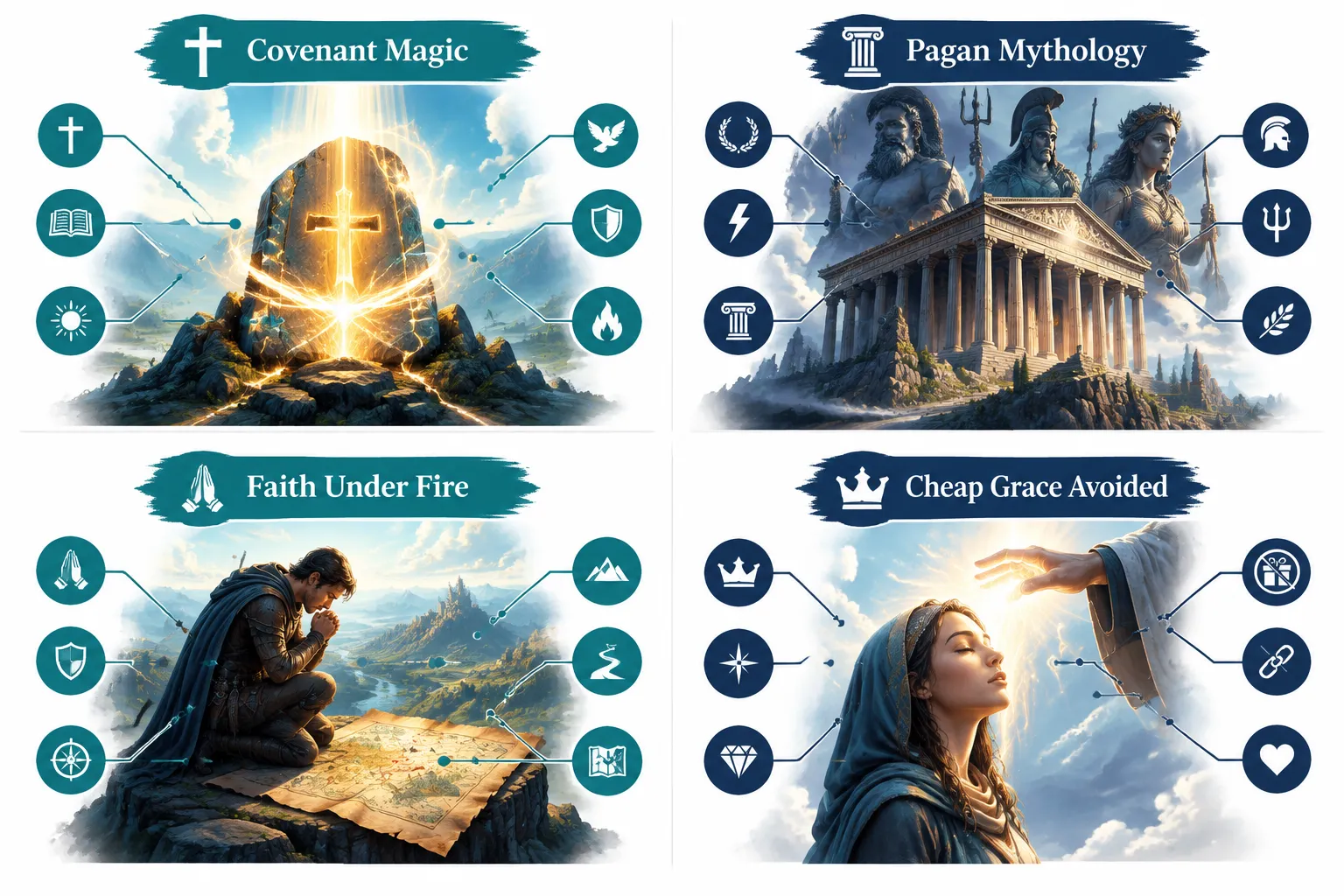
The best Christian fantasy alternatives to Percy Jackson share the energy, young heroes, high stakes, supernatural systems, mythological depth, while replacing the Greek pantheon with a worldview that holds together morally and spiritually.
Established classics in the tradition:
| Book/Series | Author | Why It Works for Percy Jackson Fans |
|---|---|---|
| The Wingfeather Saga | Andrew Peterson | Epic scope, humor, genuine darkness, deep world mythology |
| 100 Cupboards Trilogy | N.D. Wilson | Portal fantasy, layered mythology, shaped by Christian faith without being didactic |
| The Wilderking Trilogy | Jonathan Rogers | Biblical King David retold in a bayou setting, adventure, prophecy, identity |
| The Cooper Kids Adventure Series | Frank Peretti | Archaeological adventure with spiritual mystery, great for middle-grade readers |
Current Kindle Unlimited options (2026):
- The Sarel Chronicles (Silas Bellhaven), The Map of Unanswered Prayers opens with a map-scribe who discovers a black road appearing on her skin, belonging to a boy the official record refused to acknowledge. The magic system is built on the Maker-Who-Hears and the covenant of witness. [Adventure, prophecy, earned grace.]
- The Kethara Chronicles (Silas Bellhaven), An empire trying to contain and count every act of mercy, and two women carrying a covenant word the auditors cannot own. Mythology-rich, quest-driven, clean. [5][6]
Does Christian Fantasy Have Magic Systems, or Is Magic Forbidden
Christian fantasy absolutely can and does have magic systems, the question is how the power is sourced and what it answers to.
The concern some Christians have with fantasy magic comes from passages like Deuteronomy 18 that forbid occult practice. But Christian fantasy authors have developed a clear and consistent solution: magic systems that are not occult in structure. Power in these worlds doesn’t come from spirits, forbidden knowledge, or self-will. It comes from covenant relationship with a creator figure, divine gift, or the working of prayer and faith.
How faith-friendly magic systems typically work:
- Covenant-based: Power flows from a binding agreement with a divine figure. Breaking the covenant breaks the power, or worse.
- Gift-based: Characters are given abilities they didn’t earn and can’t manufacture. The story explores what they do with what they’ve been given.
- Prayer/miracle-based: Supernatural events happen in response to faith, not formula. The character asks; the answer isn’t guaranteed.
- Witness/record-based: Some systems (like the Sarel Chronicles) make the acknowledgment of truth itself the supernatural act, the Maker records what the House of Witness refuses to.
For more on how these systems are built and why they work theologically, see magic in Christian fiction and Christian cozy fantasy: magic systems rooted in grace, not power.
“Power that answers to no one is just another name for chaos. The best Christian fantasy magic systems are interesting precisely because they’re accountable.”
Percy Jackson but Christian Mythology Books: What That Actually Looks Like
“Percy Jackson but Christian” is a shorthand that captures something real: readers want mythology, divine beings, quests with cosmic stakes, and a hero who didn’t ask for any of this. Christian epic fantasy delivers all of that, the difference is that the divine figures in these worlds are not capricious Greek gods playing favorites. They are creators with moral character, and that changes the entire emotional register of the story.
What carries over from Percy Jackson:
- A young or reluctant hero with an unexpected connection to divine power
- Quests with genuine danger and real cost
- A world where the supernatural is real and present, not metaphorical
- Mythology with internal consistency and deep history
What changes:
- The divine isn’t arbitrary or petty, there’s a moral order
- The hero’s power comes with responsibility, not just advantage
- Redemption is available, but it costs something
- The story doesn’t require accepting Greek religion as valid, the worldview is internally consistent and morally coherent
Jonathan Rogers’ The Wilderking Trilogy is the clearest example: it’s essentially the story of David and Goliath, Jonathan, and Saul, but set in a Southern bayou with invented creatures and political intrigue. The mythology feels fresh because it’s rooted in something real.
Christian Epic Fantasy for Young Adults vs. Adults
Christian epic fantasy works across age ranges, but the content, complexity, and thematic weight differ meaningfully between YA-adjacent and adult series.
YA-adjacent Christian epic fantasy (ages 12-18):
- Protagonists are typically teenagers discovering their role in a larger divine plan
- Adventure and action drive the plot; faith themes are present but not heavily theological
- The Wingfeather Saga, 100 Cupboards, and The Wilderking Trilogy all fit here
- Clean content is standard, these books were written with young readers in mind
Adult Christian epic fantasy:
- Characters carry more history, more failure, more complicated faith
- Themes of mercy and justice, covenant betrayal, and earned grace carry more weight
- The Sarel Chronicles and Kethara Chronicles (Silas Bellhaven) are written for adult readers who want real stakes alongside real faith
- Faith under fire means something different when the character has already tried and failed
Choose YA-adjacent if: you’re looking for a Percy Jackson replacement for a middle-grade or teen reader, or if you want fast-paced adventure with lighter thematic load.
Choose adult Christian epic fantasy if: you want characters who doubt, serve, fail, and find grace in the ordinary Tuesday that suddenly isn’t ordinary anymore.
For readers building a cross-genre faith-based reading list, Kindle Unlimited Christian reads: how to build a clean faith-filled TBR covers options across mystery, western, fantasy, and thriller.
Faith-Based Fantasy with Greek and Roman Mythology Elements
Faith-based fantasy doesn’t typically use Greek or Roman pantheons directly, and that’s intentional. The concern isn’t that mythology is dangerous; it’s that presenting Zeus or Poseidon as real divine beings creates a worldview conflict for Christian readers.
The solution most Christian fantasy authors use is original mythology that carries the same structural energy as Greek myth, divine beings, cosmic conflict, hero lineage, prophetic destiny, but within a worldview that doesn’t require treating pagan gods as real.
How authors handle this:
- Invented pantheons with clear creator/creation hierarchy, there’s one Maker, and lesser supernatural beings exist within that hierarchy, not outside it
- Mythological history that echoes biblical patterns, creation, fall, covenant, redemption, without being allegory
- Prophecy and destiny as divine communication, not fate imposed by capricious gods
The Kethara Chronicles take this approach: the empire’s auditors want to count and contain every act of mercy, but the covenant word Amara and Sela carry operates outside the empire’s accounting system entirely. The mythology is original, but the structure, a creator whose mercy exceeds what any institution can manage, is unmistakably rooted in faith.
For readers specifically interested in how faith-based fantasy handles these worldbuilding questions, the tag archive covers multiple angles.
How Authors Handle Magic in Christian Fantasy Without Conflicting with Faith
The most common approach is to distinguish between power that serves the self and power that serves the covenant. Magic that looks like occult practice in Christian fantasy is almost always portrayed as dangerous, corrupting, or false, while the protagonist’s power flows from a source with moral character.
Practical techniques authors use:
- Cost and accountability, Using power depletes something real, or requires genuine faith, not just technique
- Source transparency, The reader knows where the power comes from, and that source has a name and a character
- Consequences for misuse, Power used for self-serving ends has consequences that aren’t just tactical
- Limits that reflect theology, The hero can’t do everything; some things only the Maker can do
The worst mistake in this space is a magic system that claims to be faith-based but operates exactly like secular magic with a prayer label attached. Readers notice. The system has to be structurally different, not just cosmetically labeled.
See balancing action and faith: how Christian epic fantasy authors keep the pace while exploring spiritual themes for a detailed breakdown of pacing alongside spiritual content.
Christian Fantasy Series with Adventure and Quests Like Percy Jackson
Quest structure is one of the strongest overlaps between Percy Jackson and Christian epic fantasy. Both traditions use the hero’s quest as a framework for identity formation, the character discovers who they are through what they’re asked to do and what it costs them.
Series with strong quest structures:
- The Sarel Chronicles, Elya Renn moves from disgraced map-scribe to something the Great Map was never built to hold. Each book is a quest that goes further past the edge of what the official record acknowledges. Adventure-forward, faith-rooted.
- The Wingfeather Saga, Multi-book quest across an invented world with genuine peril, humor, and a mythological history that deepens with each volume
- The Kethara Chronicles, Amara and Sela’s covenant quest takes them through an empire that wants to own mercy itself
What makes a Christian quest different from a secular one: The goal isn’t just survival or victory. The character is being formed. What they choose under pressure reveals and shapes who they are before God, and that formation is the real story underneath the adventure plot. Redemption in fantasy explores this theme further.
Is Christian Fantasy Only for Religious Readers, or Can Anyone Enjoy It
Christian fantasy works for non-religious readers who want clean, morally serious adventure fiction. The faith content isn’t a barrier, it’s a worldview that makes the story’s moral stakes coherent.
A reader who doesn’t share Christian belief can still appreciate a story where power has accountability, choices have genuine consequences, and grace is earned rather than given for free. Those are good storytelling values regardless of theology.
Who this genre works well for beyond practicing Christians:
- Parents looking for clean fantasy alternatives to Percy Jackson for their kids
- Readers who are tired of grimdark fantasy where nothing has moral weight
- Anyone who loved Narnia or Tolkien and wants more of that register
- Secular readers who simply want adventure fiction without graphic content
Where it may not land: Readers who actively dislike any faith content in fiction, or who want morally ambiguous magic systems with no accountability built in, will find Christian epic fantasy frustrating by design.
Common Mistakes in Christian Fantasy Writing
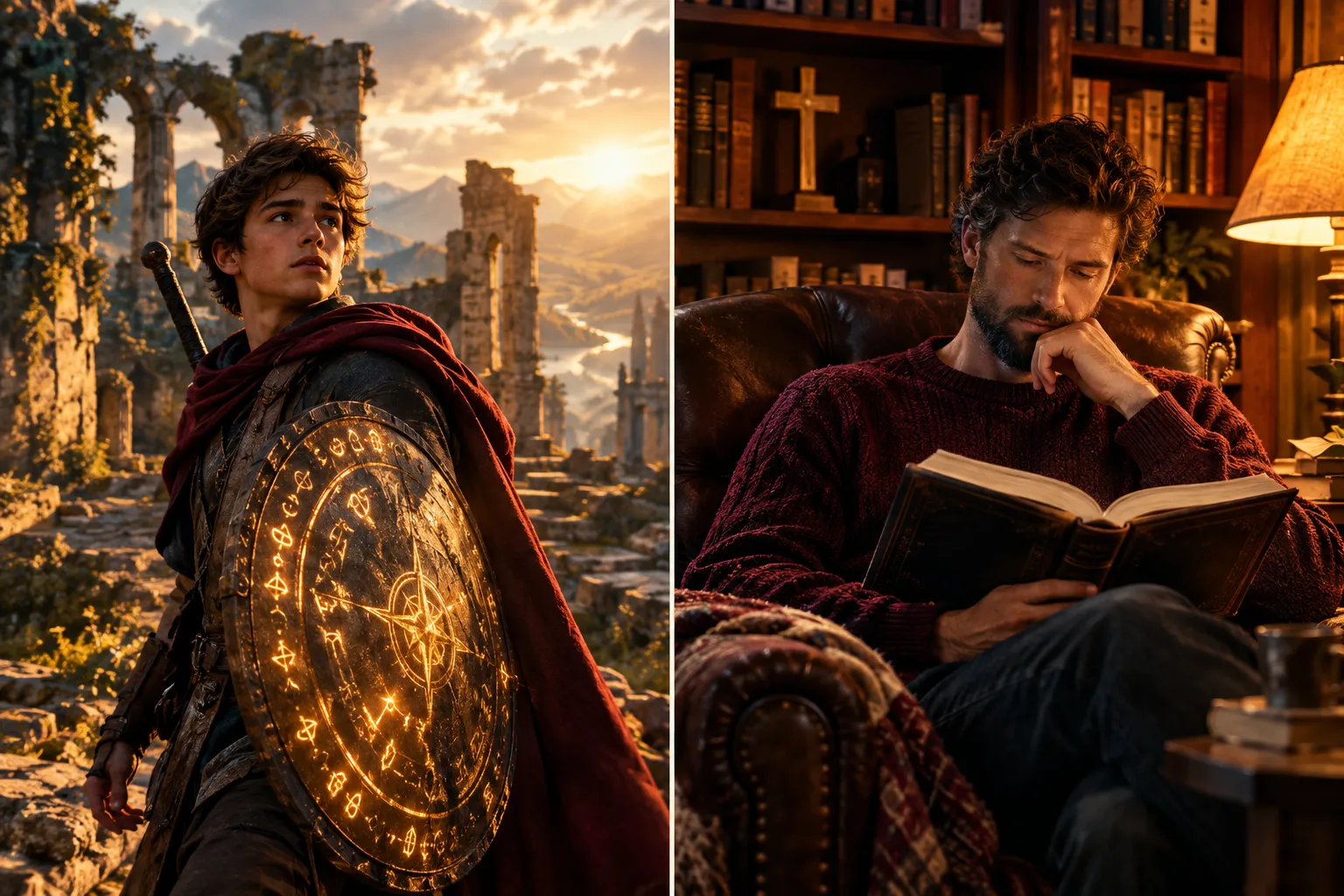
The biggest mistakes in Christian fantasy writing fall into two categories: being too heavy-handed with faith content, or being so cautious about it that the faith disappears entirely.
Mistakes that sink Christian fantasy:
- Sermon-in-disguise plotting, A character faces a problem, another character explains the gospel, problem resolves. This isn’t storytelling; it’s a tract with chapter breaks.
- Cheap grace, The hero sins, feels bad for half a page, and everything is fine. Redemption that costs nothing means nothing.
- Magic systems that are just secular magic with a prayer label, If the power works the same way regardless of the character’s faith, it’s not a faith-integrated system.
- Flat villain theology, Evil characters who are evil because they don’t believe, rather than because they’ve made specific, costly choices
- Avoiding hard things entirely, Christian fantasy can and should include loss, doubt, injustice, and real darkness. Hope in the dark is only meaningful if the dark is real.
The standard that separates good Christian epic fantasy from the rest: faith should show up through what characters choose and what those choices cost, not through what the narrator explains.
Can Christian Fantasy Have Dark Themes and Moral Complexity
Yes, and the best of it does. Clean content doesn’t mean painless content. Christian epic fantasy can and should include grief, injustice, moral failure, doubt, and genuine danger. The constraint is on how those things are portrayed, not whether they appear.
The difference between darkness in Christian fantasy and darkness in grimdark secular fantasy:
- Grimdark: Darkness is the point. Suffering exists to demonstrate that the world has no meaning.
- Christian fantasy: Darkness is real, but it isn’t the last word. Hope in the dark is earned by going through the dark honestly, not by skipping it.
Characters in Christian epic fantasy can doubt God, make terrible choices, lose people they love, and carry guilt that doesn’t resolve quickly. What they can’t do, in the best of the genre, is do those things without consequence, or find resolution without cost.
For readers who want to understand how this balance works in thriller and darker fantasy, the role of redemption arcs in Christian thrillers and dark fantasy covers the mechanics in detail.
Christian Fantasy Books That Don’t Feel Preachy or Heavy-Handed
The books that avoid preachiness share one quality: faith is load-bearing in the story’s structure, not decorative in the narration. The reader experiences the worldview through what happens, not through what characters say about it.
Markers of non-preachy Christian fantasy:
- Characters doubt without being corrected by the narrator
- Scripture or theological statements, if they appear, come from a character’s honest voice, not as authorial instruction
- The story’s moral order is demonstrated through consequence, not explained through dialogue
- Faith is tested and proven through the plot, not delivered as a given
Books that get this right:
- The Wingfeather Saga, Peterson trusts the story to carry the theology
- 100 Cupboards, Wilson’s faith shapes the world’s logic without announcing itself
- The Sarel Chronicles, The Maker-Who-Hears is real in the story because the story’s events require it, not because characters keep saying so
The working principle: walking with the reader, not talking at them. A story that earns its faith moments by putting characters through genuine cost first will never feel like a sermon.
For a broader look at series built on this principle, see best Christian epic fantasy series for readers who want deep faith themes without allegory.
Where to Find Christian Epic Fantasy Recommendations
Finding quality Christian epic fantasy has gotten easier in 2026 as the genre has grown, with dedicated communities and curated lists making discovery more reliable. [2][5][8]
Best sources for recommendations:
- ACFW (American Christian Fiction Writers) new release lists, Updated monthly, covers fantasy alongside mystery and thriller [2]
- Kindle Unlimited Christian fiction categories, The KU catalog has expanded significantly; filtering by Christian fantasy surfaces both established and indie authors [5][6]
- Goodreads Christian fantasy shelves, Community-curated lists with reader reviews that flag content concerns honestly
- Faith-focused book bloggers and BookTok creators, Growing presence in 2026, particularly for clean fantasy recommendations [10]
- The Silas Bellhaven blog, Covers Christian epic fantasy, covenant fantasy, and faith-integrated magic systems with specific recommendations
For building a full faith-based reading list across genres, best Christian epic fantasy worlds on Kindle Unlimited is a strong starting point.
Conclusion: Where to Start
Christian epic fantasy for fans of Percy Jackson is a real and growing genre, not a niche compromise, but a full tradition with its own classics, its own magic-system logic, and its own emotional register. The adventure is real. The stakes are real. The faith is load-bearing, not decorative.
Actionable next steps:
- Start with a proven classic: The Wingfeather Saga by Andrew Peterson is the most widely recommended entry point for readers crossing over from mainstream fantasy.
- Try a current KU option: The Map of Unanswered Prayers (The Sarel Chronicles, Book 1) is available on Kindle Unlimited and opens immediately on a mystery, a black road appearing on a map-scribe’s skin, belonging to a boy the official record refused to acknowledge.
- Explore the Kethara Chronicles if covenant-based magic and empire-vs-mercy conflict sounds compelling, The Stone That Remembered is Book 1.
- Use ACFW’s monthly new release lists [2] and faith-based fantasy communities to stay current as the genre keeps growing.
- Check the Silas Bellhaven author page at Amazon for the full catalog of Christian epic fantasy, covenant fantasy, and faith-rooted fiction across genres.
The best of this genre doesn’t ask readers to choose between a good story and a meaningful one. It insists, quietly and with real conviction, that those two things were never opposites.
FAQ
Q: Is Christian epic fantasy the same as Christian allegory? A: No. Allegory maps story events directly onto theological concepts (Aslan = Christ). Christian epic fantasy uses a Christian worldview as the story’s architecture without requiring one-to-one symbolic mapping. Many Christian fantasy authors actively avoid allegory to keep the story from feeling like a puzzle to decode.
Q: Can teens who loved Percy Jackson enjoy Christian epic fantasy? A: Yes, The Wingfeather Saga, 100 Cupboards, and The Wilderking Trilogy are all excellent fits for teen readers who want the same energy with a faith-consistent worldview.
Q: Does Christian fantasy always have a happy ending? A: Not always. It tends toward hope, but hope earned through real cost. Characters can lose people, fail badly, and carry lasting consequences. The difference from grimdark is that loss isn’t presented as meaningless.
Q: Is magic in Christian fantasy the same as witchcraft? A: No, the best Christian fantasy magic systems are structurally different from occult practice. Power flows from covenant relationship, divine gift, or prayer, not from forbidden knowledge or spirit-summoning. The distinction is built into the world’s logic, not just labeled differently.
Q: Do I have to be Christian to enjoy these books? A: No. Readers who want clean, morally serious adventure fiction with real stakes often find Christian epic fantasy satisfying regardless of personal belief. The worldview makes the moral stakes coherent, which improves the storytelling.
Q: What’s the difference between Christian epic fantasy and Christian cozy fantasy? A: Scale and tone. Epic fantasy involves world-altering stakes, large casts, and extended quest structures. Cozy fantasy is smaller in scope, warmer in tone, and more focused on community and personal growth. Both can have faith-integrated magic systems.
Q: Where can I find Christian epic fantasy on Kindle Unlimited? A: The Sarel Chronicles and Kethara Chronicles (Silas Bellhaven) are available on KU. Searching “Christian fantasy” in the KU catalog and filtering by series length will surface additional options. ACFW’s monthly new release lists [2] also flag KU availability.
Q: Are there Christian epic fantasy series without romance subplots? A: Yes. The Sarel Chronicles and Kethara Chronicles are adventure and quest-focused without romance as a plot driver. For readers specifically looking for this, non-romance Christian epic fantasy for Kindle Unlimited readers covers the options in detail.
Q: What makes a Christian fantasy magic system “faith-friendly”? A: The power has a moral source, operates with accountability, and has consequences for misuse that go beyond tactical failure. It doesn’t operate identically to secular magic with a prayer label, the faith is structural, not cosmetic.
Q: How long are most Christian epic fantasy series? A: Most run three to five books. The Sarel Chronicles and Kethara Chronicles are both trilogies. The Wingfeather Saga is four books. Longer series exist but trilogies are the most common structure in the current market.
References
[1] New Releases – https://australasianchristianwriters.com/category/new-releases/ [2] September 2026 Acfw New Fiction Releases – https://www.sandraardoin.com/september-2026-acfw-new-fiction-releases/ [5] New Release Fiction – https://www.christianbook.com/page/fiction/new-release-fiction [6] Top Selling Christian Fiction – https://www.accio.com/business/top-selling-christian-fiction [8] New Fantasy Books September 2026 – https://booksofbrilliance.com/2026/09/01/new-fantasy-books-september-2026/ [10] Fantasy Books Releasing In September 2026 – https://www.darlingreader.com/fantasy-books-releasing-in-september-2026/