Last updated: September 28, 2026
Quick Answer
Christian Western romance with a female marshal works when the heroine’s authority is real and costly, her vulnerability is earned rather than decorative, and the romance grows through shared trials rather than instant attraction. The strongest examples pair frontier law with a spiritual plot, forgiveness, trust, and mutual respect, so the badge and the faith both carry weight by the final page [11].
Key Takeaways
- A female marshal protagonist works best when her authority is tested by real consequence, not just admired by other characters.
- Current Christian publishing often approaches this premise sideways, the heroine is an undercover investigator, a marshal’s partner, or a witness with insider knowledge rather than always the commissioned officer herself [3][8].
- Vulnerability should surface through cost (an old wound, a broken trust, a decision that haunts her) rather than through helplessness.
- Earned trust in Christian romance is built scene by scene: shared danger, kept promises, honest confession, never a single grand gesture.
- Faith functions as what scholars call a “third party” in the relationship, giving the romance a purpose beyond attraction [11].
- Christian Western romance differs from secular Western romance mainly in restraint, in redemptive framing, and in the presence of forgiveness as plot machinery, not decoration.
- Readers of this subgenre are often women 35 to 65 who want clean stakes, real danger, and a resolution that feels earned rather than convenient.
What Makes a Good Christian Western Romance Novel?
A good Christian Western romance needs three things working at once: a lawful frontier setting with real danger, a heroine and hero who are each other’s equal in strength and conviction, and a spiritual arc that changes what the romance means, not just how it ends. Christian Western Romance With a Female Marshal: Authority, Vulnerability, and Earned Trust on the Frontier lives or dies on whether those three elements are load-bearing or decorative.
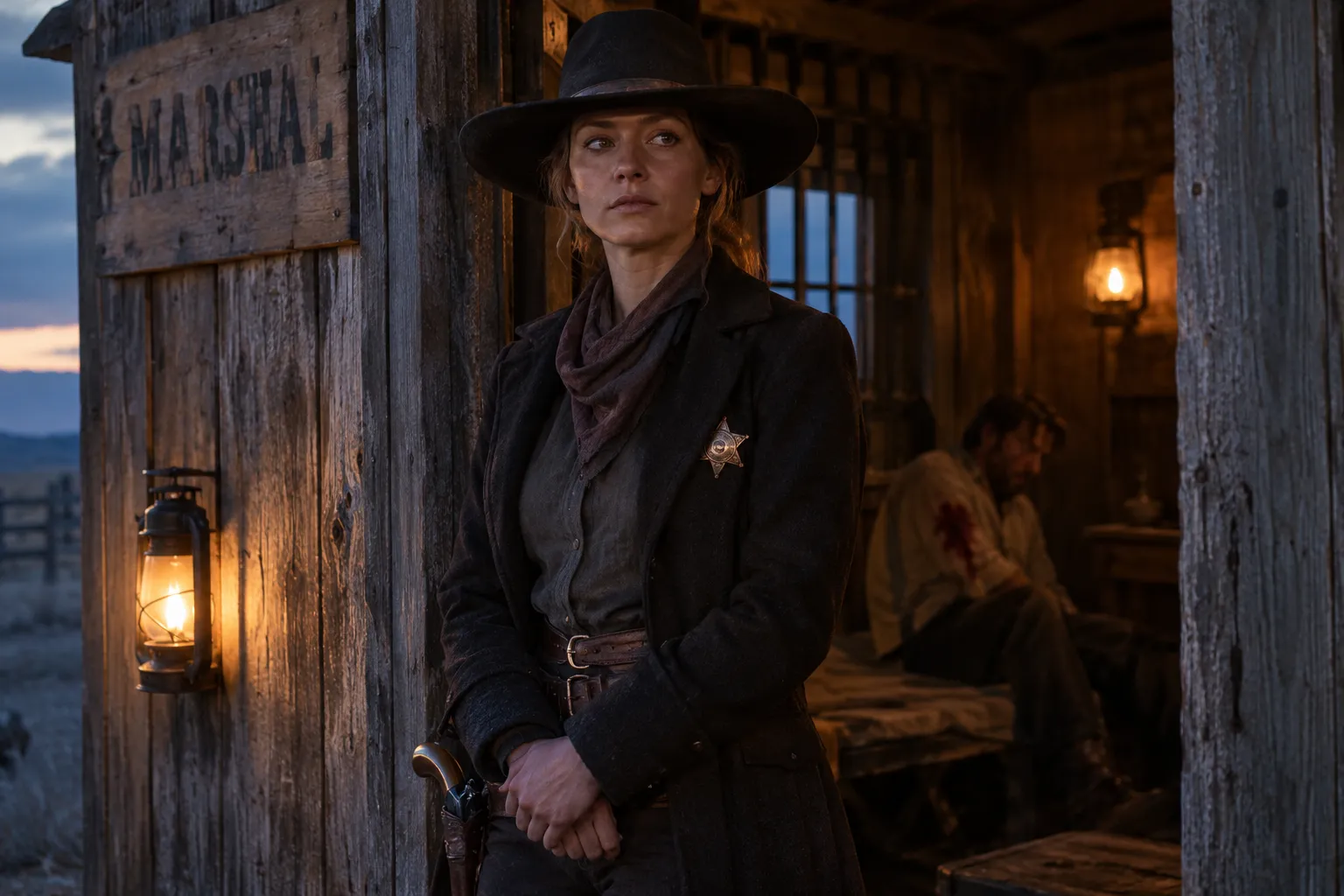
Mary Connealy has said she writes strong heroes and then makes her heroines “just as strong to be a match for them” [11]. That single design choice separates a good frontier romance from a forgettable one. If the heroine’s badge, gun, or grit only exists to make the hero look chivalrous by comparison, the story collapses into costume drama. If her strength is real, tested by a chase, a betrayal, a decision under pressure, the romance has something to survive.
Academic reviews of inspirational romance describe a recurring dual structure: a physical romance plot and a spiritual plot running side by side, built on forgiveness, trust, hope, and the conflict between good and evil [11]. A Western marshal story gives that structure a literal shape, the marshal’s job is enforcing order, and the spiritual plot is usually about mercy complicating that order.
Female Marshal Characters in Western Fiction: What the Genre Actually Does
Female marshal characters in Western fiction rarely sit in the exact commissioned-officer role without qualification, publishers often route the premise through an undercover agent, a marshal’s trusted partner, or a woman with insider knowledge of an outlaw network. This keeps the frontier-justice framework intact while giving the heroine practical authority she has to defend.
Recent Christian releases show this pattern clearly:
- Mary Connealy’s Ambush of the Heart, the first Rocky Mountain Marshals book, centers on U.S. Marshal Owen Riley and Delaney Bridger, a courageous woman navigating an ambush and wilderness survival alongside him, she is not the badge-holder, but her competence carries equal narrative weight [2].
- Loving the Lawman, a 2026 multi-author collection, includes Erica Vetsch’s “Maggie and the Maverick,” where the heroine is an undercover U.S. Marshal posing as a traveling saleswoman while investigating stage robberies [3].
- Lacy Williams’s Marrying Miss Marshal takes the direct route, following Danna Carpenter as a female town marshal handling saloon violence and rustlers, described by reviewers as a “fierce lady marshal” determined to keep order [1][8].
Do female marshals in Westerns need a love interest? No, not structurally, a marshal story can stand on justice alone. But in the Christian romance subgenre specifically, the love interest usually functions as the character who tests whether her authority is sustainable and whether her guardedness can survive being known. Without him (or her, in a rare reversed structure), the vulnerability half of the story has nowhere to go.
How Do You Write Authority and Vulnerability in Romance?
Authority and vulnerability work together in romance when the character’s public strength has a private cost that only the love interest gets to see. Write the badge first, establish it through consequence, an arrest that goes wrong, a decision the town resents, then let the vulnerability surface only after that authority has been proven real.
The mistake most drafts make is reversing the order: showing softness before showing competence, so the vulnerability reads as the character’s baseline rather than something she’s protecting. A frontier marshal who breaks down before she’s shown she can hold a line has nothing to lose by breaking down. Sequence matters:
- Establish competence under pressure, she makes a hard call and it costs her something (a friendship, a reputation, a night’s sleep).
- Let one person notice the cost, not the achievement. The hero should see the toll before he sees the triumph.
- Withhold the confession for several chapters. Trust her guardedness; don’t explain it in narration.
- Release it only when the stakes justify it, a moment where staying silent would cost more than speaking.
This mirrors what makes faith-under-fire storytelling land in general: grace and honesty only mean something after they’ve cost the character something. For more on how faith-rooted authors build that kind of pressure without turning it into a lecture, see this reading guide to clean frontier stories with strong moral stakes.
How to Make Earned Trust Feel Realistic in Romance
Earned trust feels realistic when it accumulates through specific, repeatable actions, kept promises, honest disclosures, and shared risk, rather than through one dramatic rescue. A single grand gesture can spark attraction, but it cannot substitute for the pattern of reliability that actual trust requires.
Christian Western Romance With a Female Marshal: Authority, Vulnerability, and Earned Trust on the Frontier depends almost entirely on this mechanic, because the marshal’s job trains her to distrust by default. Readers need to see the hero pass small tests before he’s allowed to pass a big one:
- He tells the truth when a lie would have been easier and she wasn’t watching.
- He defers to her judgment on a case, publicly, even when it costs him standing.
- He keeps a confidence she gave him under duress, and never brings it up again unprompted.
Common mistake: skipping straight to a marriage-of-convenience or forced-proximity setup as a shortcut to intimacy without doing the small-trust work first. Forced proximity can accelerate a plot, but it cannot manufacture trust, it can only create the opportunity for trust to be built or broken. Readers who want more on how frontier suspense builds this kind of tension without cheap payoff may find this piece on frontier love stories with real danger and real faith useful.
Christian Romance Books Set in the Old West: Where the Female Marshal Premise Shows Up
Christian romance set in the Old West currently favors indirect approaches to the female marshal premise, embedding her as a partner, undercover operative, or witness rather than always the sole commissioned officer, though direct marshal heroines still exist and remain popular with readers seeking that specific fantasy.
Beyond the titles already mentioned, Bethany House has continued backing the Western romance category through authors including Karen Witemeyer, Mary Connealy, Tracie Peterson, and Misty M. Beller, according to Publishers Weekly’s 2024 coverage of the genre’s renewed push in Christian publishing [11]. Independent publishing has kept pace outside the major houses too, Jill Dewhurst’s Clara’s Courage, part of a September 2026 release roundup, follows a captivity-and-reunion plot built around a marriage of convenience and a dangerous journey [7].
“Christian romance emphasizes God, redemption, fidelity, mutuality, consent, and marriage”, a framework literary scholarship traces through Lynn S. Neal’s research on evangelical romance [11].
Best Western Romance With Strong Female Leads: What Readers Look For
Readers of Western romance with strong female leads look for competence that isn’t undercut by the plot, danger that feels real without becoming graphic, and a romance that treats the heroine as an equal partner rather than a prize the hero earns. Frontier romance readers specifically want the setting’s hardship, isolation, lawlessness, physical risk, to actually shape the relationship, not just decorate it.
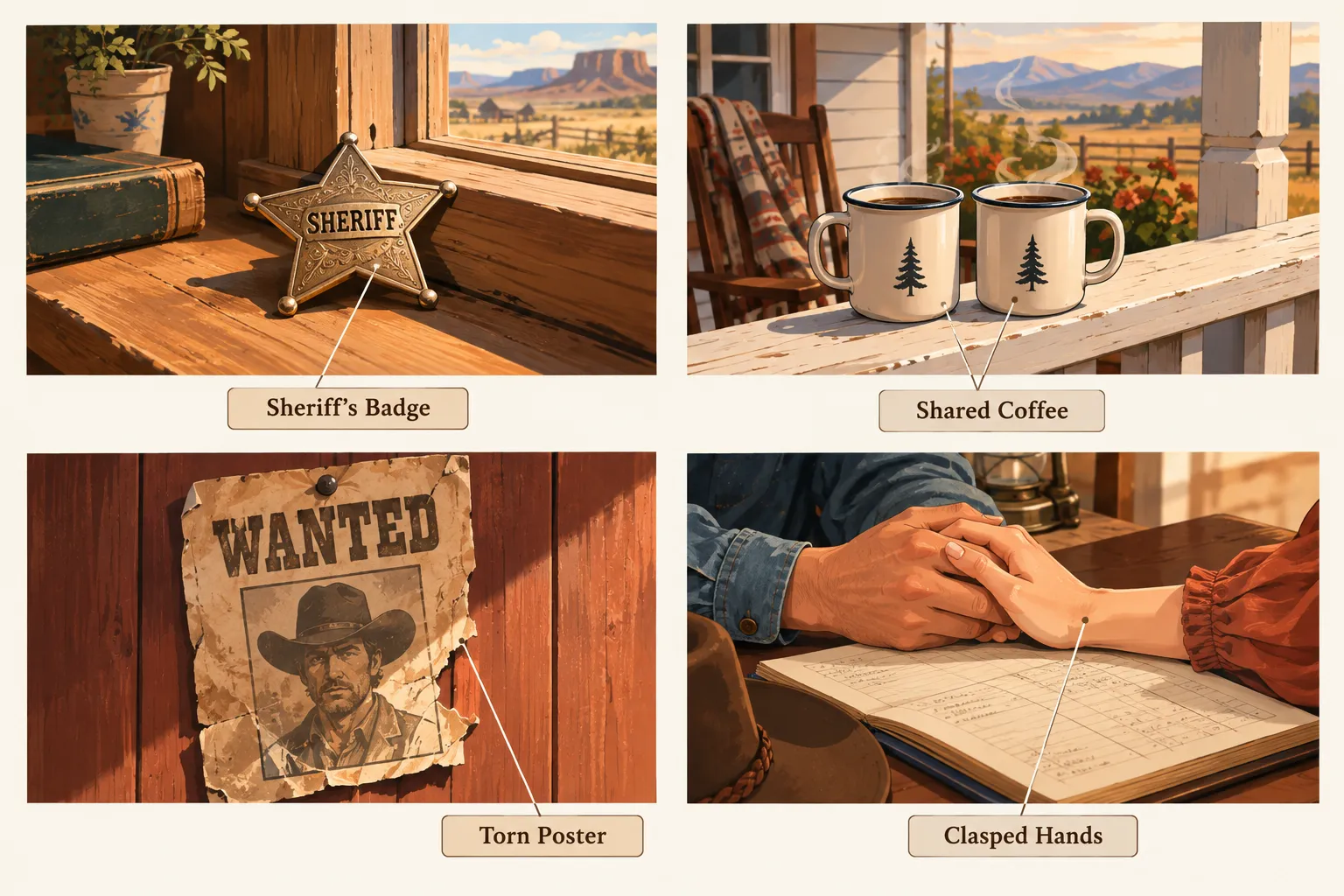
What readers consistently reward:
- A heroine whose skills (tracking, shooting, negotiating, reading people) matter to the plot’s outcome, not just her characterization.
- A hero who is drawn to her competence, not despite it.
- Stakes that could plausibly kill or ruin someone, a delayed posse, a false warrant, a debt that traps a family.
- A resolution that resolves the external danger and the internal guardedness at roughly the same time.
For readers building out a TBR around this exact tension, the tag archive for family-friendly Westerns and Kindle Unlimited Western collections are worth browsing alongside genre roundups.
How to Balance Faith Themes With Romance Plot
Faith themes balance with a romance plot when belief functions as a force that changes decisions inside the story, not as commentary layered on top of it. The scholarly framing of Christian romance treats God as a third party in the relationship, a presence that gives the love story theological meaning rather than just narrative closure [11].
Practically, that means faith should show up as a choice with consequences: a marshal who chooses mercy over a clean conviction and has to live with the fallout, or a hero who forgives a debt that was never his to forgive and loses something for it. Readers of the Mercy Line frontier westerns will recognize this pattern, grace that costs something is the whole engine of the story, not a bow tied on at the end. The Christian frontier fiction reading guide covers this balance in more depth for readers who want moral stakes without a sermon.
Common Tropes in Western Romance Novels
Common tropes in Western romance include forced proximity, marriage of convenience, wounded stranger taken in, mistaken identity, and the reformed outlaw, each one built to force intimacy before the characters are ready for it.
| Trope | What It Does | Watch For |
|---|---|---|
| Forced proximity | Creates fast intimacy through shared danger | Should still require earned trust, not just closeness |
| Marriage of convenience | Legal bond before emotional bond | Works best when the legal need is genuinely urgent |
| Wounded stranger | Heroine’s care reveals character | Avoid making her purely a caretaker with no arc of her own |
| Reformed outlaw | Redemption arc paired with romance | Redemption should cost the outlaw something concrete |
| Undercover heroine | Female authority without full commission | Gives her power while explaining genre norms of the era |
Christian Western Romance vs. Secular Western Romance
Christian Western romance differs from secular Western romance mainly in restraint around physical intimacy and in giving forgiveness and faith structural weight in the plot, rather than treating them as backdrop. Secular Western romance can use grit, explicit content, and moral ambiguity as draws; Christian Western romance instead uses restraint and redemption as the draw.
| Element | Christian Western Romance | Secular Western Romance |
|---|---|---|
| Physical intimacy | Limited, often closed-door [11] | Ranges widely, often explicit |
| Central conflict resolution | Forgiveness and mercy as plot mechanics | Justice or vengeance, faith optional |
| Heroine’s authority | Tested against community and conscience | Tested mainly against external threat |
| Tone | Hope in the dark, mercy and justice held together | Often darker, grittier, unresolved |
Mistakes to Avoid Writing Western Romance
The biggest mistake in writing this subgenre is letting the heroine’s authority exist only to be rescued from later, which quietly tells the reader her strength was never real. A close second is resolving the spiritual plot with a single clean conversion scene instead of a decision that costs the character something.
Other frequent missteps:
- Making the marshal’s badge a personality trait instead of a source of real conflict with the town, her family, or her own doubts.
- Skipping the small-trust sequence in favor of one big rescue that’s supposed to explain everything.
- Writing faith as narration (“she prayed for strength”) instead of as a choice visible in action.
- Flattening the hero into a passive admirer instead of someone whose own convictions occasionally clash with hers.
Readers who want to see moral complexity handled without preaching can compare notes in this piece on Western fiction for readers who love moral complexity.
Who Reads Christian Western Romance?
Christian Western romance is read primarily by women roughly 35 to 65, many of them Kindle Unlimited subscribers, who want clean content, real stakes, and a faith represented honestly rather than performed. Literary research on evangelical romance suggests these readers use fiction to reinforce religious identity, personal value, and hope, not just for entertainment [11].
That audience explains why the female marshal premise keeps resurfacing even indirectly: it lets a reader hold competence, faith, and romantic hope in the same character without asking her to choose between them.
Frequently Asked Questions
Is there a well-known Christian romance with an actual female marshal? Lacy Williams’s Marrying Miss Marshal follows Danna Carpenter as a town marshal, one of the more direct examples of the premise in the genre [1][8].
Does the heroine have to be a commissioned marshal, or can she be an investigator instead? She can be either. Recent releases lean toward undercover or partner roles, like Erica Vetsch’s marshal heroine in Loving the Lawman, while still granting her real authority [3].
What separates Christian Western romance from Christian frontier suspense without romance? Romance-absent frontier fiction, like the Mercy Line series, centers on law and conscience without a courtship arc; Christian Western romance adds the dual plot of physical and spiritual intimacy alongside the frontier-justice story [11].
How explicit is the physical content in Christian Western romance? Restraint is standard, closed-door or non-explicit intimacy is the genre norm, consistent with scholarship on evangelical romance conventions [11].
Why does forgiveness show up so often in these stories? Forgiveness functions as one of the recurring structural elements identified in inspirational romance scholarship, tying the romantic resolution to the spiritual one [11].
Can a female marshal romance work without a villain? Yes, if the conflict comes from internal guardedness, community pressure, or a moral dilemma rather than an external antagonist, though most published examples still use an outlaw threat to raise stakes.
Conclusion
A female marshal earns her place in Christian Western romance the same way any protagonist earns a reader’s trust: through consequence, not costume. Authority has to cost her something before it can be admired, vulnerability has to be protected before it can be shared, and the romance has to be built scene by scene rather than declared in one dramatic turn. That’s the version of Christian Western Romance With a Female Marshal: Authority, Vulnerability, and Earned Trust on the Frontier worth reading, and worth writing.
Readers looking to go deeper into this territory can start with the Christian frontier westerns overview on blending historical accuracy with spiritual themes, or browse the tag archive on faith-based Western fiction for more titles built on the same principle: mercy and justice, held together, never cheap.
References
[1] Christian Western Romance Books – https://christianromances.com/christian-western-romance-books.html [2] Book Review And A Giveaway Ambush Of The Heart By Mary Connealy – https://readingismysuperpower.org/2026/01/31/book-review-and-a-giveaway-ambush-of-the-heart-by-mary-connealy/ [3] Christian Fiction New Releases March 2026 – https://www.narelleatkins.com/christian-fiction-new-releases-march-2026/ [7] New Releases Sept 2026 – https://www.iolagoulton.com/new-releases-sept-2026/ [8] 25 Christian Historical Romance Novels – https://www.silverpetticoatreview.com/25-christian-historical-romance-novels/ [11] Christian Fiction Publishers Embrace a Classic Genre, The Western (Publishers Weekly) – https://www.publishersweekly.com/pw/by-topic/industry-news/religion/article/95660-christian-fiction-embraces-a-classic-genre-the-western.html