Last updated: September 19, 2026
Quick Answer: Christian epic fantasy for fans of The Great Gatsby’s moral questions about wealth, power, and grace offers secondary-world stories where the same corrupting forces Fitzgerald examined, status hunger, moral decay, the gap between appearance and truth, carry eternal stakes. These are not allegories for children. They are full-weight narratives where grace arrives after cost, not instead of it, and where the question of who deserves mercy is never answered cheaply.
Key Takeaways
- Christian epic fantasy and The Great Gatsby share a core moral preoccupation: what wealth does to the soul, and whether grace can reach someone who has built an identity on the wrong foundation.
- Secondary worlds in Christian fantasy allow authors to examine prosperity, power, and judgment without the constraints of historical realism, the stakes become cosmic, not just social.
- The best Christian epic fantasy is not preachy. Faith shows up through character choice and consequence, not through narration or scripture-dropping.
- These books are written for adults, readers who want moral complexity, theological depth, and earned redemption, not tidy conversion moments.
- The Christian speculative fiction market has grown structurally since 2023, with indie publishing leading the expansion of biblically grounded secondary-world stories. [1]
- Authors like Silas Bellhaven (The Sarel Chronicles, The Kethara Chronicles) build worlds where institutional power weaponizes grace, exactly the kind of moral architecture Gatsby readers recognize.
- A fantasy book does not need explicitly religious characters to be Christian in worldview, it needs a moral order that takes sin, mercy, and consequence seriously.
- Readers coming from literary fiction will find that the best Christian epic fantasy rewards the same close attention to theme and character that The Great Gatsby demands.
What Is Christian Epic Fantasy and How Does It Differ from Regular Fantasy
Christian epic fantasy is secondary-world fiction in which a Christian moral order, not just Christian imagery, shapes the story’s logic. In regular fantasy, power systems and moral consequences are defined by the author’s own framework, which may be neutral, nihilistic, or loosely humanistic. In Christian epic fantasy, the world operates under something that resembles divine justice: actions carry weight, grace is real but not free, and the gap between who a character presents themselves to be and who they actually are will eventually be exposed.
The difference is not decoration. It is structural.
- Regular fantasy may use religious imagery (temples, priests, prophecy) without any underlying theological conviction.
- Christian epic fantasy treats faith as load-bearing, the moral architecture of the world depends on it.
- The stakes are higher in Christian epic fantasy because the consequences extend beyond plot: they touch the soul of the character and, by implication, the reader.
For a deeper look at what separates these two categories at the craft level, see what makes a Christian fantasy book different from regular fantasy.
Faith isn’t a backdrop, it’s load-bearing. Every story stands on the conviction that belief and event are woven from the same thread.
How Does The Great Gatsby Compare to Christian Fantasy Literature
The Great Gatsby is, at its core, a story about the spiritual bankruptcy of wealth, about a man who builds an entire identity on the wrong foundation and pays for it with everything. Christian critics have long noted that Fitzgerald’s novel carries the ghost of a Christian moral framework even as its characters abandon it: the green light, the eyes of Doctor T.J. Eckleburg watching over the Valley of Ashes, the hollow rituals of Gatsby’s parties. The novel asks whether a person can earn grace through accumulation, and answers with a funeral.
Christian epic fantasy asks the same question, but in worlds where the divine is not absent. That changes everything.
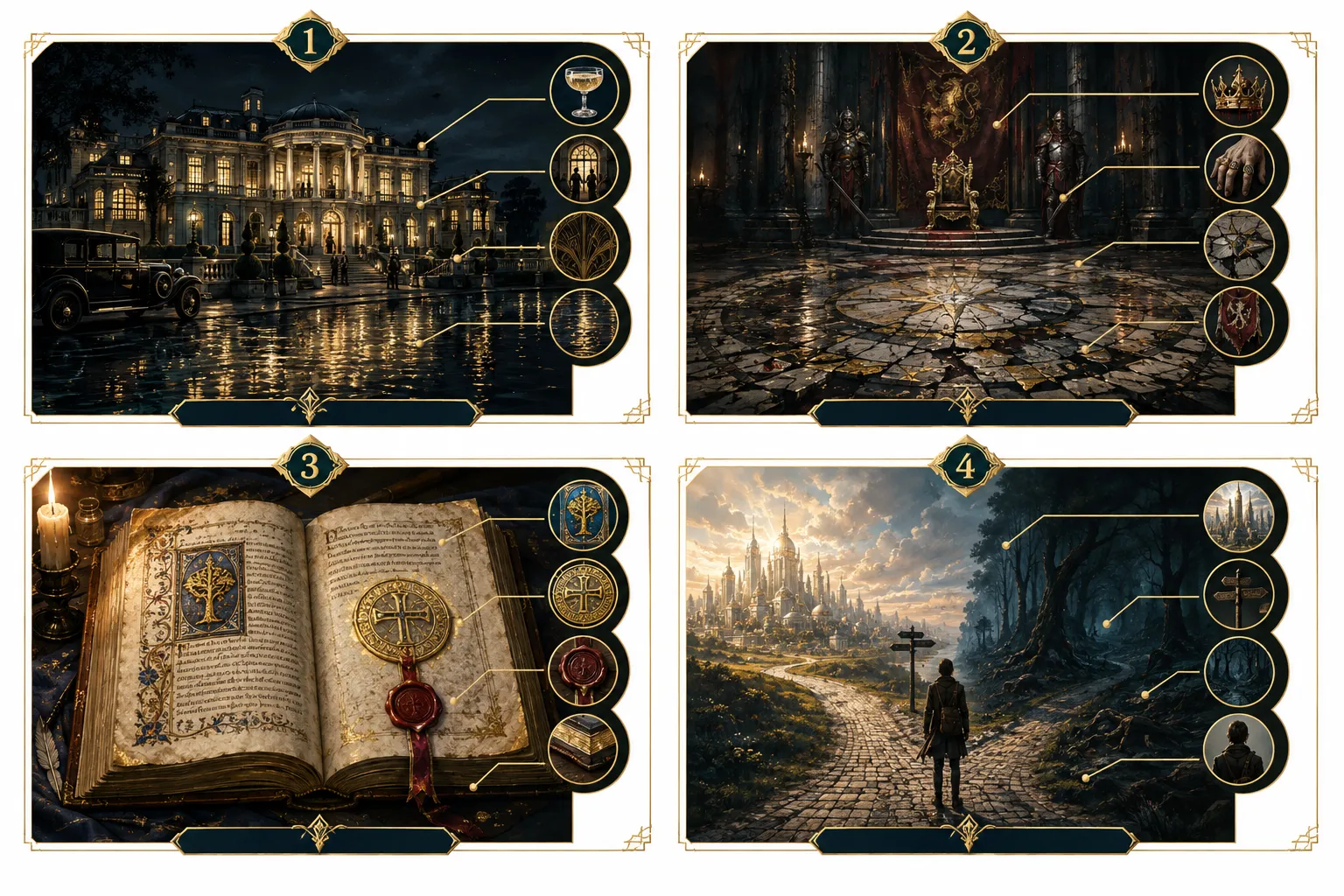
Where they converge:
- Both examine how wealth corrupts identity and distorts moral perception.
- Both use spectacle (Gatsby’s parties / a fantasy empire’s ceremonies) to expose the emptiness beneath status.
- Both are concerned with the gap between the record, what is officially known, and the truth.
Where Christian fantasy goes further:
- The moral order is not just implied; it is active. Judgment comes not from social consequence alone but from something that resembles divine reckoning.
- Grace is available, but it costs something. Redemption that costs nothing is not redemption; it is just a change of scenery.
- The secondary world allows the author to strip away the social camouflage that protects Gatsby’s kind of self-deception and make the moral stakes visible.
This is why Christian epic fantasy for fans of The Great Gatsby’s moral questions about wealth, power, and grace resonates so specifically with literary fiction readers. The genre is doing the same theological work Fitzgerald was circling, but with the full weight of a living faith behind it.
Best Christian Fantasy Books That Explore Themes of Wealth and Power
The best Christian fantasy novels treating wealth and power as moral problems, not just plot devices, tend to share a few qualities: institutional corruption is shown from the inside, the characters who hold power are not cartoonishly evil, and the cost of complicity is made specific.
Silas Bellhaven’s Sarel Chronicles (The Map of Unanswered Prayers, The Roads That Lied, Beyond the Maker’s Map) builds a world where the House of Witness controls the official record of answered prayers, and uses that record to determine who receives resources, recognition, and mercy. The institution is not evil in a dramatic sense. It is something more recognizable: a system that has learned to serve itself while speaking the language of service. Elya Renn, a disgraced map-scribe, carries a mark the institution cannot explain and will not record. The series asks what happens when the machinery of grace becomes a mechanism of exclusion.
The Kethara Chronicles (The Stone That Remembered, The Cord That Loosened, The Name That Returned) places its characters in a covenant highland under imperial audit. The empire wants every act of mercy counted, categorized, and contained. Amara and Sela carry a covenant word the auditors cannot own, and the series turns on what it costs to hold that word in a world that has monetized everything sacred.
For a broader reading list, see best Christian epic fantasy series for readers who want deep faith themes without allegory.
Christian Fantasy Novels With Moral Dilemmas About Grace and Redemption
The moral dilemma at the center of most strong Christian fantasy is not “will good defeat evil?” It is “what will this person do when grace is available but costly?” That is a harder question, and it produces better fiction.
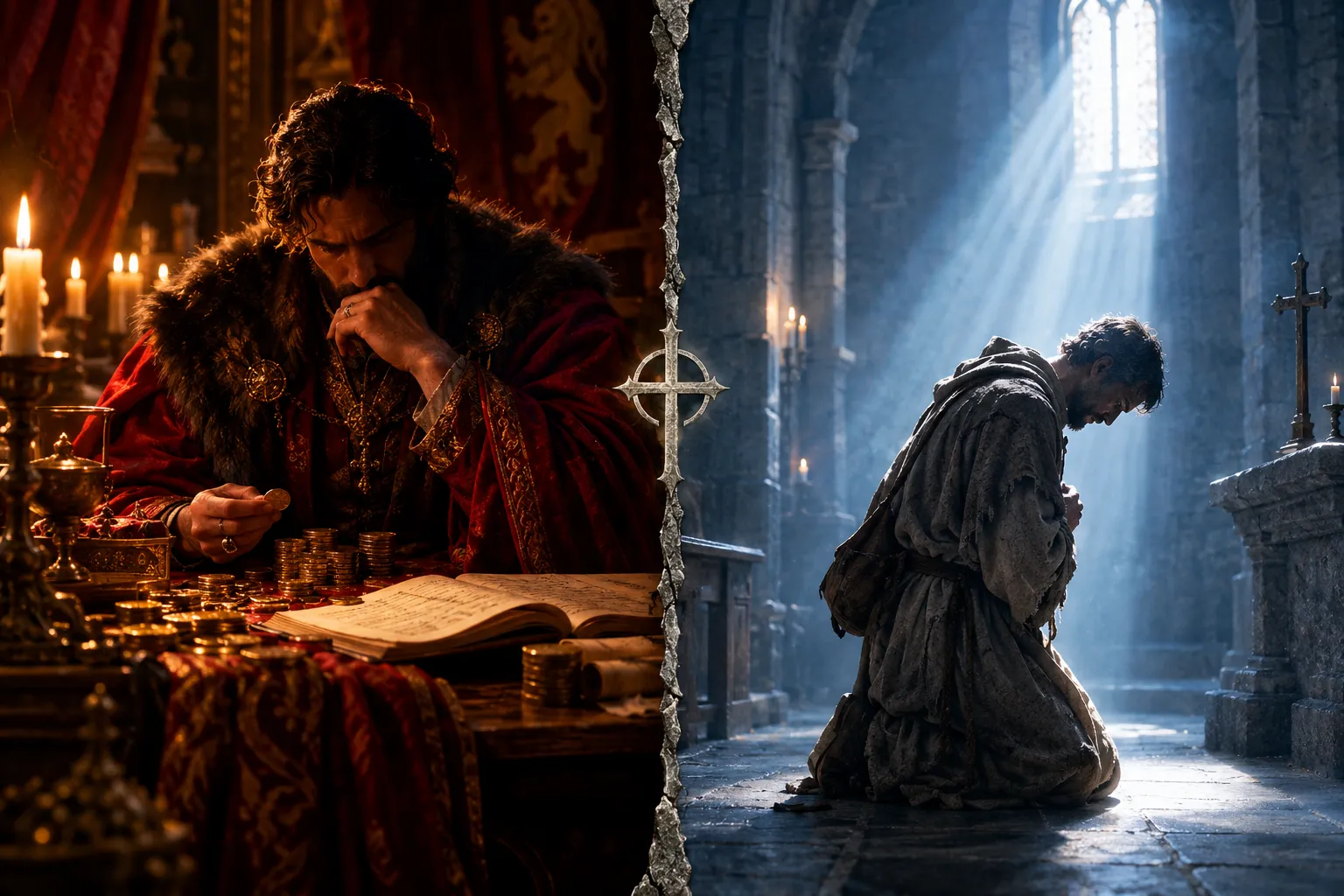
In Bellhaven’s work, redemption that costs nothing is treated as a structural lie, the same lie prosperity theology tells, the same lie Gatsby tells himself about the green light. Characters in these books doubt, serve, fail, and repent. The grace that arrives is earned in the sense that the reader has watched the character pay for it across hundreds of pages. It is not cheap.
What to look for in Christian fantasy with genuine moral dilemmas:
- The protagonist is complicit in the system they eventually oppose, not just an outsider observing it.
- Grace arrives after cost, not instead of it. Earned grace in fiction means the reader feels the weight of what was paid.
- The antagonist’s position is coherent. Institutional power in these stories is not stupid, it is persuasive, which makes the moral choice harder.
- Redemption does not erase consequence. The character is changed, but the record of what they did remains.
What Makes a Fantasy Book Christian Without Being Preachy
A fantasy book is Christian without being preachy when faith shows up as a lived reality inside the story rather than as a message delivered to the reader. The difference is the difference between a character who prays because they are desperate and a narrator who explains the importance of prayer.
Signs a Christian fantasy is doing this well:
- Characters doubt openly and are not punished by the narrative for doubting.
- The moral order of the world is consistent and consequential, but it does not announce itself.
- Scripture or doctrine, if it appears at all, appears as something a character reaches for, not something the story hands them.
- The story trusts the reader to draw the connection between what happens in the plot and what it means.
The Silas Bellhaven brand was built on exactly this distinction: stories that walk with the reader, not talk at them. For more on how this works across genres, see clean Christian fiction that isn’t just romance.
Are There Christian Fantasy Books That Aren’t for Children, Epic Fantasy Series With Theological Depth for Adult Readers
Yes, and this is one of the most common misconceptions about the genre. The association of Christian fantasy with children’s allegory (Narnia, specifically) has led many adult readers to assume the genre stops at the wardrobe door. It does not.
The Christian speculative fiction market has expanded significantly since 2023, with indie publishing leading the development of adult-oriented secondary-world fiction that carries genuine theological weight. [1] The Evangelical Christian Publishers Association has noted rising prestige for speculative fiction within Christian publishing, and industry observers have documented a structural increase in Christian fantasy output aimed at adult readers.
What adult Christian epic fantasy looks like:
- Complex political structures where power and faith are in genuine tension.
- Characters with full moral histories, not clean slates waiting for a conversion moment.
- Theological questions (covenant, judgment, mercy, the nature of grace) treated as real problems, not Sunday school answers.
- Clean content that is not the same as simple content. These books handle hard things honestly; they simply do not use graphic violence or explicit material to do it.
The 2026 Christian fantasy boom has produced a wave of secondary-world fiction that treats adult readers as capable of holding moral complexity without a guide to explain it to them.
Fantasy Books About the Corrupting Influence of Power and Wealth, Does Christian Fantasy Have to Have Religious Characters or Just Themes
Christian epic fantasy does not require explicitly religious characters. It requires a moral order that takes sin, mercy, and consequence seriously, and that order can be embedded in the world’s structure rather than in its characters’ vocabulary.
In the Sarel Chronicles, the House of Witness functions as a religious institution, but the corruption it embodies is recognizable to anyone who has watched a human system learn to protect itself at the expense of the people it was built to serve. The theological content is not in the characters’ confessions; it is in the architecture of the world and the cost the protagonist pays to tell the truth inside it.
The corrupting influence of power and wealth in Christian fantasy typically works through:
- Institutions that began as instruments of grace and became instruments of control.
- Characters who use the language of mercy to justify accumulation.
- A gap between the official record and the actual truth, and the cost of closing that gap.
- Prosperity theology’s logic made visible: the idea that wealth signals divine favor, and poverty signals divine judgment. Christian fantasy tends to expose this as the lie it is.
For readers interested in how covenant theology specifically shapes these power structures, see Christian epic fantasy series with covenant theology.
How to Find Fantasy Books That Explore Faith and Doubt, Christian Allegory in Modern Fantasy Worlds
The best place to find Christian epic fantasy that handles faith and doubt honestly is in the indie market, where authors are not constrained by traditional publishers’ tendency to soften theological edges for broader appeal. World News Group has noted that Christian sci-fi and fantasy have increasingly migrated toward indie publishing precisely because traditional houses have deprioritized biblically grounded speculative work. [1]
Practical ways to find these books:
- Search Kindle Unlimited for secondary-world fantasy with covenant, grace, or mercy in the series description, these are signal words for theologically serious work.
- Look for series with linked-protagonist structures rather than single-hero arcs; these tend to explore faith and doubt across multiple perspectives.
- Read the series description for how it handles moral failure. If failure leads immediately to restoration, the book probably avoids the hard questions. If failure has a cost, it probably does not.
- Check author pages for consistency of worldview across genres, a worldview brand like Silas Bellhaven signals that the faith is structural, not decorative.
For Kindle Unlimited readers specifically, Kindle Unlimited Christian reads: hidden gems and underrated series offers a practical starting point.
Christian Epic Fantasy Recommendations for Literary Fiction Fans, Fantasy Novels Exploring Divine Grace and Human Choice
For readers who came to this question through The Great Gatsby, or through Fitzgerald, McCarthy, or O’Connor, the entry point into Christian epic fantasy for fans of The Great Gatsby’s moral questions about wealth, power, and grace is a series that treats its world with the same moral seriousness those authors brought to theirs.
Recommended starting points:
| Series | Core Moral Question | Best for readers who liked… |
|---|---|---|
| The Sarel Chronicles (Bellhaven) | Who controls the record of grace, and what does it cost to correct it? | Gatsby’s gap between official story and truth |
| The Kethara Chronicles (Bellhaven) | Can mercy survive being institutionalized? | O’Connor’s institutional critique |
| The Measured Debt (Bellhaven) | What happens when the record of your choices finally comes due? | McCarthy’s weight of consequence |
The religious publishing market, estimated as part of a $1.37-1.409 billion segment in 2026, continues to grow, with Christian fiction representing a significant and expanding share. [4] Within that, speculative fiction for adult readers is among the fastest-developing categories. [1]
For readers interested in how faith-integrated magic systems work in these worlds, and how prophecy, prayer, and miracles function as worldbuilding elements rather than decorations, see Christian epic fantasy with faith-integrated magic systems.
The redemption arc in these stories is not the same as a happy ending. It is something harder and more honest: a character who has paid the cost of who they were, and who receives grace not because they earned it but because the moral order of the world is, finally, merciful. That is the answer The Great Gatsby could not give its characters. Christian epic fantasy can, and does, at cost.
Conclusion
The Great Gatsby ends with Gatsby dead in his pool, the parties over, the green light still blinking across the water. Fitzgerald’s moral architecture is precise and devastating: wealth without conscience produces nothing that survives. But the novel has no grace to offer. It can diagnose; it cannot heal.
Christian epic fantasy for fans of The Great Gatsby’s moral questions about wealth, power, and grace works in the same moral territory, institutional corruption, the gap between the official record and the truth, the hunger for status that hollows out the soul, but it operates in worlds where grace is real, costly, and available. That combination produces fiction with genuine stakes: not just social consequences, but something that reaches further.
Actionable next steps for readers:
- Start with The Map of Unanswered Prayers (Sarel Chronicles, Book 1), it opens on a world where the machinery of grace has been captured by the powerful, and one woman’s mark on a map begins to undo it.
- Browse the Silas Bellhaven author page for the full catalog across fantasy, western, mystery, and thriller, all built on the same worldview.
- If you are a Kindle Unlimited subscriber, the entire catalog is available to borrow, making it low-risk to find which series speaks to you first.
- For readers who want to understand the broader landscape of Christian worldview fiction before choosing a starting point, the blog at silasbellhaven.com covers the genre in depth.
Hope in the dark is not the same as optimism. It is something harder, faith under fire, held by characters who have seen what power does and chosen mercy anyway. That is what this fiction is rooted in.
FAQ
Q: Do I have to be a Christian to enjoy Christian epic fantasy? A: No. Readers who value moral complexity, earned redemption, and secondary worlds with coherent ethical stakes will find these books rewarding regardless of personal faith. The worldview is present but not preached.
Q: Is Christian epic fantasy always clean content? A: The best Christian epic fantasy handles hard moral and spiritual questions honestly without relying on graphic violence, explicit content, or profanity. Clean does not mean simple, it means the darkness is shown through consequence and character, not through graphic depiction.
Q: How is Christian epic fantasy different from Christian allegory like Narnia? A: Allegory maps story elements directly onto theological concepts (Aslan = Christ). Christian epic fantasy builds a world with a Christian moral order and lets the story operate within it, the faith is structural, not symbolic. Characters are not stand-ins for doctrine; they are people making choices inside a world where those choices have weight.
Q: Are there Christian fantasy books for adults, not just young readers? A: Yes. The indie Christian fantasy market has produced a significant body of adult-oriented secondary-world fiction since 2023, with theological depth, moral complexity, and full-weight narrative stakes. [1]
Q: What is “earned grace” in Christian fiction? A: Earned grace means the reader has watched a character pay the cost of who they were before mercy arrives. It is not that grace is deserved, grace is never deserved, but that the story has made the cost visible, so the grace lands with full weight rather than as a narrative shortcut.
Q: Does Christian epic fantasy have to include prayer, Scripture, or church? A: No. A Christian worldview in fiction is expressed through the moral order of the world and the consequences that flow from it, not through religious vocabulary. Characters can carry faith without naming it in those terms.
Q: Why do fans of The Great Gatsby specifically connect with Christian epic fantasy? A: Both are concerned with the same core problem: what wealth and status do to the soul, and whether a person can be reached by grace after building an identity on the wrong foundation. Christian epic fantasy answers the question Fitzgerald could not, with mercy, at cost.
Q: Where is the best place to start with Silas Bellhaven’s fantasy catalog? A: The Map of Unanswered Prayers (Sarel Chronicles, Book 1) is the most direct entry point for readers interested in wealth, institutional power, and grace in a secondary world. The Stone That Remembered (Kethara Chronicles, Book 1) is the better starting point for readers drawn to covenant theology and imperial resistance.
Q: Is Christian epic fantasy available on Kindle Unlimited? A: Yes. The Silas Bellhaven catalog, including both fantasy series, is available through Kindle Unlimited, making it accessible for KU subscribers at no additional cost.
Q: What makes a Christian fantasy book “rooted in faith” rather than just faith-flavored? A: The faith is load-bearing. It shapes the moral architecture of the world, the consequences characters face, and the nature of the grace available to them. Remove the faith, and the story’s structure collapses, not just its surface details.
References
[1] The Rise Of Christian Fiction Market Trends Regional Dynamics And Future Predictions For 2026 – https://www.alibaba.com/product-insights/the-rise-of-christian-fiction-market-trends-regional-dynamics-and-future-predictions-for-2026.html
[4] Religious Book Market – https://www.wiseguyreports.com/reports/religious-book-market