
Last updated: September 24, 2026
A dying kingdom, a betrayed people, and a hero willing to lose everything, those aren’t literary devices. They’re the bones of every gospel-shaped quest, and readers can tell within three chapters whether an author actually believes what the story is built on or is just borrowing the shape of belief for scenery.
Quick Answer
Christian fantasy authors build epic quests with the scope of a fantasy universe and the hope of the gospel by making redemption structural, not decorative. The magic system, the villain’s fall, the hero’s cost, and the ending all have to answer the same question a real faith answers: what does mercy cost, and who pays it? Scope comes from world-building. Hope comes from refusing to let victory arrive without sacrifice.
Key Takeaways
- Gospel truth should shape plot mechanics, not just theme, power, sacrifice, and forgiveness need consequences inside the world’s rules.
- Multi-kingdom stakes work best when tied to one personal wound, readers follow people, not politics.
- Inherited evil (a curse, a broken covenant, a corrupted bloodline) gives sacrifice weight without needing a sermon to explain it.
- Allegory is optional. Many successful Christian fantasy authors write faith-resonant worlds without a one-to-one Christ figure.
- Darkness and hope aren’t opposites in this genre, hope that never touches real cost isn’t hope, it’s decoration.
- The audience wants adventure first, faith integration second, and will feel manipulated if the order is reversed.
- Preachy dialogue almost always comes from telling instead of showing a character’s belief through a choice that costs them.
- Series length should follow the quest’s actual shape, a trilogy for one covenant arc, longer only if the world genuinely needs it.
What Makes a Christian Fantasy Quest Different From Secular Fantasy
A Christian fantasy quest differs from secular fantasy in what counts as winning. In most secular epics, victory means the hero takes the throne, kills the villain, or claims the power. In a gospel-shaped quest, victory is measured by what the hero was willing to give up, and whether mercy survived the fight.
This is what The Gospel Coalition calls making familiar gospel truths temporarily unfamiliar, using an invented world to help readers reconsider sacrifice, redemption, and evil without the flattening effect of overfamiliarity[3]. A few concrete differences:
- The villain can be offered redemption, even if they refuse it, a courtesy secular fantasy rarely extends.
- Power has a cost the hero actually pays, not a cost that’s implied and then waived.
- The ending measures loss, not just triumph.
Readers exploring how faith reshapes classic story structure often start with how classic literature’s moral themes shape faith-driven worldbuilding, which applies the same principle outside fantasy.
How Do You Balance World-Building With Gospel Themes in Fantasy
The balance comes from letting the gospel shape the world’s rules rather than sitting on top of them as commentary. If magic, law, or prophecy in the world doesn’t reflect anything about mercy, justice, or covenant, the theme will read as an add-on no matter how sincere it is.
Allegory vs. Subtle Faith Threads, and Authors Who Skip Allegory Entirely
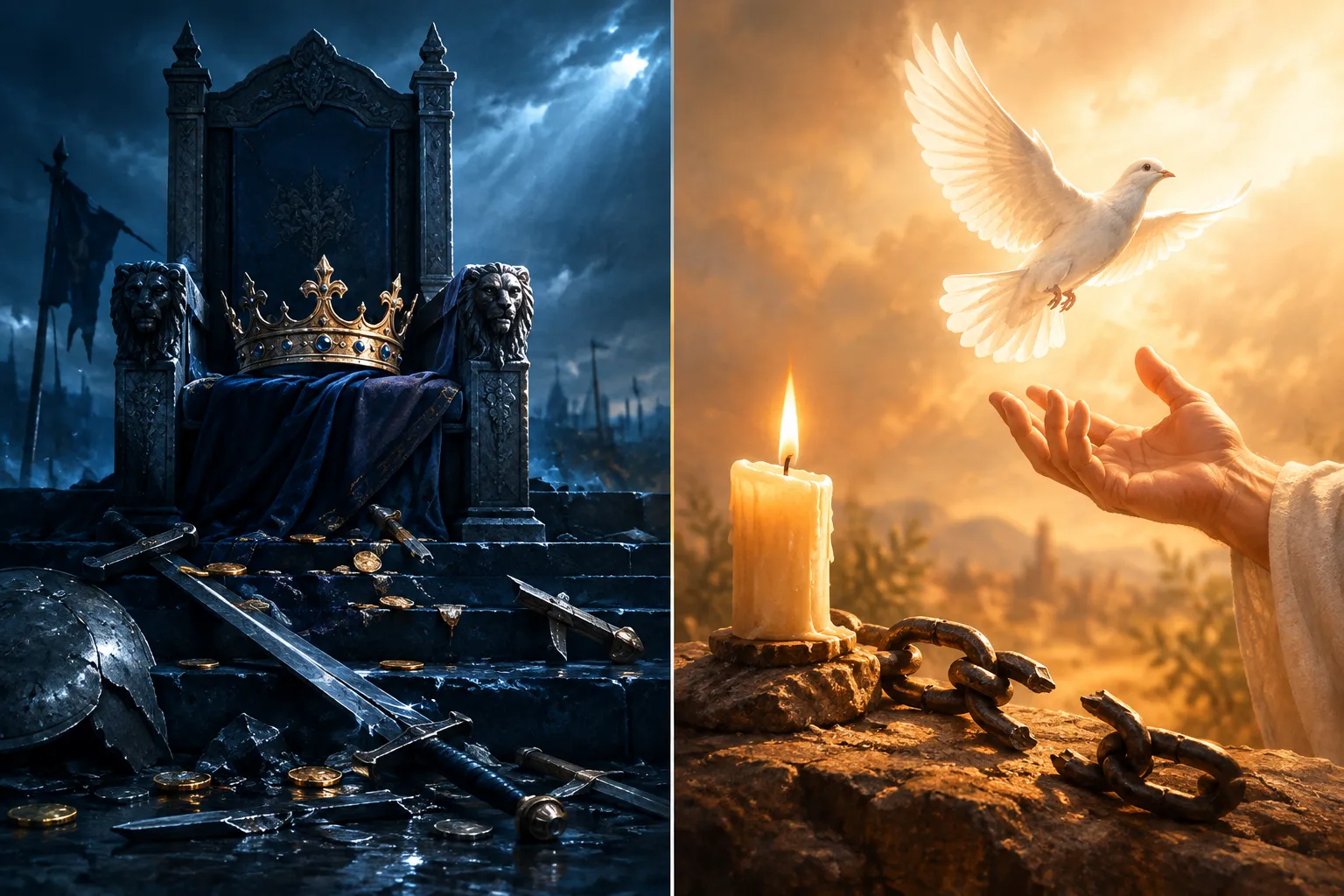
Allegory maps a Christ figure or biblical event onto the story directly; subtle faith threads let redemption, sacrifice, and mercy operate inside the world’s own logic without a one-to-one match. Neither is wrong, but they read differently.
| Approach | How It Works | Best For |
|---|---|---|
| Allegory | A character or event directly mirrors a biblical figure or moment (Aslan, a resurrection scene) | Readers who want the parallel visible and intentional |
| Subtle faith threads | Mercy, sacrifice, and covenant operate as world mechanics without naming a source text | Readers who want faith lived rather than illustrated |
Plenty of working Christian fantasy authors skip allegory entirely. Bryan Davis, for example, has built long-running fantasy series where faith operates through character conviction and consequence rather than symbolic substitution[9]. Sharon Hinck has spoken about writing fantasy where spiritual growth happens through the plot’s demands, not through a coded retelling of Scripture[10]. Choose allegory if the world benefits from a clear moral anchor readers can name. Choose subtle threads if the goal is faith that feels lived rather than illustrated.
What Fantasy Elements and Magic Systems Work Best With Christian Theology
Magic systems that fit a Christian worldview usually treat power as borrowed, not owned, granted for a purpose, answerable to something outside the user, and costly to misuse. Systems that work well include:
- Covenant-based magic, power tied to a promise or vow, lost when the vow is broken.
- Intercessory magic, power that only functions through connection to others, never in isolation.
- Witness-based magic, power that records truth and can’t be forged, only suppressed.
Avoid magic systems where power is simply earned through effort with no moral weight attached, that model fits secular progression fantasy but flattens gospel themes into a leaderboard. For a deeper look at how progression mechanics can still carry spiritual weight, see how Christian LitRPG turns leveling up into spiritual growth.
How to Write an Epic Quest That Feels Spiritually Meaningful
An epic quest feels spiritually meaningful when the world’s scale never outpaces the cost paid by one person the reader actually cares about. Scope without personal cost feels hollow. Personal cost without scope feels small. Christian fantasy authors need both running at once.

Quest Architecture: From Personal Wound to World-Ending Stakes
Build the quest in layers, starting close and widening outward:
- The personal wound, a loss, betrayal, or failure the hero can’t undo alone.
- The local consequence, one village, house, or order absorbs the fallout first.
- The regional stakes, a kingdom’s law or covenant is exposed as broken.
- The universal stakes, the world’s foundational order (a Maker’s promise, a covenant word) is at risk.
Readers should be able to trace every escalation back to the original wound. If the multi-kingdom war doesn’t connect to the hero’s first loss, the scope will feel borrowed rather than earned.
Inherited Evil and the Weight of Multi-Kingdom Consequence
Inherited evil, a curse, a broken oath, a corrupted bloodline, works because it makes the hero’s fight about someone else’s debt, not just their own grievance. That’s what makes sacrifice mean something instead of reading as revenge with better lighting.
- Give the inherited evil a named origin (a specific broken promise, not vague “ancient darkness”).
- Let at least one kingdom in the quest benefit from the evil and resist fixing it.
- Make the hero’s sacrifice pay a debt they didn’t personally create, that’s the difference between justice and self-interest.
Writing Dark Themes Without Losing Hope
Christian fantasy can absolutely include real darkness, grief, betrayal, corrupted faith, cruelty, without losing hope, as long as hope arrives through cost rather than around it. Hope that skips the hard scenes isn’t hope; it’s avoidance wearing a happy ending.
Decision rule: if a dark scene resolves too easily, the darkness wasn’t earned and neither is the comfort that follows. Mercy and justice have to coexist on the page, justice acknowledging what was actually lost, mercy offering a way forward anyway.
Ending With Hope Without Feeling Rushed
An epic quest ends with hope, not rush, when the final restoration is smaller and costlier than readers expect, not a full reversal of every loss. A rushed ending tries to heal everything in the last chapter. An earned one restores the covenant, the kingdom, or the relationship, while leaving visible scars.
- Let at least one loss stay permanent.
- Show the cost paid by someone specific, not “the world” in the abstract.
- End on restoration that required the whole book to earn, not a last-minute reveal.
Best Christian Fantasy Authors and What Makes Them Successful
The most successful Christian fantasy authors succeed by treating faith as load-bearing structure rather than genre flavor, and by writing quests that would still work as adventure fiction even for readers who skip the theology entirely. Bryan Davis built a long-running dragon-mythology series around conviction-driven characters rather than allegorical stand-ins, sustaining reader loyalty across many books[9]. Sharon Hinck has emphasized writing spiritual growth through plot pressure, the character changes because the story demands it, not because a narrator explains a lesson[10].
Market conditions support the category, too. Christian fiction bestseller data continues to show fantasy as one of the categories readers actively seek out within faith-based fiction[7][8], and major publishers have expanded into speculative and crossover imprints as demand has grown[2]. For readers building a reading list around this space, Goodreads lists built for Christian LitRPG show how genre-adjacent fans are already organizing their own recommendations.
Common Mistakes Christian Fantasy Authors Make With Pacing and Theology
The most common mistake is letting theology arrive as a pause in the plot rather than a pressure inside it, a scene where the action stops so a mentor can explain grace. The second most common mistake is under-costing the ending, where the hero wins without losing anything that mattered.
- Mistake: Faith conversations that halt the quest’s momentum. Fix: let belief show up mid-action, in a choice under pressure.
- Mistake: A villain who is purely symbolic evil with no interior life. Fix: give the villain a reason that once made sense.
- Mistake: Multi-book series that stretch one covenant arc past its natural ending. Fix: let the story’s actual shape decide the book count, not a contract target.
How Long Should a Christian Fantasy Epic Series Be
A Christian fantasy epic should run as long as the covenant or quest at its center genuinely needs, most work well as a trilogy, because three books match the natural rhythm of setup, cost, and restoration. Longer series work only when the world introduces a second covenant-level conflict, not when the first one is simply stretched.
Quick example: a trilogy built around one broken covenant (kingdom falls, hero carries the cost, covenant restored) rarely needs a fourth book unless a genuinely new stake enters the world, a second empire, a second inherited debt, a new generation inheriting the first one’s unfinished cost.
Who Is the Audience for Christian Fantasy Novels
The core audience for Christian fantasy is readers who want adventure with real stakes and want their faith represented honestly rather than preached at, often the same readers who move between clean cozy mystery, western, and thriller fiction inside faith-based publishing. This audience is largely Kindle Unlimited readers, frequently women 35-65, who want fantasy that doesn’t require setting religion aside to enjoy the story.
This crossover pattern is visible across the wider Christian fiction market as clean-content demand grows[4][5]. Readers who enjoy medieval-adventure fantasy with clear moral stakes often gravitate toward clean medieval adventure built on chivalry and duty, and readers exploring the genre’s roots frequently trace it back to Tolkien’s influence on Christian fantasy.
How Do You Avoid Preachy Dialogue in Fantasy World-Building
Preachy dialogue almost always comes from a character explaining a belief instead of a character choosing to act on one under pressure. The fix is structural: cut any line where a character summarizes the theme, and replace it with a decision that costs them something in the scene.
- Test every faith-related line: could this be cut and shown instead through action?
- Let doubt stay on the page, characters who question belief read as more credible than characters who never do.
- Reserve direct theological language for moments of real cost, not exposition.
For a fuller breakdown of this technique across genres, see how to weave believable spiritual journeys into plot without preaching and faith-rooted character development without sermonizing.
FAQ
Does a Christian fantasy quest need a clear Christ-figure character? No. Many successful Christian fantasy authors write faith-resonant worlds without a direct Christ allegory, letting mercy and sacrifice operate through the world’s own rules instead[9][10].
Can the hero fail and still deliver a hopeful ending? Yes, hope earned through failure and recovery reads as more credible than an unbroken winning streak, as long as the cost of the failure stays visible in the ending.
Should magic systems follow strict rules like secular fantasy? Yes, internal consistency still matters. The difference is what the rules reward, covenant-based or intercessory magic fits Christian themes better than power earned purely through personal effort.
Is a standalone Christian fantasy novel viable, or does the genre require a series? Standalones work fine for a single covenant arc. Series make sense only when the world introduces a genuinely new stake beyond the first book’s resolution.
How do you keep multi-kingdom politics from overwhelming the personal story? Anchor every political escalation to the hero’s original wound. If a reader can’t trace the connection, the political scale needs cutting, not explaining.
Do Christian fantasy readers expect romance in the plot? Not necessarily, many readers specifically seek fantasy that keeps the focus on quest and covenant rather than romantic subplot, similar to demand seen in non-romance fantasy reading lists.
Conclusion
Christian fantasy authors build epic quests with real scope by treating the gospel as structure, not decoration, letting mercy, sacrifice, and covenant shape the magic system, the villain, and the ending the same way they’d shape a real life of faith under pressure. Start small: pick one personal wound, one inherited debt, and one ending that costs the hero something real. Scope will follow. Hope in the dark only reads as true when it’s paid for on the page, not announced from the sidelines, that’s earned grace, and it’s the difference readers remember long after the last kingdom is restored.
References
[1] Faucis Diary Joe Rogan And The Magic Boom In Fiction – https://www.authormedia.com/faucis-diary-joe-rogan-and-the-magic-boom-in-fiction/ [2] New Imprints – https://lunch.publishersmarketplace.com/category/new-imprints/ [3] Blog – https://christianpublishers.net/blog/ [4] Religion Book Deals September 2 2026 – https://www.publishersweekly.com/pw/by-topic/industry-news/religion/article/101154-religion-book-deals-september-2-2026.html [5] Christian Book Marketing – https://book-publicist.com/category/book-marketing/christian-book-marketing/ [6] Penguin Random House Global – https://global.penguinrandomhouse.com/ [7] Top Selling Christian Fiction – https://www.accio.com/business/top-selling-christian-fiction [8] Best Selling Christian Fiction – https://www.accio.com/business/best_selling_christian_fiction [9] Interview: Bryan Davis, Christian Fantasy Author – https://www.geeksundergrace.com/books/interview-bryan-davis-christian-fantasy-author/ [10] Sharon Hinck – https://www.wherethemapends.com/Interviews/Sharon_Hinck.htm