
Last updated: September 13, 2026
Quick Answer: Christian historical romance with suspense combines period-accurate settings, a faith arc woven into the plot, and clean romantic tension, adding a layer of mystery, danger, or moral jeopardy that raises the stakes beyond the love story alone. It differs from standard historical romance in that faith is load-bearing, not decorative, and from secular suspense in that grace and redemption shape the resolution. It suits readers who want real stakes, honest doubt, and hope that costs something.
Key Takeaways
- Christian historical romance with suspense layers period detail, clean romantic tension, and a faith arc with a mystery or danger thread, all without graphic content.
- Faith functions as a plot engine, not a backdrop. Characters make choices because of what they believe, and those choices carry consequences.
- The genre spans eras: Civil War, Victorian England, American frontier, WWII, Regency, and beyond, each era creates different moral and spiritual pressure.
- It differs from “clean romance” in that Christian content includes active faith expression; clean romance simply avoids explicit content.
- Suspense in this subgenre is psychological and moral rather than graphic, hidden documents, false identities, buried secrets, and conscience-driven choices.
- Authors like Susan May Warren, Colleen Coble, Sarah Sundin, and Patricia Raybon represent different corners of the field, from romantic adventure to literary historical mystery.
- Period detail matters because historical accuracy grounds the spiritual stakes in real human cost.
- Non-Christian readers frequently enjoy the subgenre when faith is shown through character behavior rather than stated as doctrine.
- Kindle Unlimited has expanded access to indie and traditional titles in this space significantly through 2025-2026 [7].
What Is Christian Historical Romance With Suspense?
Christian historical romance with suspense is a subgenre of faith-based fiction where a romantic storyline set in a specific historical period is threaded with suspense, a secret, a threat, a moral danger, or a mystery that must be resolved before the characters can reach safety or love. Faith is active in the story: characters pray, doubt, choose, and reckon with God in ways that affect the plot’s outcome.
The suspense element distinguishes these books from straightforward Christian historical romance. Something is at stake beyond the relationship, a hidden identity, a forged document, a war-era secret, a false accusation. That danger creates pressure on both the romance and the faith arc simultaneously.
“Rooted in faith” doesn’t mean the characters have easy answers. It means the questions they carry are real ones, and the story takes them seriously.
This is the subgenre’s core promise: faith under fire, mercy and justice held in tension, and a love story that can only resolve once the harder thing has been faced honestly.

How Is Christian Historical Romance Different From Regular Historical Romance?
The difference is structural, not cosmetic. In regular historical romance, faith may appear as period flavor, a church wedding, a vicar character, a prayer before meals. In Christian historical romance, faith shapes what the protagonist will and won’t do, what they fear losing, and what they ultimately choose when the plot forces a decision.
A heroine in a secular Regency romance might bend the rules of society to win love. A heroine in a Christian Regency romance bends those same rules while also wrestling with whether her choices honor God, and that internal conflict is part of the tension, not a side note.
Three structural differences:
- Moral stakes are spiritual, not just social. The character isn’t only risking reputation; they’re risking their integrity before God.
- Grace enters the story at cost. Forgiveness, second chances, and reconciliation happen after something real has been lost or confessed, not as a shortcut to a happy ending.
- The faith arc has a trajectory. Characters often begin with doubt, tested belief, or wounded faith, and the story’s resolution includes a spiritual movement, not just a romantic one.
For a deeper look at how faith functions structurally across genres, see Faith in Fiction Across Genres: How Much Is Too Much?
Clean Romance vs. Christian Romance: What’s the Difference?
Clean romance avoids explicit sexual content, graphic violence, and heavy profanity. Christian romance does all of that and includes active faith content, prayer, Scripture, church community, spiritual struggle, or a character’s relationship with God as a plot-relevant element.
A book can be clean without being Christian, but Christian romance is always clean by definition within the genre’s expectations.
| Feature | Clean Romance | Christian Romance |
|---|---|---|
| No explicit content | ✓ | ✓ |
| No graphic violence | ✓ | ✓ |
| Faith as plot element | ✗ | ✓ |
| Spiritual character arc | ✗ | ✓ |
| Scripture or prayer in story | ✗ | Often ✓ |
| Moral stakes tied to belief | ✗ | ✓ |
The distinction matters for readers searching specifically for faith representation, not just content filtering. For a fuller breakdown, see Clean Christian Fiction vs. Inspirational Romance: Content Standards, Faith Focus, and Reader Expectations.
What Makes Good Period Detail in Christian Historical Romance With Suspense?
Good period detail in Christian historical romance with suspense does two things simultaneously: it grounds the reader in a specific time and place, and it makes the spiritual stakes feel historically real rather than anachronistic.
Period detail fails when it’s decorative, bonnets and cobblestones dropped in for atmosphere. It succeeds when the era’s specific pressures create the story’s moral problem.
What strong period detail looks like in practice:
- Civil War settings: Letters that may never arrive, divided families, the question of what loyalty to God requires when loyalty to country is in conflict.
- Victorian England: Class structures that make certain truths unspeakable, the tension between public piety and private sin, the cost of a woman speaking plainly.
- WWII occupied Europe: Hidden Bibles, false papers, the choice between safety and conscience. Sarah Sundin’s Mists Over the Channel Islands, set during German occupation of Jersey, is a recent example of how “forbidden love and sacrificial faith” emerge directly from period conditions [31].
- American frontier: Land claims, false warrants, the absence of institutional law that forces characters to decide what they answer to personally.
The era isn’t a costume. It’s the source of the story’s pressure.
How Do Authors Balance Faith Themes With Romance Plot?
The balance works when faith and romance face the same obstacle. If the suspense threat endangers both the relationship and the character’s spiritual integrity, the story moves as a single unit rather than alternating between “romance chapter” and “faith chapter.”
Common approaches that work:
- The hero or heroine must choose between protecting someone they love and telling a truth that will cost them.
- A secret from the past, a false record, a hidden identity, a buried wrong, threatens both the romance and the protagonist’s standing before God.
- The faith arc tracks the same emotional beats as the romance: doubt mirrors distance, confession mirrors vulnerability, grace mirrors the moment the relationship becomes possible.
The mistake to avoid: treating faith as the resolution rather than the struggle. A character who converts neatly at the end, solving all problems, isn’t a faith arc, it’s a shortcut. Earned grace shows up after cost, not instead of it.
For more on how this plays out in suspense-adjacent Christian fiction, see How Christian Authors Build Suspense Without Darkness in Psychological Thrillers.
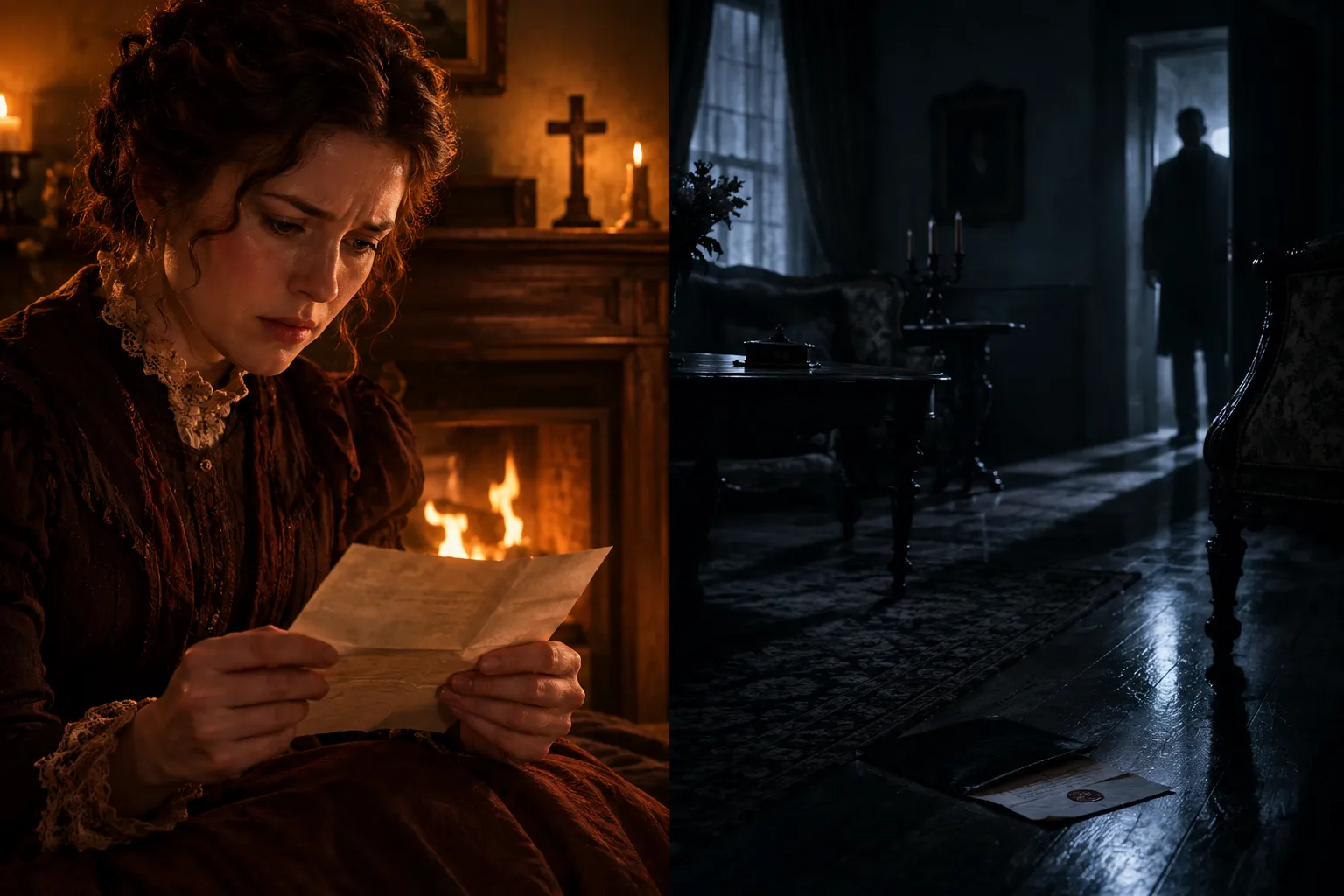
Christian Historical Romance Set in Different Time Periods
The subgenre is genuinely era-spanning. Each historical period generates its own version of faith under fire and clean tension.
Popular eras and their characteristic tensions:
- Regency England (1811-1820): Social constraint as moral pressure; hidden truths in a world obsessed with appearances.
- American Civil War (1861-1865): Divided loyalties, wartime correspondence, the question of justice and mercy in a nation at war with itself.
- Victorian era (1837-1901): Class, gender, and religious hypocrisy create rich territory for secrets and suspense.
- American frontier/post-Civil War West: Institutional law is thin; conscience and community fill the gap. See Why Christian Readers Love Frontier Westerns for more on this appeal.
- WWI and WWII: Occupied territories, resistance networks, and wartime sacrifice make sacrificial faith feel earned rather than abstract.
- Early 20th century American South: Race, justice, and faith intersect in ways that push the subgenre toward more literary territory, as Patricia Raybon’s historical mystery/suspense work demonstrates [34].
The era choice is a story choice. Each period asks a different version of the same question: what will you do with the truth once you’re holding it?
Best Christian Historical Romance Books With Suspense and Authors to Read
Several authors consistently define what the subgenre can do at its best.
Authors worth knowing in 2026:
- Susan May Warren, described by The Christian Romance Podcast as the “queen of Christian romance books with suspense and adventure” [31]. Her work blends high-stakes adventure with romantic tension across multiple historical and contemporary settings.
- Colleen Coble, a long-running voice in Christian romantic suspense, with recent work including When Justice Comes (co-authored with Rick Acker) [31].
- Sarah Sundin, specializes in WWII-era historical romance with strong period research and faith arcs. Mists Over the Channel Islands and Twelve Days and Twelfth Night are recent examples [31].
- Patricia Raybon, writes at the intersection of faith, race, and historical mystery/suspense. The Sedalia Code (2026) pushes the subgenre toward more layered historical crime narrative [34].
- Cathy Gohlke, Every Given Day is among the 2026 releases noted for historical depth and faith themes [17].
- Danielle Grandinetti, Sabotage Games represents the action-adjacent end of the subgenre [17].
For readers new to the subgenre: Start with an author whose chosen era interests you. WWII readers gravitate toward Sundin; readers who want more mystery-forward plots often find Raybon or Coble a better fit.
Christian Historical Romance With Mystery or Thriller Elements
The mystery/thriller crossover is one of the most active corners of Christian historical romance with suspense. Instead of a single antagonist or romantic rival, these books center on a crime, a conspiracy, or a hidden record that the protagonist must uncover.
The faith stakes are high here because the protagonist often has to decide whether to pursue truth at personal cost, and the story’s resolution depends on that choice.
What distinguishes mystery-adjacent historical romance from straight suspense:
- The romantic relationship develops alongside the investigation, not separately from it.
- The mystery’s solution often requires a spiritual reckoning, a confession, a forgiveness, a choice to testify even when silence would be safer.
- The period setting provides the mystery’s conditions: records that can be falsified, identities that can be hidden, communities that protect their own.
For readers who want this crossover in a contemporary cozy format, the Mercy House Mysteries series by Silas Bellhaven offers a faith-rooted mystery structure where hidden records and community secrets drive each book, the same DNA, different era.
See also: Blending Genres in Christian Fiction: Cozy Mystery + Romance, Western + Suspense, Fantasy + Thriller
Common Mistakes in Writing Christian Historical Romance With Suspense
These are the patterns that pull readers out of the story or make faith feel tacked on rather than earned.
Mistakes that undermine the subgenre:
- Faith as decoration. A cross on the wall, a prayer before meals, a church scene, none of these make faith load-bearing. Faith has to affect what the character chooses when it costs something.
- Anachronistic spiritual language. Characters in 1860 shouldn’t sound like they’re quoting a contemporary devotional. Period-accurate faith expression requires research.
- Clean conversion as plot resolution. If the antagonist converts in the final chapter and all conflict dissolves, that’s not grace, it’s a shortcut. Redemption that costs something is more honest and more satisfying.
- Suspense that evaporates before the climax. The threat needs to stay real until the moment of resolution. Defusing tension early to protect the characters’ comfort undermines the whole structure.
- Period detail as costume. Dropping in historical vocabulary without understanding the era’s actual moral and social pressures produces a setting that feels like a backdrop rather than a source of story.
- Preaching through dialogue. Characters who explain their faith in speeches rather than demonstrating it through choices turn readers off regardless of their own beliefs.
For more on how to handle faith without moralizing, see Faith in Fiction: How to Weave Believable Spiritual Journeys Into Plot Without Preaching.
Is Christian Historical Romance Only for Christian Readers?
No. Readers who don’t identify as Christian regularly enjoy the subgenre when faith is handled as lived experience rather than doctrine. The key is whether faith shows up as character behavior, choices made under pressure, or as stated belief the author wants the reader to adopt.
A character who struggles with whether God is trustworthy in the middle of a war, and whose actions reflect that struggle, is compelling to any reader who has ever wondered whether the world is ordered by anything good. That’s a human question, not a denominational one.
When non-Christian readers disengage:
- When characters deliver mini-sermons to other characters (or to the reader).
- When faith resolves plot problems too neatly, making the story feel like a tract.
- When doubt is treated as a character flaw to be corrected rather than a real experience to be held honestly.
When non-Christian readers stay:
- When the faith arc tracks emotional truth they recognize.
- When the suspense and romance are strong enough to carry the story independently.
- When grace shows up as something the characters have to work toward, not something handed to them.
The goal is fiction that walks with readers, not talks at them, regardless of where those readers stand on faith.
How Much Faith Content Should Be in Christian Historical Romance?
Enough that it shapes the outcome; not so much that it replaces the story. Faith content is calibrated correctly when removing it would change what the protagonist decides to do. If the faith elements could be deleted without altering the plot, they’re decorative. If removing them would collapse the story’s moral logic, they’re structural.
A practical calibration guide:
- Too little: Faith appears only in setting details (churches, prayers at meals). The character’s belief never affects a plot choice.
- Balanced: The protagonist’s faith creates a specific dilemma, they know what they believe, the situation demands something that tests it, and the resolution comes through that tension.
- Too much: Multiple characters deliver extended spiritual reflections that pause the story’s momentum. The reader feels instructed rather than accompanied.
The Christian fiction market in 2026 continues to show strong reader demand for faith-based stories with real stakes [1][3]. Readers aren’t asking for less faith, they’re asking for faith that feels honest rather than performed.
Where to Find Christian Historical Romance Recommendations
Several reliable channels exist for readers looking to build a reading list in this subgenre.
Active recommendation sources in 2026:
- The Christian Romance Podcast, features author interviews and new release coverage, with recent episodes on Colleen Coble, Sarah Sundin, Susan May Warren, and others [31].
- Iola Goulton’s Christian fiction roundups, monthly release lists covering historical romance, suspense, and crossover titles. The September 2026 roundup includes The Marquess’s Masked Archer, Every Given Day, Sabotage Games, and Shadowing You among others [17].
- Christianbook.com, organizes releases by category including Historical, Romance, and Suspense and Intrigue, making browsing by subgenre straightforward [19].
- The Christian Fiction Reading Challenge, runs author Q&As and community programming around specific titles through the year, including historical romance picks [42].
- Goodreads, useful for list-building, though filtering for clean/faith-based content requires some navigation. See Goodreads for Christian Fiction Readers: How to Navigate Lists, Avoid Graphic Content, and Find Hidden Clean Reads.
- Kindle Unlimited, the platform has become a significant discovery engine for faith-based fiction across subgenres [7]. See the Clean Christian Fiction TBR for 2026 for cross-genre KU recommendations.
FAQ
What is the difference between Christian romantic suspense and Christian historical romance with suspense? Christian romantic suspense is usually set in the present day. Christian historical romance with suspense is set in a specific past era, where the period’s conditions, war, frontier law, class structure, create the story’s moral and romantic pressure.
Do these books always have a happy ending? Most do, by genre convention. The romantic relationship resolves, and the suspense threat is neutralized. The faith arc, however, may end in a more open place, growth rather than arrival, which feels more honest than a tidy spiritual resolution.
Are there Christian historical romance books with suspense on Kindle Unlimited? Yes. KU has become one of the primary platforms for indie and hybrid-published Christian fiction, including historical romance with suspense elements [7].
Can men enjoy Christian historical romance with suspense? The romance-forward framing skews toward a female readership, but the suspense and historical elements appeal broadly. Readers who prefer less romance and more moral/frontier stakes might find Christian western fiction a better fit.
What’s the most common historical setting for this subgenre? WWII and the American Civil War are the most frequently used eras, followed by Regency England and the post-Civil War American West. WWII in particular offers natural conditions for hidden faith, sacrifice, and forbidden relationships.
How graphic is the violence in Christian historical suspense? Not graphic. The genre standard is tension without gore, danger is real, consequences matter, but graphic violence is absent. The suspense is moral and psychological rather than visceral.
Is faith always Protestant/evangelical in these books? Predominantly, though the field is broadening. Most titles in the mainstream Christian fiction market reflect evangelical Protestant faith, but Catholic and more broadly Christian perspectives appear in some historical settings where they’re historically accurate.
What’s the difference between inspirational romance and Christian historical romance with suspense? Inspirational romance is a broader, softer category that may include faith elements lightly. Christian historical romance with suspense is more specific: the faith arc is structural, the historical setting is detailed, and the suspense thread creates real stakes.
How do I know if a book is truly “clean”? Look for CBA (Christian Booksellers Association) market labels, publisher imprints like Revell, Bethany House, or Tyndale, or author descriptions that specify no profanity, no explicit content, and no graphic violence. Reader reviews on Goodreads and Amazon often flag content concerns specifically.
What if I want faith in my historical fiction but not romance? Christian historical fiction without romance exists, Patricia Raybon’s mystery/suspense work leans more toward historical crime than romance. The Mercy Line western series by Silas Bellhaven is a romance-absent faith-based historical series set on the American frontier.
Conclusion
Christian historical romance with suspense earns its place in the faith-fiction landscape because it refuses to make things easy. The period setting provides real pressure. The suspense thread demands real choices. The faith arc requires real cost. When those three elements work together, the result is a story where hope in the dark means something, because the dark was genuinely dark, and the hope had to be found rather than assumed.
Actionable next steps for readers:
- If you’re new to the subgenre, start with an author whose chosen era interests you, Sarah Sundin for WWII, Susan May Warren for adventure-forward romantic suspense, Patricia Raybon for more literary historical mystery.
- Use Kindle Unlimited to sample broadly before committing to a series.
- Check The Christian Romance Podcast and Iola Goulton’s monthly roundups for current releases.
- If you want the suspense and moral stakes without the romance, explore Christian western fiction or Christian psychological thrillers, the same DNA, different genre packaging.
The stories worth staying with are the ones where faith is tested and proven through the plot, not delivered as a sermon. That’s the standard worth holding, for readers and writers alike.
References
[1] Marketersmedia 2026 4 17 Christshare Releases Report On Christian Reading Trends In 2026 – https://markets.financialcontent.com/bpas/article/marketersmedia-2026-4-17-christshare-releases-report-on-christian-reading-trends-in-2026
[3] The Rise Of Christian Fiction Market Trends Regional Dynamics And Future Predictions For 2026 – https://www.alibaba.com/product-insights/the-rise-of-christian-fiction-market-trends-regional-dynamics-and-future-predictions-for-2026.html
[7] The Clean Wholesome Romance Market Rebound New Data For Authors In 2026 – https://k-lytics.com/the-clean-wholesome-romance-market-rebound-new-data-for-authors-in-2026/